Loading...

Writing reflective paragraphs can feel confusing whether you are facing a personal experience, analyzing a class project, or linking course concepts to your daily life. Knowing what details to include and how to structure your thoughts often makes the difference between surface reflection and deep learning. The solutions in this list bring clarity by showing you how to describe events, share feelings, and critically connect experiences to bigger lessons. You will discover concrete strategies and sample structures that make your reflective writing more meaningful and effective. Get ready to find practical examples and steps that will strengthen your confidence and help your reflections stand out.
| Key Message | Explanation |
|---|---|
| 1. Reflective writing deepens personal understanding | Engaging in reflective writing allows individuals to analyze their experiences and gain significant insights about themselves. |
| 2. Use structure for effective reflections | Organizing thoughts through structured approaches enhances clarity and depth in reflective writing, whether personal or academic. |
| 3. Embrace peer feedback for growth | Viewing feedback as a collaborative growth tool fosters self-awareness and improves communication skills in academic settings. |
| 4. Connect theory to real-life experiences | Linking academic theories to personal situations enriches understanding and showcases the practical relevance of learned concepts. |
| 5. Conclude reflections with intention | Crafting thoughtful conclusions links previous insights to future actions, emphasizing ongoing personal development beyond just summarization. |
Reflective writing transforms ordinary experiences into powerful learning opportunities by encouraging deep personal analysis. Personal experience paragraphs help students examine their thoughts critically and understand how individual moments shape broader insights.
A simple personal experience paragraph follows a structured approach that breaks down an event into meaningful reflection. Here are the key components:
For example imagine writing about a challenging group project where conflicts arose. You might start by describing the specific situation how team members disagreed about project direction. Then explore your emotional response such as frustration or anxiety. The critical thinking emerges when you analyze why these conflicts occurred and what communication strategies could have improved collaboration.
Personal reflections transform individual experiences into opportunities for profound self understanding and growth.
Pro tip: When writing personal experience paragraphs focus on honest self examination rather than creating a perfect narrative.
Academic reflective writing transforms challenging projects from mere assignments into profound learning experiences. Reflective thinking in academic contexts helps students analyze their performance critically and develop deeper insights.
When reflecting on a challenging class project you want to create a comprehensive narrative that goes beyond surface level description. The most effective reflections include several key components:
For instance suppose you struggled with a group research project where team communication broke down. Your reflection might explore why these communication barriers emerged what specific interpersonal dynamics created challenges and how you could improve collaboration skills in future group work.
Reflective writing transforms academic challenges into opportunities for meaningful personal and professional growth.
Pro tip: Use specific examples and concrete details when analyzing your project experience to demonstrate genuine self awareness and critical thinking.
Reflective writing in liberal arts requires more than simply summarizing a text. Reflective analysis of reading assignments transforms passive reading into an active intellectual exploration that challenges assumptions and deepens understanding.
When approaching a reading assignment for reflective writing you want to move beyond surface level comprehension. The most effective reflective analyses include several critical components:
For example when analyzing a complex philosophical text you might explore how the author's arguments challenge your existing beliefs. Reflect on moments of intellectual discomfort or surprise. Consider how the text relates to your previous knowledge and experiences.
Reflective reading transforms texts from static documents into dynamic conversations that expand your intellectual horizons.
Pro tip: Keep a reading journal to capture immediate thoughts and track how your understanding evolves throughout the assignment.
Peer feedback transforms academic experiences from isolated learning to collaborative growth. Reflective writing about peer feedback allows students to develop critical self-awareness and interpersonal communication skills.
Reflecting on peer feedback requires a structured and honest approach. The most effective reflections include several key elements:
For instance imagine receiving feedback on a group presentation. Your reflection might explore how initial defensiveness transformed into genuine learning. Analyze which comments resonated most deeply and why. Consider how the feedback challenged your existing perspectives or revealed blind spots in your communication or work approach.
Peer feedback is not about judgment but about mutual growth and understanding.
Pro tip: Always approach peer feedback with curiosity and openness rather than defensiveness or ego protection.
Transforming academic theories into lived experiences bridges the gap between classroom learning and practical understanding. Connecting course concepts to real experiences empowers students to see the profound relevance of academic knowledge in everyday contexts.
Effective reflective writing requires more than simply describing a connection. You want to develop a nuanced analysis that demonstrates deep learning and critical thinking:
For instance a sociology student might reflect on how theories of social interaction explain a recent workplace conflict. Explore how specific course concepts help you understand interpersonal dynamics more deeply. Examine how theoretical frameworks provide new lenses for interpreting everyday experiences.
Academic knowledge becomes powerful when it helps us understand and navigate the complexities of real life.
Pro tip: Keep a reflective journal where you regularly document unexpected connections between course material and your personal experiences.
Reflective journals transform personal experiences into powerful tools for self-discovery and growth. Reflective journal entries create a structured pathway for understanding your thoughts, behaviors, and potential for personal development.
Crafting an effective self-improvement journal entry requires more than simply recording daily events. You want to create a thoughtful analysis that reveals deeper insights:
For instance a journal entry might explore a challenging workplace interaction. Reflect on your communication style your emotional triggers and how you might approach similar situations more effectively in the future. The goal is not to judge yourself but to understand and grow.
A reflective journal is a mirror that reveals your inner landscape of growth and potential.
Pro tip: Set aside dedicated time each week for journaling and approach your entries with curiosity and compassion rather than harsh self-criticism.
A reflective conclusion transforms an ordinary essay into a powerful narrative of personal growth and learning. Reflective essay conclusions are not mere summaries but profound statements of transformation and insight.
Crafting an exceptional reflective conclusion requires more than restating previous points. You want to create a meaningful synthesis that demonstrates your intellectual and personal development:
For example in an essay about a challenging group project your conclusion might explore how initial frustrations transformed into valuable lessons about collaboration. Reflect on specific communication strategies you learned and how these insights will shape your future professional interactions.
A powerful reflective conclusion is not an ending but a beginning of continued personal development.
Pro tip: Write your conclusion last and approach it as an opportunity for deep personal insight rather than a formulaic wrap up.
Below is a comprehensive table summarizing the reflective writing strategies and examples discussed in the article.
| Type of Reflection | Description | Key Components | Pro Tip |
|---|---|---|---|
| Personal Experience | Encourages analyzing individual events for growth. | Describe event, emotional response, lessons learned, future impact. | Focus on honesty and self-analysis over perfection. |
| Challenging Class Project | Provides insights into academic challenges. | Context, personal performance, challenges, connections, improvement strategies. | Use specific examples to illustrate understanding. |
| Liberal Arts Reading | Deepens understanding through critical reading. | Summarize text, personal response, critical analysis, context, personal growth. | Keep a reading journal to track evolving thoughts. |
| Peer Feedback | Encourages growth through others' perspectives. | Feedback context, specific comments, emotional response, analysis, action plan. | Approach feedback with openness and curiosity. |
| Course Concept Application | Connects academic theories to real-world scenarios. | Identify concepts, describe scenario, analyze connections, reflect, consider implications. | Regularly document connections in a reflective journal. |
| Reflective Journal | A tool for personal and professional development. | Describe event, explore emotions, analyze patterns, evaluate growth, create action steps. | Set aside dedicated journaling time. |
| Reflective Conclusion | Synthesizes learning into actionable insights. | Summarize insights, articulate growth, link concepts, outline intentions, demonstrate ongoing learning. | Write the conclusion as a starting point for further reflection. |
Reflective writing requires honest self-examination and critical analysis to transform personal experiences into meaningful academic insights. If you find breaking down complex experiences or connecting course concepts challenging Samwell.ai offers an advanced AI-driven platform that helps you craft well-structured, original essays that showcase your growth and understanding. Whether you need help describing emotional responses analyzing obstacles or linking theory to real life our tools support every step of the reflective writing process.
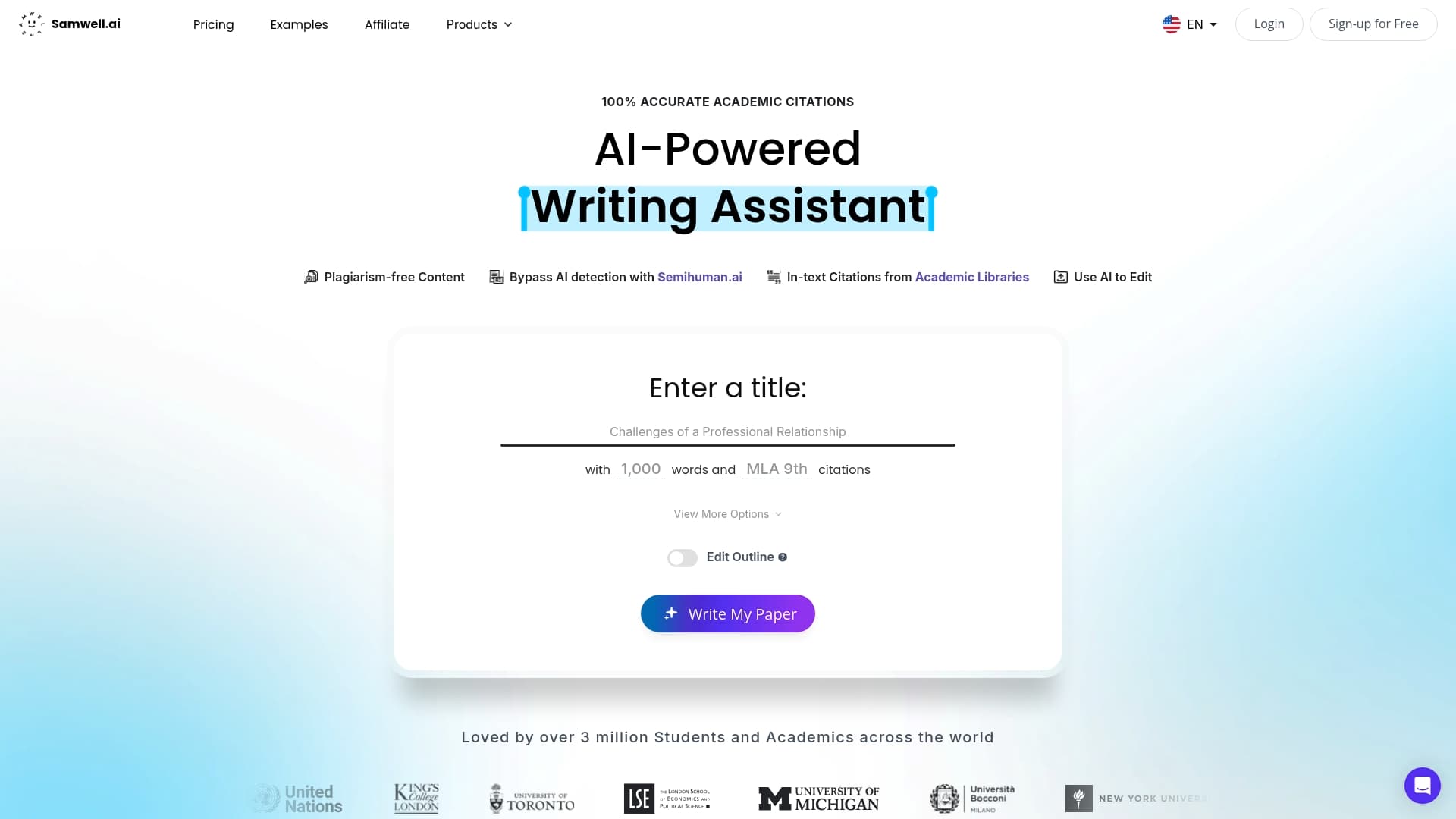
Unlock your potential with features like the 'Power Editor' for deep content expansion and the 'Guided Essays' that provide structured outlines to boost your critical thinking and personal reflection skills. Join over 1,000,000 students and academics who trust Samwell.ai for efficient, plagiarism-safe writing assistance. Start elevating your reflective essays today at Samwell.ai and experience how AI can turn your experiences into powerful academic narratives.
Reflective writing encourages deeper personal analysis, helping you connect experiences to broader insights. Start practicing by journaling about your daily encounters and specifically analyzing the emotional responses they evoke.
A personal experience paragraph typically includes a description of the experience, an exploration of emotional responses, an analysis of learning, and considerations for future actions. Begin by summarizing a recent experience and then dissect each component to enhance clarity and depth.
Utilize peer feedback by documenting specific comments, analyzing their validity, and formulating an action plan for improvement. Review feedback after receiving it and reflect on how it challenges your perspectives to enhance your growth.
Begin by summarizing the text, articulating your personal response, and critically analyzing the author's assumptions. Take notes as you read to capture immediate thoughts and ensure a deeper engagement with the material.
Identify relevant theoretical concepts, describe specific scenarios from your life, and articulate how these concepts illuminate your experiences. Practice linking course material to real-world situations several times a week to strengthen your understanding and application of theories.
An impactful reflective conclusion summarizes key insights, articulates personal growth, and outlines future intentions. Craft your conclusion last and focus on demonstrating your ongoing learning process rather than merely summarizing previous points.