Loading...

Capturing your audience’s attention and persuading them effectively can be overwhelming, especially when you face widely different beliefs, backgrounds, and expectations. Whether you're presenting to a diverse classroom or engaging a business crowd, simply stating your point isn't enough. You need approaches that turn uncertainty into confidence and make your message memorable.
This list reveals proven strategies for creating persuasive speeches that resonate with Canadian and American listeners. You’ll discover actionable steps based on audience analysis, clear messaging, strong evidence, and seamless structure. Get ready to unlock techniques that help your arguments stand out and inspire action.
| Takeaway | Explanation |
|---|---|
| 1. Know Your Audience | Understanding demographics and motivations helps tailor your persuasive message effectively. |
| 2. Clearly State Your Purpose | A direct purpose statement engages the audience and clarifies the speech's intent from the start. |
| 3. Use Strong Evidence | Support your arguments with credible evidence to enhance your persuasiveness and audience trust. |
| 4. Address Counterarguments | Acknowledge opposing viewpoints to demonstrate intellectual integrity and strengthen your own argument. |
| 5. Craft a Memorable Conclusion | End with a clear call to action that inspires and motivates your audience to engage with your message. |
Crafting a persuasive speech begins with truly understanding who you are speaking to. Your audience's demographics, beliefs, and motivations are the foundation of an effective communication strategy.
When developing a persuasive speech, you must dive deep into audience analysis through comprehensive research. Understanding audience psychographics allows you to tailor your message precisely.
Key aspects of audience understanding include:
Research shows that speakers who invest time in understanding their audience are 70% more likely to create compelling presentations. By mapping out the psychological landscape of your listeners, you can strategically design arguments that resonate on a deeper level.
Knowing your audience isn't just about statistics. It's about understanding their hopes, fears, and core values.
To effectively analyze your audience, consider using methods like surveys, preliminary interviews, or demographic research. This preparatory work transforms your speech from a generic presentation into a targeted communication experience.
Pro tip: Always spend at least 30% of your speech preparation time researching and understanding your specific audience group.
The introduction of your persuasive speech serves as the critical gateway to capturing your audience's attention and establishing the core message. A powerful introduction does more than just welcome listeners it immediately signals the central purpose of your presentation.
Crafting an introduction for a persuasive speech requires strategic planning and precision. Your purpose statement should be direct transparent and compelling.
Key components of a clear purpose statement include:
Effective purpose statements typically follow a structured approach:
A well-crafted purpose statement transforms your speech from a mere presentation into a targeted communication experience.
Your purpose statement should answer three fundamental questions for your audience: What am I talking about? Why should I care? What will I learn?
By clearly articulating your purpose early communicates respect for your audience's time and demonstrates the value of your message.
Pro tip: Practice delivering your purpose statement in one crisp compelling sentence that could stand alone and intrigue your listeners.
Persuasive speeches rise or fall based on the quality of evidence supporting their arguments. Your claims must be substantiated with credible sources that transform opinion into compelling narrative.
Supporting arguments with robust evidence requires strategic selection and presentation of information. Not all evidence carries equal weight in persuading your audience.
Types of compelling evidence include:
Key strategies for effective evidence integration:
Strong evidence transforms a mere opinion into a persuasive argument that resonates with listeners.
Quality evidence accomplishes multiple objectives. It builds your credibility demonstrates thorough research and helps listeners connect emotionally and intellectually with your message.
Remember that evidence should always be:
Pro tip: Always have at least three distinct pieces of evidence for each major claim to create a robust and convincing argument.
Effective persuasive speeches do more than just present a one-sided perspective. They demonstrate intellectual sophistication by acknowledging and systematically addressing potential counterarguments.
Confidently handling opposing viewpoints transforms your argument from defensive to proactive. This approach shows your audience that you have thoroughly considered multiple perspectives before reaching your conclusion.
Strategies for addressing counterarguments include:
Key steps in counterargument management:
Addressing counterarguments is not about winning an argument it is about demonstrating intellectual integrity.
Your goal is not to demolish alternative perspectives but to show why your approach offers the most comprehensive and compelling solution.
Critical elements of effective counterargument presentation:
Pro tip: Practice presenting counterarguments as if you are arguing on behalf of the opposing side first to fully understand and anticipate potential challenges.
A persuasive speech without structure is like a ship without a navigation system. Organizing information for maximum impact requires strategic planning and intentional sequencing.
The architecture of your argument determines how effectively your message will be received. Your goal is to create a logical progression of ideas that guides your audience seamlessly from introduction to conclusion.
Key principles of effective argument organization:
Structural approaches for argument organization:
A well-organized speech transforms complex ideas into an easily digestible narrative.
Critical elements of maintaining logical flow include:
Your organizational strategy should anticipate how listeners process information and create intellectual momentum.
Pro tip: Map out your speech structure using a mind mapping technique to visualize how different points connect before finalizing your presentation.
The conclusion of your persuasive speech is your final opportunity to inspire and motivate your audience. Crafting a powerful speech conclusion requires strategic thinking and emotional intelligence.
A memorable conclusion transforms information into inspiration. It is not just a summary but a pivotal moment that bridges understanding with action.
Key components of an effective conclusion:
Structural elements of a compelling conclusion:
A great conclusion does not just end a speech it launches a movement.
Your call to action should be:
The most effective calls to action create a sense of urgency and personal responsibility while offering a clear path forward.
Pro tip: Practice your conclusion multiple times to ensure your tone shifts from informative to inspirational and your call to action feels natural and compelling.
Transitional phrases are the invisible threads that weave your speech together creating a seamless narrative experience. Mastering speech transitions transforms a disjointed presentation into a compelling journey.
Transitions are more than mere connecting words. They serve as intellectual signposts guiding your audience through complex ideas with clarity and intention.
Types of transitional phrases include:
Strategic transition placement:
Effective transitions transform your speech from a collection of ideas into a unified narrative.
Key benefits of using transitional phrases:
The most powerful transitions feel natural and almost invisible to your audience.
Pro tip: Practice your speech transitions out loud to ensure they sound conversational and smooth rather than rehearsed or mechanical.
Below is a comprehensive table summarizing the main strategies and techniques for delivering a persuasive speech as outlined in the article.
| Topic | Key Details | Benefits & Outcomes |
|---|---|---|
| Understanding Your Audience | Research demographics, cultural context, and motivational triggers to tailor your message. | Resonates deeply with listeners; boosts effectiveness by aligning with audience needs. |
| Purpose Statement Design | Deliver a focused introduction with a clear and compelling purpose. | Captures attention; establishes the presentation's relevance and intent clearly. |
| Building Arguments | Utilize credible statistical data, expert testimony, and other evidences strategically. | Enhances argument credibility; fosters listeners' trust and comprehension. |
| Counterargument Handling | Recognize and address alternative views respectfully, reinforcing your position. | Demonstrates thoroughness; shows intellectual integrity and persuades effectively. |
| Logical Organization | Arrange speech contents systematically for seamless delivery. | Improves audience engagement; ensures clarity and comprehension of ideas. |
| Conclusion Crafting | Summarize key points, restate your thesis, and motivate audience with a direct call to action. | Leaves lasting impressions; inspires action; solidifies speech impact. |
| Smooth Transitions | Employ transitional phrases to connect sections fluidly. | Facilitates topic navigation; maintains speech cohesion and engagement. |
Crafting a persuasive speech demands a clear purpose, credible evidence, and a logical flow to captivate your audience effectively. If you find yourself struggling to organize your ideas, develop strong arguments, or seamlessly integrate transitions the comprehensive tools at Samwell.ai can transform your preparation process into a streamlined journey toward success. Our AI-driven platform offers tailored essay outlines and powerful editing features that align perfectly with the detailed steps presented in the persuasive speech outline template.
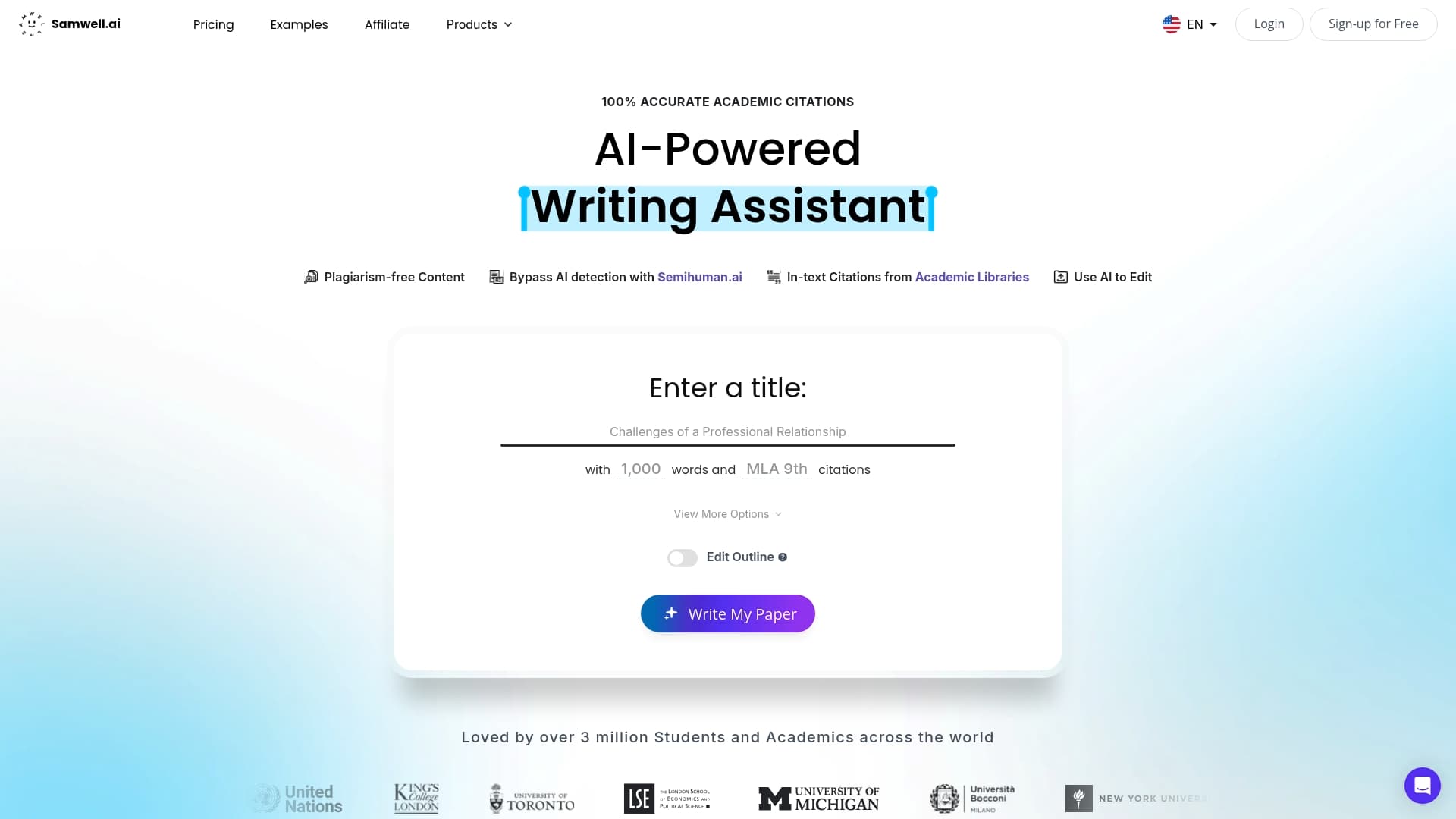
Take control of your speech writing today by using Samwell.ai's Guided Essays to create structured content that addresses key elements like audience targeting, purpose clarity, and counterargument handling. Enhance your confidence and clarity with the Power Editor which helps you refine your arguments while ensuring originality and citation compliance. Start now and experience how integrating smart technology into your speech preparation delivers not just content but a compelling narrative your audience will remember.
To structure your persuasive speech outline, start with a clear introduction that states your purpose and grabs attention. Follow with organized points that logically build your argument, and conclude with a strong closing that includes a call to action.
Your introduction should include a hook to captivate your audience, a brief overview of the topic, your purpose statement, and a preview of the main arguments. Aim to craft this introduction in a way that clearly communicates the value of your message right at the outset.
In your speech outline, include various types of evidence such as statistics, expert testimonies, and real-world examples that support your arguments. Aim for at least three distinct pieces of evidence for each major claim to strengthen your overall argument and enhance credibility.
Addressing counterarguments demonstrates your ability to engage with different perspectives, showcasing intellectual integrity. In your outline, identify potential opposing views and plan how you will respectfully counter them to strengthen your own argument.
Utilize transitional phrases throughout your outline to link ideas together effectively, such as "first," "however," and "as a result." Incorporate these transitions at key points, particularly when shifting topics or introducing new arguments, to maintain audience engagement and comprehension.
To create a strong call to action, clearly restate your main points and motivate your audience to take a specific action related to your message. Ensure this action is both realistic and achievable, providing a clear next step they can follow.