Loading...

Struggling to untangle the full scope of APA Style can leave students feeling lost before a research paper even begins. While many focus solely on citations, the reality is that APA is a complete writing system shaped by the American Psychological Association. Mastering these comprehensive guidelines for structure, clarity, and citations not only strengthens your academic credibility but also ensures your work meets international scholarly standards.
| Point | Details |
|---|---|
| Comprehensive Guidelines | APA Style encompasses much more than citations, including formatting, clarity, and document organization. Understanding its full scope is vital for academic writing. |
| Version Awareness | Students should be aware of the different versions of APA Style, particularly the updates in the 7th Edition, to ensure compliance with current standards. |
| Consistent Formatting | Consistency in formatting and citations is critical for readability and professionalism, impacting grading and perception of the work. |
| Importance of Citation | Proper citations enhance academic integrity by clearly attributing ideas to their sources, preventing plagiarism, and fostering trust in scholarly work. |
APA Style is far more than just a citation format. The American Psychological Association created a comprehensive writing system that governs formatting, punctuation, structure, and referencing standards for academic papers. Many students mistakenly treat it as only a reference list requirement, missing the bigger picture entirely.
Here's what APA actually covers:
APA Style provides comprehensive guidelines designed to help writers communicate research findings clearly and persuasively. It emphasizes concision, precision, and inclusivity in scholarly writing. The format prioritizes reader understanding by establishing consistent structures across all academic disciplines.
Think of it like traffic laws. Just as traffic rules govern not only which lane you drive in but also speed, signaling, and right-of-way, APA governs your entire paper's appearance and voice.
This is the biggest myth. Yes, APA covers in-text citations and references, but that's roughly 20% of what it does. The other 80% involves how you write sentences, structure paragraphs, format headings, present data, and organize your entire document.
Students who only focus on citations often submit papers with inconsistent formatting, unclear transitions, and poor readability—even if the citations are technically correct.
Not exactly. APA has evolved. Most universities now require APA 7th Edition (the latest version), but some still accept APA 6th. The differences matter. Margins changed. In-text citations changed. Heading styles shifted.
Always check your assignment guidelines. Don't assume your professor wants the version you learned last year.
Here's a comparison of APA 6th Edition and 7th Edition formatting changes students should know:
| Element | APA 6th Edition | APA 7th Edition |
|---|---|---|
| Font Requirements | Times New Roman only | Multiple fonts allowed |
| Heading Levels | Five levels, some bolded | All levels bolded, changes in structure |
| In-Text Citations | Requires all authors up to 6 | Use "et al." after the first author for 3+ |
| Publisher Location | Required for books/journals | Omitted from references |
| Up to 7 Authors Listed | Yes | Up to 20 authors listed |
| DOI Format | "doi:" prefix | DOI as a clickable link |
APA does have strict rules, but it also includes exceptions for specific situations. The system builds in flexibility for different document types, disciplines, and edge cases. Understanding the "why" behind rules helps you apply them correctly when standards don't cover your exact scenario.
APA Style exists to standardize academic communication, making research accessible and credible across disciplines—not to frustrate writers with arbitrary rules.
Pro tip: Bookmark the official APA Style website and refer to it directly rather than relying on secondhand summaries. Official sources clarify edge cases your textbook might miss, saving hours of confusion later.
APA formatting might seem like a checklist of tedious rules, but each element serves a real purpose. Consistency makes your paper easier to read. Standardization helps professors grade fairly. Proper formatting signals that you understand academic professionalism.
Let's break down what actually matters.
Every APA paper needs these core components:
APA formatting standards exist to maximize readability and professionalism. One-inch margins prevent cramped text. Double spacing gives professors room to write feedback. Times New Roman ensures legibility on any device.
These aren't arbitrary preferences. They're practical decisions made by researchers and educators over decades.
Your title page is the first impression. It includes your paper title, your name, your course information, and the date. Centering and spacing follow strict APA rules. No decorative elements or creative formatting—just clean, professional presentation.

This page tells professors you know how to follow instructions. That matters more than you might think.
Every page gets a running head (shortened title) and page number in the header. The title page has its own rules for header placement. Subsequent pages follow a consistent pattern.
This seems tedious until you realize it prevents lost pages and maintains document integrity.
Proper citations connect your ideas to sources. They protect you from plagiarism accusations and give readers a path to verify your claims. APA's specific format makes these connections clear and verifiable.
APA formatting isn't busywork—it's the language professional researchers use to communicate credibly with each other.
Pro tip: Use your word processor's built-in formatting tools to create APA templates before you start writing. Set margins, spacing, and fonts once, then focus on content rather than wrestling with formatting later.
APA's dual citation system works like a conversation between your paper and your readers. In-text citations acknowledge sources as you write. Reference lists provide complete details so readers can find those sources themselves. Together, they create transparency and credibility.
Understanding how they work together transforms citation from a frustrating chore into a logical system.
The author-date method is the backbone of APA citations. You include the author's last name and publication year in parentheses right where you use the information. For direct quotes, add the page number too.
This tells readers exactly which source you're referencing and when it was published. They can immediately find that source in your reference list.
Here's what you need:
Example: Research shows that students improve retention through active recall (Smith, 2021). For a direct quote: "Active recall outperforms passive review" (Smith, 2021, p. 45).
Different sources require slightly different formats:
Every in-text citation must have a matching entry on your reference page. This is where full details live: complete author names, exact titles, publication dates, publishers, and URLs. In-text citation paragraph basics show how citations appear in context, but your reference list backs up every claim.
Without this connection, your citations mean nothing.
Your reference list appears on its own page at the end of your paper. Entries are alphabetized by author's last name. Each entry follows a specific format depending on source type: books, journal articles, websites, and more have their own rules.
Consistency matters. One missing period or misplaced comma breaks the entire system.
In-text citations and reference lists are a promise to your reader: every claim I made came from somewhere, and you can verify it.
Pro tip: Start a reference list document as you research, adding sources immediately rather than scrambling to find them later. This prevents missing citations and saves hours of detective work before submission.
Academic integrity isn't just about following rules. It's about honesty, respect, and building trust in the scholarly community. APA Style exists partly to enforce that trust by making attribution clear, transparent, and verifiable.
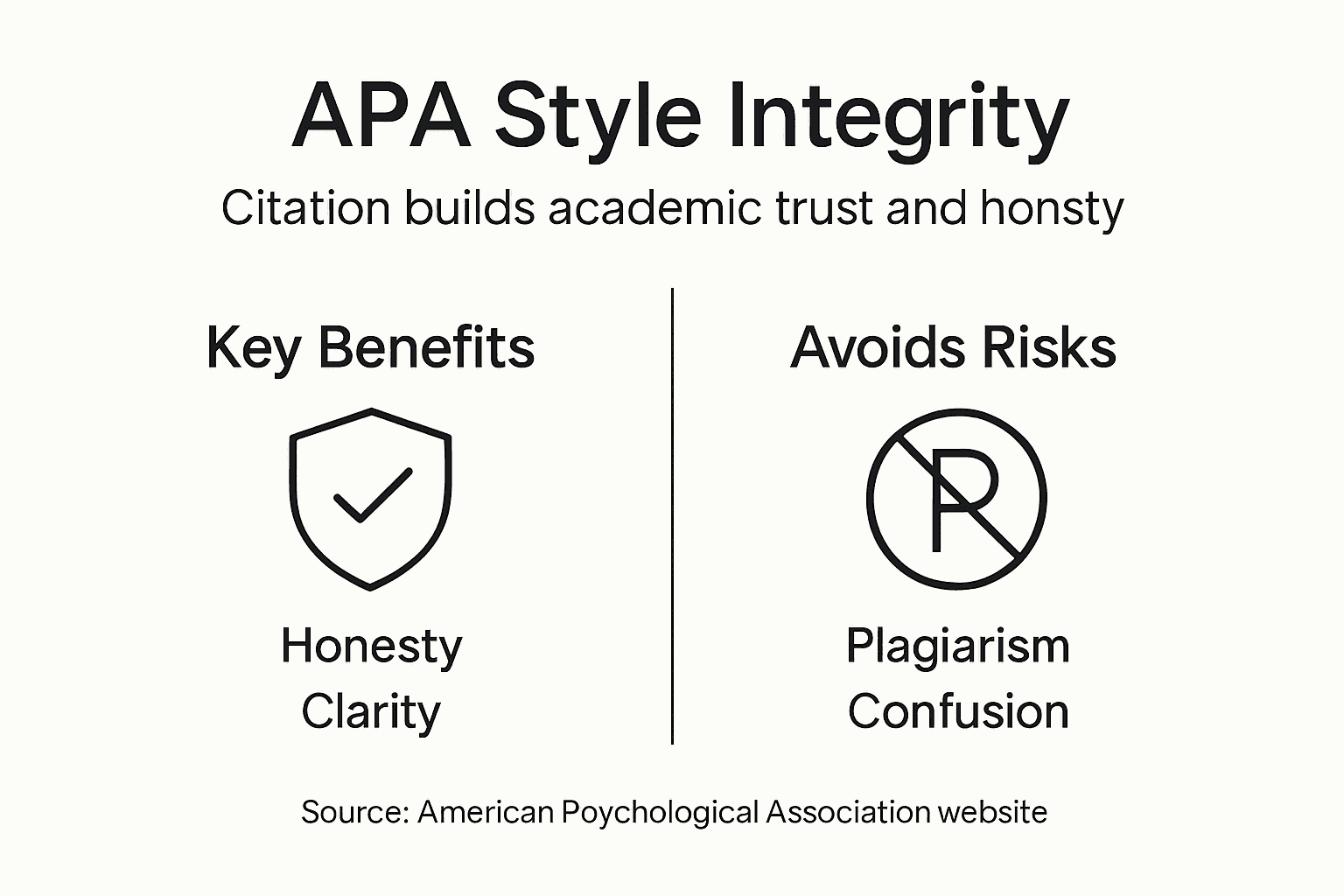
When you cite properly, you're doing more than avoiding plagiarism. You're participating in a system that respects ideas and the people who created them.
Clear attribution of ideas to their original sources prevents plagiarism and respects intellectual property rights. Without consistent citation standards, determining who actually said what becomes impossible.
APA creates a uniform language so every student, every professor, every researcher knows exactly where information came from.
Plagiarism often isn't intentional. Students sometimes:
Proper APA citation creates a paper trail. Every idea gets traced back. Every source gets credited. This accountability deters dishonesty and protects you.
Consistent format isn't busy work. When citations follow APA standards, professors can instantly verify sources. They can check your work. They can trust your research. Sloppy citations look sloppy. They suggest carelessness or, worse, intentional hiding of sources.
Professional presentation builds credibility. Format matters because it signals competence.
Academic work builds on previous research. Someone studied retention. Someone else discovered this chemical reaction. Someone developed that theory. Understanding types of academic dishonesty shows how violations damage the entire system.
When you cite sources, you acknowledge that foundation. You respect the work that came before yours.
Many students cite correctly only to avoid penalties. But proper citation actually protects you in multiple ways:
Academic integrity powered by clear citation systems transforms scholarship from individual achievement into collective knowledge-building.
Pro tip: Develop the habit of citing sources immediately as you take notes during research, not after you finish writing. This prevents accidentally claiming ideas as your own and makes citation less stressful when you're in writing mode.
Even careful writers make APA mistakes. A misplaced comma. A forgotten page number. An author name formatted wrong. These tiny errors add up, and professors notice them.
The good news? Most common mistakes are easy to catch if you know what to look for.
Students consistently make the same errors across different papers:
These aren't small oversights. They suggest you didn't understand the material or didn't care enough to proofread.
Use this table to identify and resolve frequent APA citation mistakes:
| Common Error | Why It Matters | How to Fix |
|---|---|---|
| Omitted Author Name | Makes sources unverifiable | Always list all required names |
| Missing Page Number | Fails to credit direct quotes | Add page with "p." for quotes |
| Wrong "et al." Usage | Causes confusion in attribution | Follow author count rules |
| Mixed Capitalization | Diminishes professionalism | Use sentence/title case as required |
| Absent Publication Date | May lower source credibility | Insert "n.d." if truly unavailable |
APA guidelines for references require complete information: author names, publication year, title, and source details. Missing even one element breaks the reference.
Many students leave out publisher names, URL access dates, or DOI numbers. Double-check every reference entry against official APA standards before submitting.
The abbreviation "et al." means "and others." Use it when citing three or more authors. But many students use it incorrectly or inconsistently. In-text citations follow one format. Your reference list follows another. Mixing them creates confusion.
Learn the exact rules. Then apply them consistently throughout your paper.
APA has specific punctuation rules that differ from regular writing. Periods go in certain places. Commas in others. Titles capitalize differently depending on context.
One misplaced period might seem trivial. But it signals carelessness to professors grading 50 papers.
Your first citation might be correct, but your tenth citation might follow a slightly different format. This inconsistency confuses readers and suggests you don't understand the system.
Create a template for each source type. Use it consistently. This prevents subtle variations.
Proofreading specifically for citations takes effort. Use this process:
The difference between an excellent paper and a mediocre one often comes down to citation accuracy and consistency.
Pro tip: Create a personal checklist of the three APA rules you mess up most frequently, then scan your paper specifically for those errors before submission. Targeting your own patterns saves time and catches mistakes faster than generic proofreading.
Understanding the true meaning of APA and why citation matters can be overwhelming. Students face challenges like mastering complex citation rules, avoiding plagiarism, and ensuring every source is properly credited. The emotional pressure to submit flawless papers that demonstrate academic integrity can feel exhausting. Samwell.ai is designed to ease these struggles by offering advanced AI-driven tools that help you write clear, original, and perfectly cited research papers with confidence.
Benefit from:
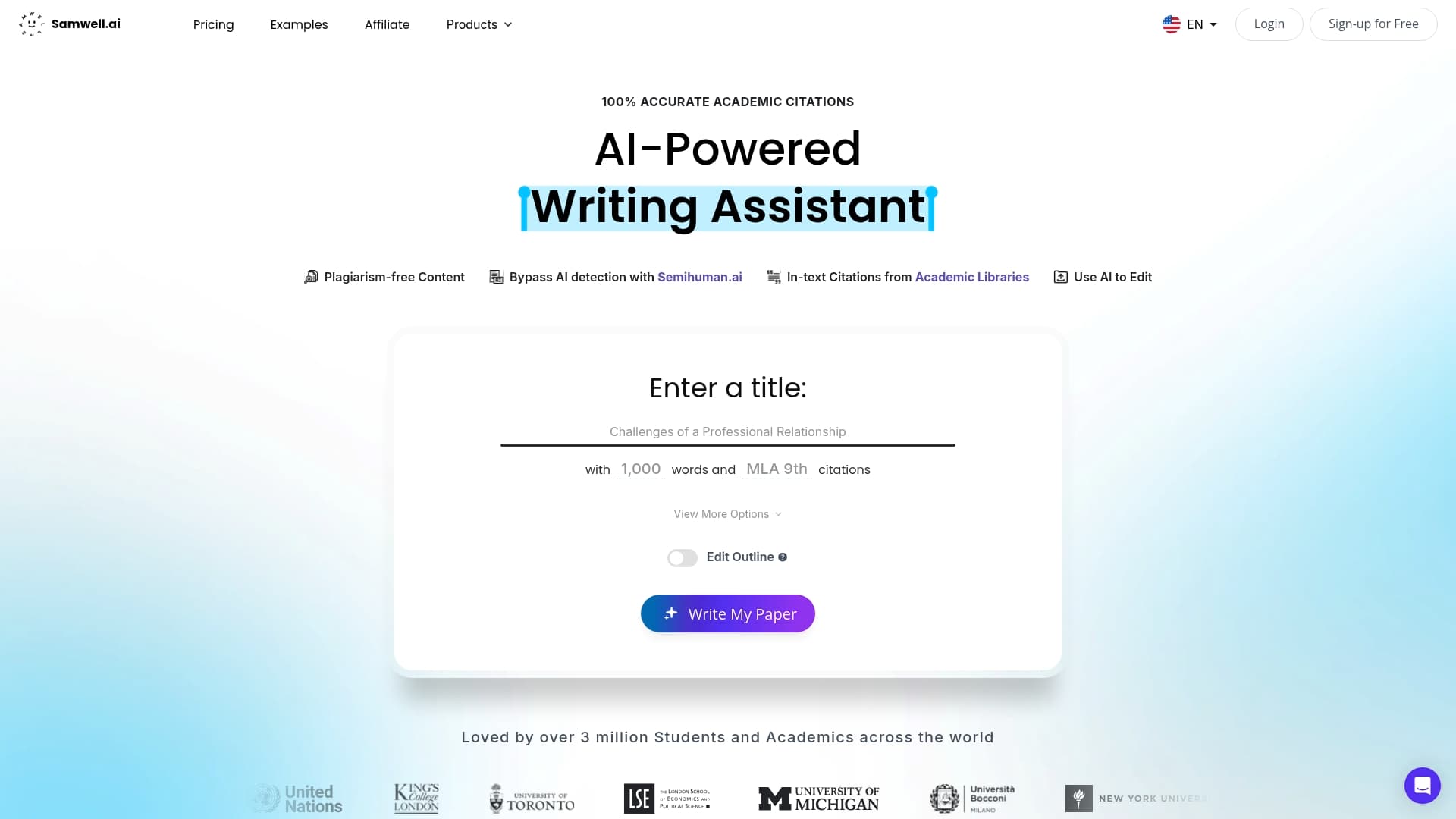
Take control of your academic success and avoid common APA mistakes today. Visit Samwell.ai to harness AI technology that safeguards your work from plagiarism and ensures credible, professional papers. Discover how our platform supports precise in-text citations and comprehensive reference lists by checking out detailed resources like In-Text Citations and Reference Lists Explained and explore the full range of tools available at Samwell.ai. Start improving your writing now and experience the confidence that comes with academic integrity.
APA Style is a comprehensive writing and citation format established by the American Psychological Association. It governs not just citations but also paper formatting, structuring, and clarity of writing. Understanding APA is crucial for maintaining academic integrity and ensuring clear communication in scholarly work.
Many students believe that APA is solely about citation rules. In reality, it encompasses much more, including paper formatting, heading organization, and clarity standards. Ignoring these aspects can lead to poorly structured papers, even if citations are correct.
Always check your assignment guidelines and verify with your professor which APA edition is required. Most institutions now require the APA 7th Edition, which includes significant updates from the 6th Edition. Be aware of differences, such as formatting changes and citation methods.
Academic integrity builds trust within the scholarly community by ensuring that ideas and research findings are clearly attributed to their original sources. Proper citation practices prevent plagiarism and acknowledge the contributions of previous researchers, fostering a culture of respect and knowledge sharing.