
Loading...

A maioria dos estudantes americanos acha surpreendentemente desafiadora a jornada de uma ideia inicial até um trabalho acadêmico refinado. Cada detalhe, desde estabelecer objetivos claros de pesquisa até editar e verificar a originalidade, é importante para a credibilidade acadêmica. Sem um processo sólido, até mesmo escritores talentosos lutam para destacar seus argumentos. Este guia passo a passo detalha as estratégias que constroem confiança acadêmica e resultam em melhores notas, baseando-se em práticas de escrita acadêmica comprovadas usadas pelas principais universidades americanas.
| Ponto Chave | Explicação |
|---|---|
| 1. Defina Objetivos Claros de Pesquisa | Divida objetivos amplos em metas específicas usando o framework SMART para guiar sua pesquisa de forma eficaz. |
| 2. Crie um Esboço Estruturado | Organize suas ideias logicamente para garantir um fluxo suave e argumentação coerente em sua escrita acadêmica. |
| 3. Redija com Tom Acadêmico | Use linguagem neutra e uma tese clara para apresentar evidências sistematicamente, aumentando a credibilidade em seus argumentos. |
| 4. Cite Fontes com Precisão | Mantenha a integridade acadêmica seguindo estilos de citação específicos e gerenciando referências meticulosamente ao longo de sua pesquisa. |
| 5. Edite para Clareza e Precisão | Revise criticamente seu rascunho para fluxo lógico e precisão da linguagem para comunicar ideias complexas de forma eficaz. |
Os objetivos de pesquisa são seu mapa para um trabalho acadêmico bem-sucedido. Eles transformam ideias vagas em metas de pesquisa precisas e acionáveis que guiam todos os aspectos do seu trabalho acadêmico.
Comece dividindo seu objetivo amplo de pesquisa em componentes específicos e gerenciáveis. Objetivos de pesquisa eficazes são claros, focados e alinhados com sua pergunta de pesquisa, seguindo o framework SMART: Específico, Mensurável, Alcançável, Relevante e com Prazo. Pense nesses objetivos como coordenadas de GPS para sua jornada acadêmica.
Para elaborar objetivos de pesquisa convincentes, faça a si mesmo perguntas críticas. O que exatamente você está tentando descobrir? Quais resultados específicos você deseja alcançar? Quais lacunas no conhecimento atual sua pesquisa abordará? Evite declarações amplas como Quero estudar as mudanças climáticas e, em vez disso, concentre-se em algo preciso, como Vou examinar o impacto dos espaços verdes urbanos na redução da temperatura local em cidades de médio porte do Meio-Oeste entre 2010 e 2020.
Dica profissional: Escreva seus objetivos e revise-os várias vezes. Compartilhe-os com mentores ou colegas para obter feedback. Um objetivo de pesquisa bem definido não apenas fornece direção, mas também ajuda você a se manter focado e motivado ao longo do seu processo de pesquisa acadêmica.
Criar um esboço estruturado é sua arma secreta para transformar pensamentos dispersos em um trabalho acadêmico coerente e poderoso. Pense em um esboço como um mapa que guia sua jornada de escrita, ajudando você a navegar por ideias complexas com clareza e propósito.
O esboço ajuda os escritores a agrupar e organizar ideias, planejar o desenvolvimento e a organização de seu trabalho, e verificar lacunas de informação. Comece fazendo um brainstorming de seus conceitos principais e, em seguida, categorize-os logicamente. Use técnicas como o método Lista-Agrupar-Rotular, onde você primeiro escreve todas as ideias potenciais, depois agrupa conceitos semelhantes e, finalmente, atribui rótulos significativos a cada grupo. Essa abordagem garante que seu trabalho flua suavemente e mantenha uma progressão clara e lógica.
Ao construir seu esboço, preste atenção à hierarquia e estrutura. Comece com sua tese principal ou argumento central, depois divida-o em seções primárias, seguidas por subseções de apoio e evidências específicas. Cada seção deve se conectar perfeitamente à próxima, criando uma narrativa que guia seu leitor através de sua pesquisa. Dica profissional: Revise seu esboço da perspectiva de um leitor. Pergunte a si mesmo se a estrutura faz sentido, se o argumento se constrói logicamente e se cada seção contribui significativamente para seu objetivo geral de pesquisa.
Elaborar um argumento acadêmico convincente requer precisão, objetividade e uma abordagem estruturada que transforma suas ideias brutas em uma narrativa acadêmica sofisticada. Seu objetivo é apresentar uma pesquisa que soe profissional, credível e intelectualmente rigorosa.

Organizar ideias usando técnicas como ordem cronológica, ordem de importância, conexões lógicas e abordagens do geral para o específico pode ajudar na redação de argumentos com tom acadêmico. Comece estabelecendo uma declaração de tese clara que articule seu argumento central de forma concisa. Use uma linguagem neutra e objetiva que evite retórica emocional ou viés pessoal. Integre evidências sistematicamente, garantindo que cada afirmação seja apoiada por fontes e dados confiáveis. A escrita acadêmica exige que você demonstre pensamento crítico analisando informações em vez de simplesmente relatá-las.
Considere adotar estruturas de escrita acadêmica estabelecidas, como a estrutura IMRAD (Introdução, Métodos, Resultados e Discussão), que fornece uma progressão lógica para apresentar a pesquisa. Essa abordagem ajuda os leitores a entender sua metodologia, interpretar suas descobertas e avaliar a importância do seu trabalho. Dica profissional: Leia seu rascunho em voz alta e ouça por frases excessivamente complicadas ou linguagem emocional. A escrita acadêmica deve ser clara, precisa e focada no discurso intelectual. Corte palavras desnecessárias, elimine a voz passiva sempre que possível e garanta que cada parágrafo contribua diretamente para seu argumento central.
Citar fontes é mais do que uma formalidade na escrita acadêmica; é a base da credibilidade acadêmica e da integridade intelectual. Suas citações demonstram rigor acadêmico, dão crédito adequado aos pesquisadores originais e permitem que os leitores rastreiem a linhagem intelectual de seus argumentos.
Entender diferentes estilos de citação é crucial para manter os padrões acadêmicos. Cada disciplina geralmente segue diretrizes específicas, como os estilos APA, MLA ou Chicago. Um organizador pode ajudar a organizar informações textuais de maneira estruturada, o que é essencial para rastrear e formatar citações sistematicamente. Comece criando uma lista de referências abrangente enquanto pesquisa, registrando detalhes bibliográficos completos para cada fonte. Preste muita atenção à pontuação, capitalização e requisitos de formatação específicos do estilo de citação escolhido. Verifique se as citações no texto correspondem exatamente às entradas da sua lista de referências.
Considere usar ferramentas de gerenciamento de referências acadêmicas para simplificar seu processo de citação. Dica profissional: Crie um sistema consistente para salvar informações de fontes desde o início de sua pesquisa. Isso evita correria de última hora e reduz o risco de plágio acidental. Sempre priorize a precisão; verifique cada citação e garanta que você está representando a fonte original de forma justa e contextual. Lembre-se de que citações adequadas não são apenas um requisito técnico; são um sinal de respeito acadêmico e honestidade intelectual.
A edição transforma um rascunho bruto em uma obra-prima acadêmica polida. Pense na edição como esculpir suas ideias brutas em um trabalho acadêmico preciso e convincente que comunica sua pesquisa com máxima clareza e impacto.
O esboço ajuda os escritores a verificar lacunas de informação e organizar ideias sistematicamente. Comece seu processo de edição lendo todo o seu rascunho de forma crítica. Procure por fluxo lógico, coerência do argumento e integridade estrutural. Preste atenção às transições de parágrafo, garantindo que cada seção se conecte perfeitamente e construa uma narrativa abrangente. Examine sua linguagem em busca de precisão acadêmica; remova palavras desnecessárias, elimine a voz passiva e substitua termos vagos por linguagem específica e descritiva.

Considere uma abordagem de edição em várias etapas. Primeiro, aborde elementos de visão geral, como argumento geral e estrutura. Em seguida, concentre-se na clareza e coerência em nível de parágrafo. Finalmente, conduza uma revisão detalhada linha por linha, focando em gramática, pontuação e escolha de palavras. Dica profissional: Leia seu rascunho em voz alta ou peça para alguém revisá-lo. Olhos frescos podem detectar erros e frases estranhas que você pode ter perdido. Lembre-se de que a excelente escrita acadêmica não é sobre perfeição, mas sobre comunicação clara e lógica de ideias complexas.
Garantir a qualidade e originalidade do seu trabalho acadêmico é o ponto de verificação crítico final que separa a bolsa de estudos excepcional da pesquisa medíocre. Este passo é sobre provar a integridade intelectual e a contribuição única do seu trabalho acadêmico.
Os critérios SMART fornecem uma estrutura robusta para avaliar a qualidade da pesquisa, avaliando objetivos que são Específicos, Mensuráveis, Alcançáveis, Relevantes e com Prazo. Comece examinando criticamente seu trabalho em relação a esses padrões. Verifique se cada seção demonstra claramente seu pensamento original e contribui com novos insights para seu campo. Execute verificações abrangentes de plágio usando ferramentas avançadas, comparando seu trabalho com bancos de dados acadêmicos e pesquisas publicadas. Preste atenção especial à citação e parafraseamento adequados para garantir que você está creditando as fontes originais com precisão.
Implemente um processo de verificação em várias camadas. Primeiro, revise sua metodologia de pesquisa em busca de rigor e precisão. Em seguida, avalie a singularidade de seus argumentos e evidências. Considere pedir a colegas ou mentores que revisem seu trabalho para fornecer feedback objetivo sobre originalidade e padrões acadêmicos. Dica profissional: Leia seu trabalho como se você fosse um revisor cético procurando por possíveis fraquezas. Desafie suas próprias suposições, verifique cada afirmação e esteja preparado para refinar seu trabalho. Lembre-se de que a verdadeira excelência acadêmica não é sobre perfeição, mas sobre demonstrar curiosidade intelectual e pensamento crítico.
Está tendo dificuldades para elaborar objetivos claros de pesquisa? Preocupado em organizar suas ideias ou manter um tom acadêmico? Esses desafios podem atrasar o processo de escrita e criar frustração. Com suas ferramentas avançadas, como o Power Editor e Ensaios Guiados, Samwell.ai transforma tarefas acadêmicas complexas em etapas gerenciáveis, ajudando você a construir esboços estruturados e criar argumentos convincentes de forma eficiente. Além disso, sua tecnologia Semihuman.ai minimizadora de plágio protege sua originalidade enquanto apoia estilos de citação precisos, como MLA e APA.
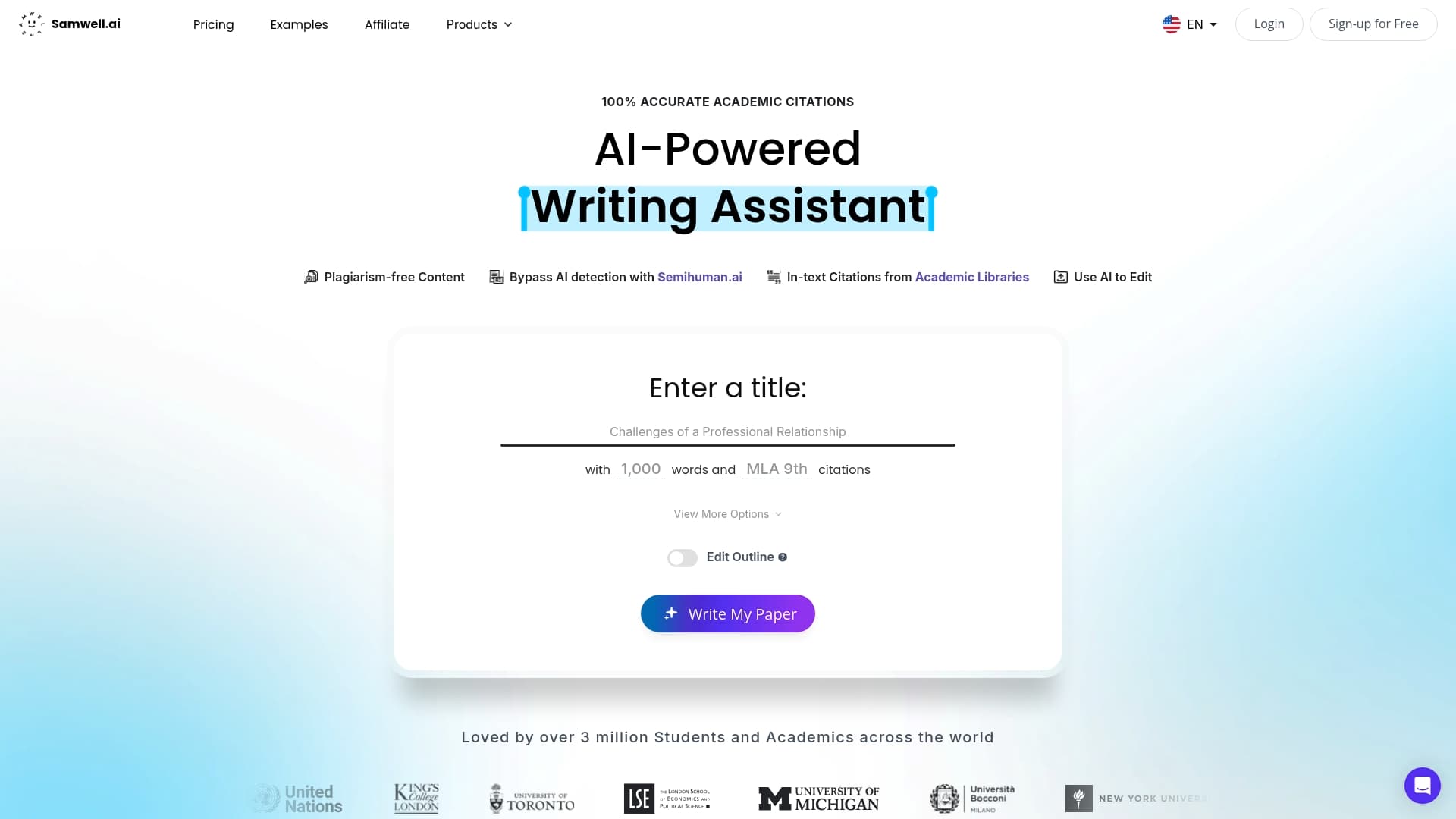
Descubra como você pode refinar seus rascunhos com edição precisa e manter a integridade acadêmica com verificações de detecção de IA em tempo real. Assuma o controle de sua jornada de escrita agora em Samwell.ai. Comece a produzir trabalhos mais fortes mais rapidamente com orientação especializada de IA, especificamente adaptada para trabalhos acadêmicos.
Estabelecer objetivos claros de pesquisa ajuda a refinar seu foco e guia seu processo de escrita. Divida seu objetivo amplo em componentes específicos e mensuráveis e certifique-se de que eles estejam alinhados com sua principal pergunta de pesquisa.
Organizar ideias de forma eficaz requer a criação de um esboço estruturado. Comece fazendo um brainstorming de seus conceitos principais, categorizando-os logicamente e garantindo que cada seção flua para a próxima, o que ajudará a manter a clareza em sua escrita.
Para redigir argumentos com tom acadêmico, mantenha precisão e objetividade ao longo do seu trabalho. Comece com uma declaração de tese clara e apoie suas afirmações com evidências confiáveis, garantindo que sua linguagem permaneça neutra e livre de viés.
A citação adequada é crucial na escrita acadêmica porque demonstra credibilidade acadêmica e dá crédito aos pesquisadores originais. Crie uma lista de referências abrangente à medida que avança e certifique-se de que suas citações no texto correspondam às suas entradas de referência.
Durante o processo de edição, revise criticamente seu rascunho em busca de fluxo lógico, coerência e clareza. Aborde primeiro questões estruturais maiores, depois concentre-se na clareza do parágrafo e, finalmente, realize uma verificação linha por linha de gramática e pontuação.
Para garantir qualidade e originalidade, examine criticamente seu trabalho em relação aos padrões acadêmicos e execute verificações de plágio. Desafie suas suposições e busque feedback de colegas para refinar seus argumentos e aumentar a singularidade de seus insights.