Loading...

De meeste Amerikaanse studenten vinden onderzoeksartikelen bijzonder moeilijk als het gaat om het organiseren van gerelateerde literatuur en het omgaan met citaties. Bijna 60 procent van de studenten verliest punten door zwakke literatuuroverzichten of citatiefouten, waardoor de druk om dit onderdeel goed te doen reëel is. Of je nu voorbeelden van gerelateerde literatuur wilt of duidelijkere richtlijnen over APA- en MLA-standaarden, deze gids biedt praktische strategieën om je te helpen sterkere onderzoeksartikelen te schrijven en je academische zelfvertrouwen te vergroten.
| Punt | Details |
|---|---|
| Belang van Gerelateerde Literatuur | Een robuust literatuuroverzicht vestigt geloofwaardigheid, identificeert onderzoekshiaten en positioneert nieuwe studies binnen de bestaande academische discussie. |
| Soorten Reviews | Verschillende reviewmethodologieën, zoals narratief, systematisch en meta-analyse, dienen unieke academische doelen en moeten worden geselecteerd op basis van onderzoeksdoelstellingen. |
| Citatienormen | Het naleven van citatiestijlen zoals APA of MLA is essentieel voor het behoud van intellectuele integriteit en het waarborgen van duidelijkheid in wetenschappelijke communicatie. |
| Veelgemaakte Fouten | Het vermijden van valkuilen zoals onvoldoende brondiversiteit en oppervlakkige samenvatting is cruciaal voor het ontwikkelen van een rigoureus literatuuroverzicht. |
Een gerelateerd literatuuroverzicht vertegenwoordigt een cruciaal academisch onderdeel dat bestaande onderzoeken synthetiseert en een wetenschappelijke context biedt voor nieuw onderzoek. Dit wetenschappelijke proces omvat een uitgebreide analyse en evaluatie van eerdere studies, theorieën en academische bevindingen die direct verband houden met een specifiek onderzoeksonderwerp. Door systematisch bestaande wetenschappelijke bijdragen te onderzoeken, leggen onderzoekers een solide basis die hun begrip van de huidige kennis aantoont en mogelijke onderzoekshiaten identificeert.
Het primaire doel van gerelateerde literatuur gaat verder dan eenvoudige samenvatting. Onderzoekers gebruiken dit onderdeel strategisch om hun academische geloofwaardigheid te bewijzen door een diep begrip van bestaande onderzoekslandschappen te tonen. Door zorgvuldige analyse kunnen wetenschappers illustreren hoe hun huidige werk zich verhoudt tot, voortbouwt op of eerdere academische onderzoeken uitdaagt. Deze benadering helpt lezers de theoretische kaders, methodologische precedenten en intellectuele erfenis rond een specifieke onderzoeksvraag te begrijpen.
Het begrijpen van gerelateerde literatuur omvat verschillende belangrijke componenten. Onderzoekers moeten bronnen kritisch evalueren door hun methodologie, bevindingen, theoretische kaders en mogelijke beperkingen te onderzoeken. Het proces vereist het onderscheiden tussen verschillende soorten bronnen, waaronder peer-reviewed tijdschriftartikelen, academische boeken, conferentieverslagen en gespecialiseerde onderzoeksrapporten. Wetenschappers moeten streven naar het creëren van een genuanceerd verhaal dat de intellectuele evolutie van hun onderzoeksonderwerp volgt, waarbij belangrijke ontwikkelingen, tegenstrijdige perspectieven en onopgeloste vragen worden benadrukt die hun huidige onderzoek motiveren.
Pro Tip: Strategische Bronselectie: Wanneer je je gerelateerde literatuursectie opbouwt, geef prioriteit aan recente wetenschappelijke bronnen die in de afgelopen vijf tot zeven jaar zijn gepubliceerd, met de nadruk op peer-reviewed publicaties die de meest actuele en rigoureuze academische inzichten in je onderzoeksonderwerp bieden.
Onderzoekers gebruiken meerdere reviewmethodologieën om bestaande academische kennis te synthetiseren, elk met een uniek doel in wetenschappelijk onderzoek. Verschillende soorten literatuuroverzichten vertegenwoordigen verfijnde benaderingen voor het analyseren en interpreteren van onderzoeksbevindingen in verschillende academische disciplines. Deze reviewtypes variëren van brede narratieve verkenningen tot zeer gestructureerde systematische onderzoeken, waardoor onderzoekers flexibele tools hebben voor uitgebreide academische analyse.
Drie primaire reviewtypes domineren academisch onderzoek: narratieve reviews, systematische reviews en meta-analyses. Narratieve reviews bieden brede, interpretatieve overzichten van een onderzoeksonderwerp, waardoor wetenschappers theoretische ontwikkelingen en conceptuele kaders kunnen bespreken zonder strikte methodologische beperkingen. Systematische reviews volgen rigoureuze, vooraf gedefinieerde protocollen om alle relevante onderzoeken over een specifieke vraag uitgebreid te verzamelen en kritisch te evalueren, waarbij mogelijke bias wordt geminimaliseerd door gestructureerde beoordeling. Meta-analyses vertegenwoordigen de meest statistisch verfijnde benadering, waarbij kwantitatieve resultaten van meerdere studies wiskundig worden gesynthetiseerd om robuustere, gegeneraliseerde conclusies over onderzoeksbevindingen te genereren.
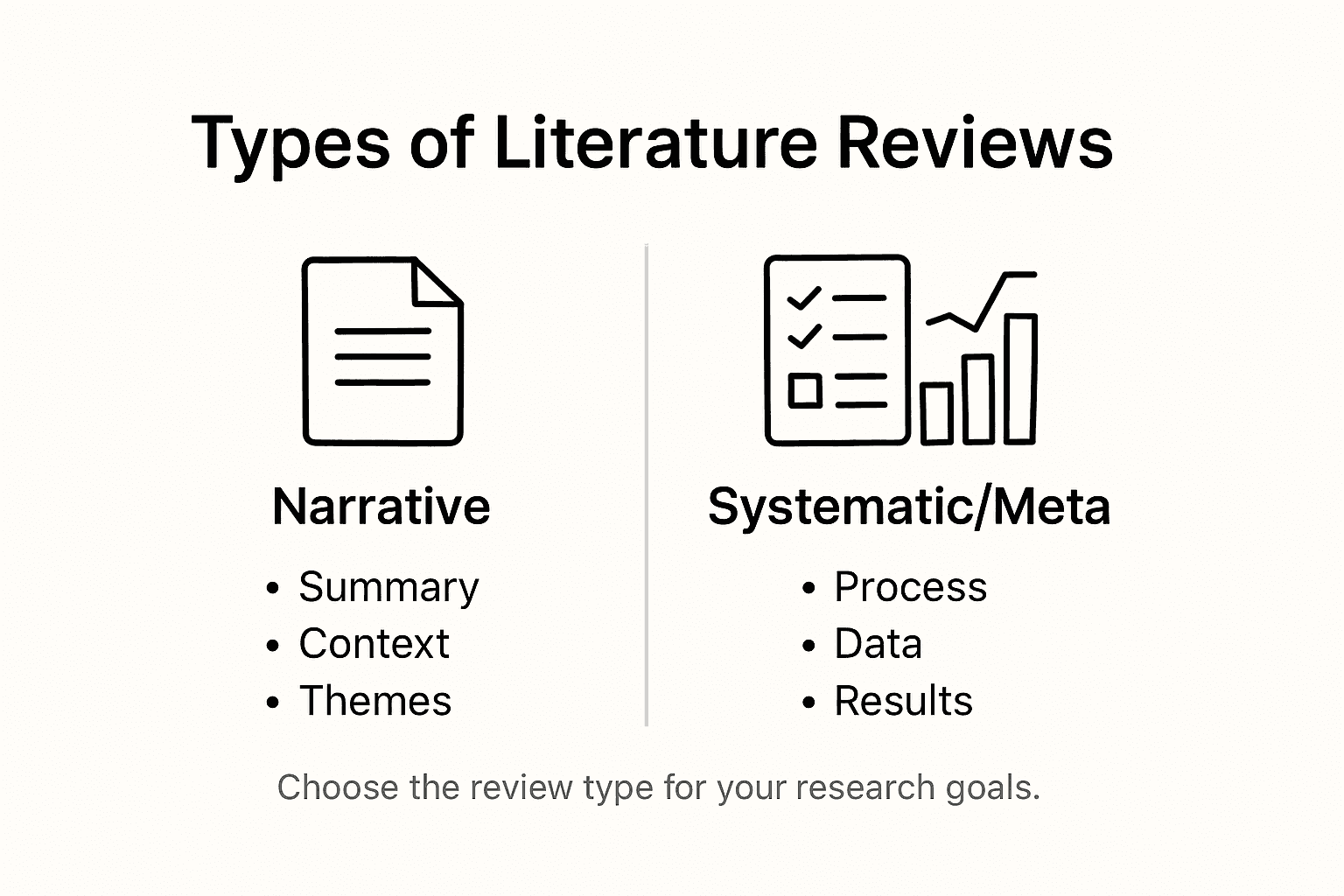
Elk reviewtype presenteert unieke sterke punten en methodologische overwegingen. Narratieve reviews excelleren in het bieden van uitgebreide theoretische context en het verkennen van opkomende onderzoekstrends. Systematische reviews geven prioriteit aan methodologische transparantie en reproduceerbaarheid, waardoor ze ideaal zijn voor evidence-based praktijken in velden zoals gezondheidszorg en sociale wetenschappen. Meta-analyses bieden krachtige statistische inzichten door gegevens over meerdere studies te aggregeren, waardoor onderzoekers meer definitieve conclusies kunnen trekken over complexe onderzoeksvragen. Onderzoekers moeten hun reviewbenadering zorgvuldig selecteren op basis van hun specifieke onderzoeksdoelstellingen, beschikbare gegevens en disciplinaire standaarden.
Hier is een vergelijking van de belangrijkste literatuuroverzichttypes en hun onderscheidende academische toepassingen:
| Reviewtype | Hoofddoel | Typische Gebruikssituaties | Belangrijk Kenmerk |
|---|---|---|---|
| Narratieve Review | Brede theoretische overzicht | Opkomende onderwerpen, kaders | Gesynthetiseerde interpretaties |
| Systematische Review | Uitgebreide bewijskrachtkaart | Beleid, gezondheidszorg, wetenschap | Strikte methodologische protocollen |
| Meta-analyse | Resultaten statistisch combineren | Klinische proeven, onderwijs | Kwantitatieve gegevenssynthese |
Pro Tip: Reviewtype Selectie: Stem je reviewmethodologie af op je onderzoeksdoelen door de diepte van de vereiste analyse, het beschikbare onderzoeksvolume en specifieke disciplinaire verwachtingen voor wetenschappelijk onderzoek in overweging te nemen.
Citatienormen vormen de ruggengraat van academische geloofwaardigheid, door een gestructureerde benadering te bieden voor het erkennen van wetenschappelijke bijdragen en het behouden van intellectuele integriteit. APA-formatteringsrichtlijnen vertegenwoordigen een van de meest gebruikte citatiesystemen in academische disciplines, met uitgebreide regels voor het verwijzen naar en documenteren van onderzoeksbronnen. Deze standaarden zorgen ervoor dat onderzoekers systematisch de oorsprong van academische claims kunnen traceren en verifiëren, waardoor een transparant en verantwoord wetenschappelijk communicatieproces ontstaat.

De twee primaire citatiestijlen—APA en MLA—hebben elk specifieke vereisten voor het formatteren van in-tekst citaties, referentielijsten en de algehele documentstructuur. APA (American Psychological Association) stijl gebruikt doorgaans een auteur-datum citatiemethode, met in-tekst haakjesverwijzingen en een gedetailleerde referentielijst aan het einde van het document. MLA (Modern Language Association) stijl, vaak gebruikt in de geesteswetenschappen, hanteert een naam-pagina citatieformaat met een werken-cited pagina. Beide stijlen vereisen specifieke opmaak voor verschillende brontypen, waaronder boeken, tijdschriftartikelen, websites en elektronische bronnen, met genuanceerde regels voor het omgaan met meerdere auteurs, bedrijfsbronnen en secundaire citaties.
Belangrijke elementen van effectieve citatie zijn consistente opmaak, nauwkeurige broninformatie en uitgebreide referentiedocumentatie. Onderzoekers moeten aandacht besteden aan details zoals publicatiedata, auteursnamen, paginanummers en digitale objectidentificatoren (DOIs). Elke citatiestijl heeft unieke vereisten voor interpunctie, hoofdlettergebruik en bronpresentatie. Academische schrijvers moeten officiële stijlgidsen raadplegen, citatiemanagementtools gebruiken en hun referentielijsten zorgvuldig proeflezen om volledige naleving van de gekozen citatiestandaard te waarborgen. Het begrijpen van deze ingewikkelde richtlijnen helpt onderzoekers hun wetenschappelijke werk met maximale duidelijkheid en professionele precisie te communiceren.
Deze tabel vat de belangrijkste verschillen in citatiestijlen samen voor snelle referentie:
| Citatiesstijl | In-tekst Formaat | Naam Referentielijst | Gemeenschappelijke Disciplines |
|---|---|---|---|
| APA | Auteur-Datum (Smith, 2021) | Referenties | Sociale wetenschappen, psychologie |
| MLA | Auteur-Pagina (Smith 123) | Werken Cited | Geesteswetenschappen, literatuur |
Pro Tip: Citatiemanagement: Investeer in betrouwbare citatiemanagementsoftware die meerdere stijlen ondersteunt en automatisch referentielijsten genereert om handmatige opmaakfouten te minimaliseren en aanzienlijke onderzoekstijd te besparen.
Literatuuroverzichtsynthese transformeert individuele onderzoeksbronnen van geïsoleerde stukken in een uitgebreide, onderling verbonden wetenschappelijke narratief. Geavanceerde synthesetechnieken stellen onderzoekers in staat verder te gaan dan eenvoudige samenvatting, door genuanceerde interpretaties te creëren die diepere academische inzichten en onderzoekspatronen onthullen. Deze benadering vereist strategische analyse die verbindingen, contrasten en opkomende themas identificeert over meerdere wetenschappelijke bronnen.
Succesvolle literatuuroverzichtsorganisatie hangt af van het ontwikkelen van een gestructureerde maar flexibele benadering voor het categoriseren van onderzoeksmaterialen. Onderzoekers kunnen bronnen effectief synthetiseren door verschillende belangrijke strategieën te implementeren: thematische clustering, die studies groepeert op conceptuele overeenkomsten; chronologische mapping, die theoretische ontwikkelingen in de tijd volgt; en vergelijkende analyse, die tegenstrijdigheden en complementaire bevindingen benadrukt. Thematische organisatie blijkt bijzonder krachtig, waardoor schrijvers een narratief kunnen construeren dat bredere wetenschappelijke gesprekken onthult in plaats van geïsoleerde individuele studies te presenteren.
Het syntheseproces omvat kritisch intellectueel werk dat verder gaat dan mechanische informatieverzameling. Onderzoekers moeten elke bron kritisch evalueren op methodologie, theoretisch kader en empirische bevindingen, waarbij patronen van overeenstemming, tegenstrijdigheid en opkomende onderzoekshiaten worden geïdentificeerd. Deze analytische benadering vereist een balans tussen beschrijvende rapportage en kritische interpretatie. Academische schrijvers moeten streven naar het creëren van een coherent narratief dat een uitgebreid begrip aantoont en tegelijkertijd originele inzichten biedt in het onderzoekslandschap, waardoor hun werk uiteindelijk binnen de bredere wetenschappelijke discussie wordt gepositioneerd.
Pro Tip: Synthesestrategie: Creëer een kleurgecodeerd annotatiesysteem voor onderzoeksbronnen, met verschillende markeerstiften of digitale markeringen om themas, methodologische benaderingen en belangrijke bevindingen over meerdere studies te volgen.
Onderzoekers komen vaak kritieke uitdagingen tegen bij het ontwikkelen van hun Review of Related Literature (RRL), met talrijke potentiële valkuilen die de academische geloofwaardigheid kunnen ondermijnen. Veelgemaakte fouten in onderzoeks literatuuroverzichten onthullen systematische fouten die de wetenschappelijke kwaliteit van academisch schrijven aanzienlijk kunnen compromitteren. Het begrijpen van deze potentiële misstappen is cruciaal voor het creëren van een robuust, intellectueel rigoureus literatuuroverzicht dat oprechte academische verfijning aantoont.
Verschillende fundamentele fouten kunnen een effectief literatuuroverzicht ontsporen. Onvoldoende brondiversiteit vormt een primaire zorg, waarbij onderzoekers te veel vertrouwen op een beperkt aantal bronnen of nalaten hedendaagse wetenschappelijke bijdragen op te nemen. Even problematisch is oppervlakkige samenvatting, waarbij schrijvers slechts individuele studies herhalen zonder hun verbindingen, theoretische implicaties en bredere onderzoekscontext kritisch te analyseren. Academische schrijvers moeten ook waken voor chronologische desorganisatie, die het narratief fragmenteert en voorkomt dat lezers het evolutionaire traject van onderzoek in een specifiek veld begrijpen.
Naast structurele problemen moeten onderzoekers waakzaam zijn voor meer genuanceerde uitdagingen die de integriteit van hun literatuuroverzicht kunnen compromitteren. Plagiaat, of het nu opzettelijk of per ongeluk is, vormt een aanzienlijk risico en kan leiden tot ernstige academische gevolgen. Onderzoekers moeten zich richten op het synthetiseren van ideeën in plaats van het kopiëren van tekst, waarbij ze zorgen voor juiste citatie en originele interpretatie. Bovendien kan het niet identificeren van duidelijke onderzoekshiaten of het nalaten aan te tonen hoe de huidige studie bijdraagt aan bestaande kennis een literatuuroverzicht ineffectief maken. De meest overtuigende reviews vatten niet alleen bestaand onderzoek samen, maar evalueren ook kritisch methodologische sterktes en beperkingen, waardoor nieuw onderzoek binnen een bredere wetenschappelijke discussie wordt gepositioneerd.
Pro Tip: Kritische Reviewstrategie: Ontwikkel een systematische benadering voor bronbeoordeling door een gedetailleerde matrix te maken die de methodologie, belangrijkste bevindingen, theoretisch kader en mogelijke beperkingen van elke bron bijhoudt voordat je begint met het schrijven van je literatuuroverzicht.
Het opbouwen van onderzoeksgeloofwaardigheid vereist meer dan alleen het verzamelen van bronnen. Het artikel benadrukt uitdagingen zoals het effectief synthetiseren van literatuur, het vermijden van plagiaat en het naleven van citatiestandaarden zoals APA en MLA. Als je moeite hebt met het organiseren van complexe informatie, het behouden van originaliteit of het zorgen voor juiste citaties, ben je niet alleen. Dit zijn veelvoorkomende hindernissen die het schrijven van je Review of Related Literature overweldigend kunnen maken.
Ontgrendel een slimmere manier om je literatuuroverzicht te maken met Samwell.ai. Ons AI-gedreven platform helpt je hoogwaardige, originele inhoud te genereren terwijl je wordt begeleid om correct citatieformaten moeiteloos toe te passen. Gebruik functies zoals de Power Editor om je analyse te verdiepen en de Guided Essays om duidelijke, impactvolle verhalen te bouwen. Krijg real-time plagiaatcontroles en blijf voorop met Semihuman.ai-technologie die academische integriteit verbetert. Neem vandaag nog de controle over je onderzoeks schrijven door Samwell.ai te bezoeken en zie hoe we duizenden studenten en academici helpen hun literatuuroverzichten en essays met vertrouwen te perfectioneren.
Een gerelateerd literatuuroverzicht synthetiseert bestaand onderzoek om een wetenschappelijke context te bieden voor nieuwe onderzoeken, waarbij het begrip van een onderzoeker van de huidige kennis wordt aangetoond en onderzoekshiaten worden benadrukt.
Het kiezen van het juiste type literatuuroverzicht hangt af van je onderzoeksdoelstellingen. Narratieve reviews zijn goed voor contextuele overzichten, systematische reviews voor uitgebreide bewijskrachtkaarten, en meta-analyses voor statistische synthese van gegevens uit meerdere studies.
Veelgemaakte fouten zijn onder andere onvoldoende brondiversiteit, oppervlakkige samenvatting zonder kritische analyse, chronologische desorganisatie, en het niet identificeren van duidelijke onderzoekshiaten of het aantonen van de bijdrage van je studie aan bestaande kennis.
Je kunt literatuur effectief synthetiseren door thematische clustering, chronologische mapping en vergelijkende analyse te gebruiken om je bronnen te organiseren, zodat je narratief de verbindingen tussen individuele studies onthult en bredere wetenschappelijke gesprekken laat zien.