Loading...

Nearly half of American college students admit struggling to organize their thoughts before drafting academic essays. Efficient outlining not only streamlines your argument but also reduces chances of unintentional plagiarism. For humanities undergraduates, mastering essay structure boosts originality and strengthens every submission. This guide offers practical steps that help you build logical, well-supported outlines, whether you study in France, India, or the United States.
| Takeaway | Explanation |
|---|---|
| 1. Create a Strategic Outline | An outline helps organize thoughts and ensures a coherent structure throughout your essay. |
| 2. Gather High-Quality Research Materials | Collect and evaluate credible academic sources that directly support your thesis to enhance the quality of your arguments. |
| 3. Develop a Clear Thesis Statement | A precise thesis statement guides your writing and summarizes your main argument, ensuring focus and clarity. |
| 4. Use Effective Headings | Main headings organize your essay, making it navigable and helping readers follow your logical progression. |
| 5. Review and Revise | Regularly revising your outline for clarity and coherence helps strengthen your argument and maintain logical flow throughout your essay. |
An essay outline is your strategic roadmap for academic writing. Think of it as a blueprint that transforms scattered thoughts into a coherent, logically structured argument.
At its core, an outline helps you organize and visualize your ideas before diving into actual writing. By creating a systematic framework for your essay, you can strategically map out your thesis, supporting arguments, and evidence.
The primary purpose of an essay outline is to provide clear direction and prevent random wandering in your writing. It allows you to identify potential gaps in your argument, ensure logical progression of ideas, and maintain focus on your central thesis. Without an outline, writers often struggle with disjointed paragraphs and unclear messaging.
Creating an effective outline involves breaking down your essay into key components: introduction, body paragraphs, and conclusion. Each section should connect seamlessly, with every paragraph serving a specific purpose in advancing your overall argument. This structured approach helps you stay organized and ensures that every point contributes meaningfully to your central argument.
Pro tips for effective outlining:
Pro tip: Start your outline with a clear thesis statement and use Roman numerals and letters to hierarchically organize your main points and supporting details.
Research materials are the foundation of any powerful academic essay. Collecting and organizing your sources strategically transforms your writing from mediocre to exceptional.
The goal of gathering research materials is not just accumulating information but creating a systematic approach to scholarly research. You want to collect high quality academic sources that directly support your thesis and provide robust evidence for your arguments.
Effective research gathering involves multiple steps:
Academic Sources: Focus on peer reviewed journals, academic books, scholarly publications, and reputable online academic databases. University library resources are typically more reliable than general internet searches.
Source Evaluation: Not all sources are created equal. Evaluate each source for credibility, relevance, currency, and academic rigor. Check the author's credentials, publication date, and the reputation of the publishing institution.
Note Taking Strategy: Create a systematic method for tracking your sources. Use digital tools like reference management software or create a spreadsheet that captures key information such as source title, author, publication date, key quotes, and potential relevance to your thesis.
Organize Thematically: Group your research materials around key themes or arguments rather than collecting random information. This approach helps you see connections between sources and build a more coherent argument.
Digital Organization: Use reference management tools like Zotero or Mendeley to keep your sources organized and easily accessible. These tools can help you generate citations and maintain a clean research workflow.
Pro tip:
Pro tip: Create a research tracking document where you summarize each source in 23 sentences, highlighting its most relevant insights and potential connection to your specific essay argument.
A thesis statement is the compass that guides your entire academic essay. It represents the core argument you will explore and defend throughout your paper.
Developing a clear and precise thesis statement transforms an ordinary essay into a compelling academic argument. Your thesis should be specific, arguable, and directly address the assignment requirements while presenting a focused perspective on your chosen topic.
Key Characteristics of a Strong Thesis:
Specificity Matters: A powerful thesis is narrow and precise rather than broad and vague. Instead of claiming something general like "Social media is important," craft a specific argument such as "Social media algorithms contribute to increased political polarization among young adults."
Argumentative Position: Your thesis must make a claim that someone could potentially disagree with. It should spark intellectual discussion and invite critical analysis. A good thesis presents an interpretation or evaluation rather than simply stating a fact.
Evidence Driven: Ensure your thesis can be substantiated with credible research and evidence from your gathered sources. Your subsequent paragraphs will provide the supporting arguments that prove your central claim.
Strategic Placement: Position your thesis statement at the end of your introduction. This location signals to readers the specific direction and scope of your academic exploration.
Revision Friendly: Understand that your initial thesis might evolve as you conduct deeper research. Remain flexible and willing to refine your argument based on emerging insights.
Pro tip:
Pro tip: Draft multiple thesis statement versions and read them aloud to assess their clarity, argument strength, and potential for engaging academic discourse.
Main headings are the architectural blueprint of your academic essay. They transform a complex document into a navigable, structured narrative that guides your readers through your argument.
Understanding effective document structure and headings is crucial for creating a clear and professional academic paper. Your headings should serve as signposts that help readers understand the logical progression of your ideas.
Strategic Heading Development:
Clarity is Key: Choose headings that are concise, descriptive, and directly reflect the content of each section. Avoid vague titles that could confuse readers about the section's purpose.
Hierarchical Organization: Use a consistent heading structure that shows the relationship between different sections. Typically, this means using different levels of headings Roman numerals, capital letters, or numerical systems to demonstrate content hierarchy.
Typical Academic Essay Headings:
Parallel Structure: Maintain consistent grammatical structure across your headings. If one heading starts with a verb, all should follow that pattern. If using noun phrases, keep that format throughout.
Formatting Consistency: Follow specific academic style guidelines MLA, APA, or Chicago for precise heading formatting. Pay attention to capitalization, font, and spacing requirements.
Pro tip:
Pro tip: Draft your headings before writing full sections to create a roadmap that helps you stay focused and ensures logical flow between different parts of your essay.
Breaking down your essay into well structured supporting points transforms a basic argument into a compelling academic narrative. Each section of your essay should work like a precision instrument advancing your central thesis.
Understanding how to develop strong supporting paragraphs is crucial for creating a persuasive academic argument. Your supporting points must connect logically and provide clear evidence for your main claims.
Constructing Effective Supporting Points:
Topic Sentence Strategy: Begin each paragraph with a clear topic sentence that directly relates to your thesis. This sentence acts as a mini thesis for that specific section, guiding readers through your argument.
Evidence Hierarchy: Organize your supporting points from most to least significant. This approach ensures that your strongest arguments appear early and create a powerful initial impression.
Types of Supporting Evidence:
Connection to Thesis: Ensure every supporting point directly reinforces your central argument. Each paragraph should include a clear link back to your original thesis statement.
Coherence and Flow: Create smooth transitions between paragraphs. Each supporting point should build upon the previous one, creating a cohesive narrative progression.
Pro tip:
Pro tip: Create a reverse outline after drafting your first version to verify that each paragraph contributes meaningfully to your overall argument and connects logically to your thesis.
The sequence of your ideas can make or break your academic essay. A well arranged argument flows like a compelling story, guiding readers through your intellectual landscape with clarity and purpose.
Mastering logical idea progression in academic writing transforms an ordinary paper into a sophisticated intellectual journey. Your goal is to create a seamless narrative that leads readers effortlessly from one point to the next.
Strategies for Logical Sequencing:
Chronological Progression: For topics with a time based narrative, arrange ideas in sequential order. This works exceptionally well for historical analysis, scientific developments, or process explanations.
Order of Importance: Start with your most compelling argument and progress to supporting points. This approach ensures your strongest evidence appears early and captures reader attention.
Thematic Clustering: Group related ideas together, creating coherent sections that explore different facets of your central argument. Each thematic cluster should build upon the previous one.
Common Organizational Patterns:
Transitional Signposting: Use clear transitional phrases that help readers understand how different sections connect. Words like "furthermore," "consequently," and "in contrast" provide intellectual roadmaps.
Coherence Check: After drafting, review your outline to ensure each section flows naturally into the next. Your ideas should feel interconnected, not randomly assembled.
Pro tip:
Pro tip: Create a reverse outline after completing your draft to verify that your ideas progress logically and each section contributes meaningfully to your overall argument.
The final stage of creating an outstanding essay outline is meticulous review and revision. This crucial step transforms a good outline into an exceptional academic document.
Effective essay revision requires systematic examination of structural coherence and ensures your argument flows logically and persuasively.
Comprehensive Revision Strategies:
Read Aloud Technique: Reading your outline verbally helps identify awkward phrasing, logical gaps, and areas that need refinement. Your ears will catch what your eyes might miss.
Logical Flow Evaluation: Examine how each section transitions into the next. Your outline should feel like a smooth intellectual journey, with each point building naturally upon the previous one.
Checklist for Outline Revision:
Remove Redundancies: Eliminate repetitive points or unnecessary sections that do not contribute meaningfully to your argument. Academic writing demands precision and concision.
External Perspective: Consider asking a peer or academic advisor to review your outline. Fresh eyes can identify blind spots in your logical structure.
Consistency Check: Maintain uniform formatting, grammatical structure, and citation style throughout your outline.
Pro tip:
Pro tip: Create a reverse outline by summarizing each paragraph in one sentence to quickly identify structural weaknesses and improve overall clarity.
Below is a comprehensive table summarizing the main concepts and strategies for creating an essay outline, as discussed in the article.
| Topic | Description | Key Considerations |
|---|---|---|
| Purpose of an Essay Outline | Transforms dispersed ideas into a structured argument, facilitating coherence in writing. | Ensures logical progression, clarity, and central thesis focus. |
| Components of an Effective Outline | Divides into introduction, body paragraphs, and conclusion, each connected seamlessly to support the essay's thesis. | Maintains an organized framework ensuring every paragraph serves its purpose. |
| Gathering and Organizing Research | Involves collecting credible academic sources and evaluating them for their support to the thesis. Maintains a systematic approach for documentation and citation. | Uses reference management tools such as Zotero. |
| Developing a Thesis Statement | Focuses on crafting a specific, arguable position directly addressing the essay's topic. | Revise as research deepens and the paper evolves. |
| Main Headings and Subdivision | Structures the essay with concise headings reflecting the section's purpose. Aids in navigation and logical development of arguments. | Formats according to academic style guidelines, ensuring clarity and coherence. |
| Supporting Evidence and Points | Details should include evidence such as statistics, expert opinions, or logical analysis, building upon the thesis with coherence and progression. | Connects every argument to the thesis while ensuring individual coherence within paragraphs. |
| Logical Sequencing | Employs strategies such as chronological order, importance hierarchy, or thematic clustering for organized idea flow. | Transitional phrases and thematic alignment ensure seamless intellectual progression. |
| Reviewing the Outline | Entails evaluating for structural coherence, logical gaps, and stylistic consistency. | Enhances quality and clarity through audience perspectives and meticulous revisions. |
| Effective Tools and Practices | Utilizes digital reference management and employs structured note-taking strategies. | Enables efficient access to research material and consistency in citations. |
This table captures the article's core strategies for formulating an impactful and well-organized essay outline, geared toward academic success.
Creating an effective essay outline involves clear thesis development, logical sequencing, and well-structured supporting points. Many students struggle to organize their research materials and craft precise sections that flow naturally while maintaining focus on the central argument. With challenges like evaluating sources, generating concise thesis statements, and ensuring smooth transitions, it can feel overwhelming to produce a high-quality academic essay.
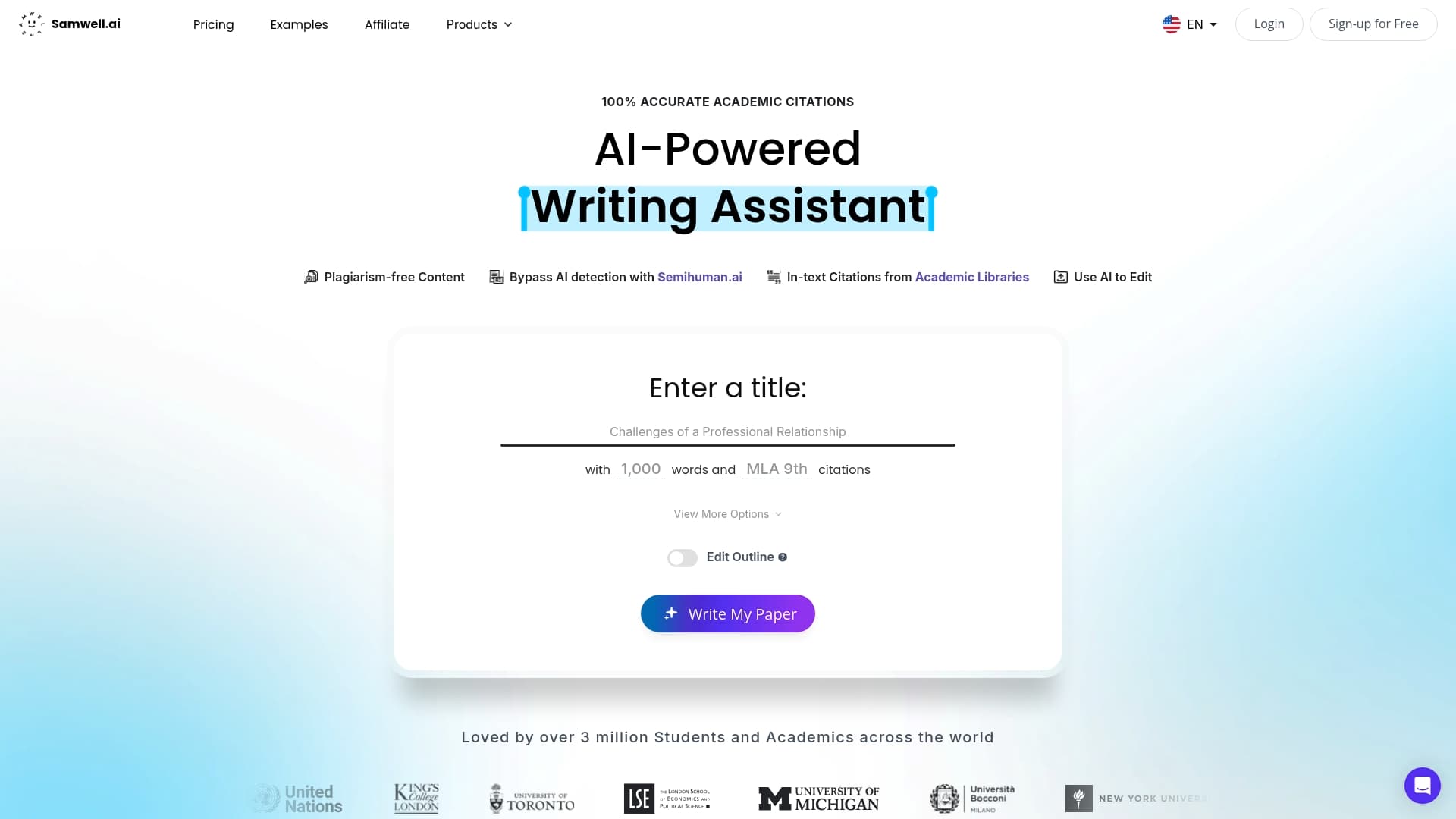
Experience how Samwell.ai transforms your essay writing process. Our advanced AI-powered platform offers tools like Guided Essays for structured outlines, a Power Editor to refine your arguments, and real-time AI detection ensuring originality and academic integrity. Hundreds of thousands of students and academics trust Samwell.ai to overcome the pain points outlined in this essay guide. Start organizing your ideas with ease and create compelling, well-supported essays today. Visit Samwell.ai and take your first step toward academic excellence.
An effective essay outline includes a clear thesis statement, main headings for major sections, and detailed supporting points for each section. Begin by structuring your outline into an introduction, body paragraphs, and conclusion to maintain logical flow.
To gather research materials, focus on high-quality academic sources such as peer-reviewed journals and scholarly publications. Organize them thematically around your main arguments to ensure each source directly supports your thesis.
When developing your thesis statement, ensure it is specific, arguable, and backed by evidence from your research. A clear thesis should be positioned at the end of your introduction to set the direction for your essay.
To arrange your ideas logically, consider using chronological progression or order of importance to guide the reader through your arguments. After drafting, create a reverse outline to check if your ideas connect seamlessly and contribute to your overall thesis.
To review your outline, read it aloud to catch any awkward phrasing or logical gaps. Use a checklist to evaluate alignment with your thesis, relevance of evidence, and effectiveness of transitions.
Headings serve as signposts that help readers navigate your essay by clearly indicating the content of each section. Use a consistent hierarchical structure to enhance clarity and maintain document organization.