Loading...

Every student faces the challenge of understanding what technology really means within modern society. The modern meaning of technology emerged during waves of industrial, scientific, and corporate change, shifting from mechanical arts to a vast collection of knowledge, systems, and digital tools. Knowing how technology shapes academic life helps you use AI-assisted platforms wisely while maintaining academic integrity and making your essays more impactful.
| Point | Details |
|---|---|
| Evolving Definition of Technology | Technology now includes software, systems, and social innovations, shaping how we communicate and learn. |
| Cultural Influence | Modern technology affects economic, political, and social structures, illustrating its integral role in daily life. |
| Benefits and Challenges | While technology provides access to information and improved healthcare, it also presents issues like privacy concerns and screen addiction. |
| Ethical Considerations | Students must navigate ethical dilemmas related to data privacy and academic integrity as technology continues to evolve. |
Technology isn't just gadgets or machines anymore. The word itself has transformed dramatically over the past century, shifting from describing mechanical arts to representing something much broader and more abstract.
In the early 1900s, technology's meaning evolved significantly during waves of industrial, scientific, and corporate change. Rather than referring only to specific tools or techniques, technology came to mean society's entire collection of technical knowledge, equipment, and systems. This shift reflected a fundamental change in how humans interact with innovation.
Today, technology encompasses far more than hardware:
Modern technology shapes how you communicate, work, and learn. It influences economic systems, political structures, and social values worldwide. Technology and society remain deeply interconnected, each continuously influencing the other.
You experience this daily. Your phone connects you instantly to classmates across continents. Online research papers replace hours in libraries. Learning management systems organize your assignments and grades.
Technology promised progress and abundance. It delivered unprecedented access to information, medical breakthroughs, and global connectivity. Yet it also created new challenges.
The benefits and drawbacks exist simultaneously:
Technology isn't inherently good or bad—it reflects the values, priorities, and choices embedded within it by those who design and deploy it.
Understanding technology's true meaning helps you navigate academic life more thoughtfully. You're not just using tools; you're participating in a system shaped by complex social, economic, and cultural forces.
As you write essays, conduct research, and submit assignments online, you're relying on technological infrastructure built by countless people over decades. Recognizing this broader context transforms how you think about academic integrity, information reliability, and your role as a student in a technology-driven world.
When you use academic writing platforms, you're engaging with modern technology's promise: making knowledge more accessible while maintaining ethical standards.
Pro tip: When researching essay topics, distinguish between technology as mere tools and technology as a social system that shapes human behavior—this nuance strengthens your critical analysis and essay arguments.
Technology comes in many forms, and understanding the main categories helps you recognize how different innovations shape your academic work. From information systems to biotechnology, each type serves distinct purposes and impacts learning differently.
Technology combines both physical and knowledge components. Hardware includes the tangible tools and machines you interact with daily: your laptop, smartphone, printer, or laboratory equipment. Software encompasses the knowledge, instructions, and systems that make hardware function.
This distinction matters for students. Your laptop alone is useless without operating systems, applications, and the knowledge of how to use them. Both components work together as an integrated system.
Here's a comparison of hardware and software components in academic technology:
| Component | Example in Academia | Primary Function | Impact on Learning |
|---|---|---|---|
| Hardware | Laptop, projector, lab tools | Facilitates physical tasks | Enables access to digital resources |
| Software | Word processor, LMS, databases | Processes information | Organizes, analyzes, and shares knowledge |
| Integration | Video conferencing setup | Combines hardware/software | Supports remote collaboration and engagement |
Technology spans numerous domains affecting different aspects of modern society:
You encounter multiple technology types daily as a student. Academic writing often relies on various digital tools and platforms that streamline research, collaboration, and submission processes.
Your university provides:
Technologies don't remain static. They undergo continuous cycles of invention, innovation, and adoption. New discoveries build upon existing systems, creating interconnected clusters of related technologies.
Consider how essay writing has evolved. Typewriters led to word processors, which became cloud-based collaborative tools. Each generation built upon the previous one, making writing more accessible and collaborative.
Technologies often form interdependent systems where one innovation enables or transforms others, creating cascading effects across society.
Recognizing technology types helps you choose appropriate tools for assignments. Different projects benefit from different technologies. A literature review requires robust database access and reference management software. A multimedia presentation demands video editing and design platforms.
Understanding these distinctions strengthens your critical thinking about which technologies serve your academic goals most effectively.
Pro tip: When starting an essay, inventory which technologies you'll use—research databases, writing platforms, citation managers—and ensure each aligns with your assignment requirements and maintains academic integrity standards.
Technology shapes nearly every aspect of your daily routine, from how you communicate with classmates to how you absorb course material. Its influence on learning is profound but complex, bringing both remarkable opportunities and genuine challenges.

Digital tools transform passive learning into active participation. Your professors use videos, interactive simulations, and real-time polling to hold your attention. Learning management systems adapt to your pace, allowing you to review lectures multiple times at speeds that work for you.
Technology enhances student engagement through digital tools, supporting personalized learning pathways that traditional textbooks cannot match. When used strategically, technology motivates students and creates opportunities for deeper understanding.
Benefits you experience directly:
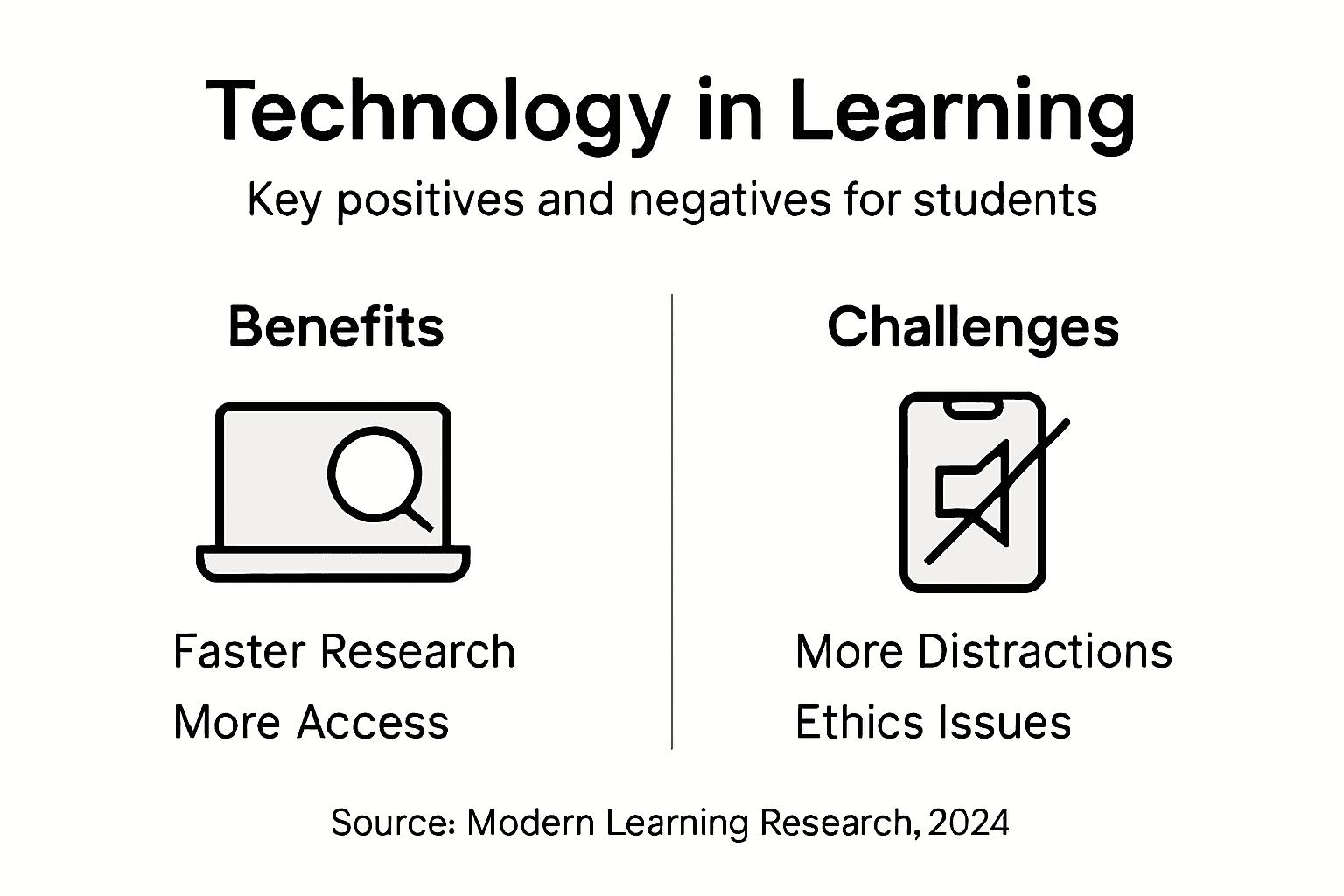
The same devices enhancing your learning also derail it. Social media notifications, gaming apps, and endless streaming consume attention meant for studying. Research shows that students who multitask between coursework and digital distractions significantly underperform.
Your brain struggles to switch contexts repeatedly. Opening your email while writing an essay fractures focus. Each interruption costs real time—sometimes 15-20 minutes to regain concentration.
Overreliance on technology can weaken essential academic abilities. Spell-check reduces spelling retention. Calculator dependence diminishes mental math fluency. Too much screen time affects handwriting and note-taking skills.
Technology works best when integrated thoughtfully—amplifying human capabilities rather than replacing the cognitive work that builds genuine learning.
Proper training and intentional design matter tremendously. Your university's most effective courses blend technology strategically with traditional methods.
As you write essays and research papers, technology creates both advantages and pitfalls. Digital research databases grant access to thousands of scholarly articles instantly. But this abundance creates decision paralysis and encourages surface-level skimming over deep reading.
When approaching academic writing, understanding how AI tools support your process helps you leverage technology productively while maintaining academic integrity and developing your own analytical voice.
The answer isn't rejecting technology—it's using it intentionally. Disable notifications during study sessions. Separate social apps from academic tools. Schedule specific times for checking messages instead of constant monitoring.
Your most successful academic experiences likely combine human interaction with strategic technology use. Study groups over video calls, readings supplemented by digital lectures, and handwritten notes processed through typed summaries.
Pro tip: When tackling assignments, identify which technologies genuinely support your learning and which create distraction; use blocking apps or separate devices to eliminate temptation during focused work periods.
Technology advances faster than society can assess its consequences. As a student, you face ethical dilemmas daily—from plagiarism detection to data privacy—that previous generations never encountered. Understanding these challenges helps you navigate academic integrity with confidence.
Your university collects enormous amounts of personal information. Learning management systems track which videos you watch, how long you study, and when you submit assignments. This data reveals patterns about your behavior and learning habits.
Technology ethics examines privacy concerns and moral responsibilities that arise from data collection and surveillance. Who accesses your information? How is it stored? These questions matter because misused data can affect your academic record, financial aid, or future opportunities.
Data security risks include:
Artificial intelligence tools can generate essays, solve problems, and produce research in seconds. The ethical line between assistance and cheating blurs quickly. Your professor cannot always distinguish between your original thinking and AI-generated content.
Universities struggle to define what constitutes academic dishonesty when AI tools become commonplace. Some institutions permit AI as a brainstorming partner; others consider any AI use plagiarism. You must understand your university's specific policies before using these tools.
Technology manufacturing carries hidden costs. Mining rare earth minerals for devices damages ecosystems and exploits workers in developing nations. Server farms powering cloud storage consume massive amounts of electricity.
These impacts:
Technology's ethical impact extends beyond individual users to encompass environmental sustainability and social equity on a global scale.
AI systems learn from historical data, perpetuating existing biases. If grading algorithms trained on past records reflect historical discrimination, they'll continue that discrimination automatically. Recommendation systems may steer certain students toward specific majors based on demographic patterns.
You might never know you're being influenced by biased algorithms. The system appears neutral and objective, but human prejudices programmed into it shape your options invisibly.
You're not powerless. Making conscious choices about technology use supports ethical practices. Question what data you're sharing. Read privacy policies. Use strong passwords. Cite your sources properly. Report suspicious activity.
Your awareness of these issues, combined with intentional action, contributes to more responsible technology use in academia.
Here's a summary of key ethical concerns students should consider when using technology:
| Ethical Issue | Academic Scenario | Potential Risk | Student Action |
|---|---|---|---|
| Data Privacy | Using learning platforms | Exposure of sensitive info | Check privacy settings |
| Academic Integrity | AI-generated essays | Unintentional plagiarism | Review university policies |
| Algorithmic Bias | Automated grading | Unfair assessments | Advocate for transparency |
| Environmental Impact | Device disposal | Electronic waste | Recycle devices responsibly |
Pro tip: Before using any new academic technology platform, review its privacy policy and your university's guidelines; knowing the ethical boundaries beforehand prevents costly mistakes and helps you use tools responsibly.
Writing about technology requires more than listing facts about devices or describing innovations. Your essay needs a clear argument that makes readers think differently about how technology shapes learning, society, or human experience. This section guides you through building that argument effectively.
Your thesis is your essay's backbone. It's the single claim you'll defend throughout your paper. A strong thesis statement must be arguable and narrowly focused rather than simply stating a fact everyone accepts.
Weak thesis: "Technology is used in schools today."
Strong thesis: "Overreliance on learning management systems reduces student autonomy and diminishes the critical thinking skills that come from independent research."
Notice the difference. The weak version describes what exists. The strong version makes a claim someone might reasonably disagree with—inviting debate and analysis.
Before diving into arguments, explain why your topic matters. Why should readers care about technology's role in modern learning? Connect your specific argument to broader implications:
Framing significance transforms your essay from academic exercise into meaningful exploration.
Effective essays follow logical progression:
Each section builds toward your central insight. Readers follow your reasoning because you've organized it deliberately.
Generalizations weaken essays. Replace vague statements with concrete examples and data. Instead of "Technology helps students," cite specific research showing which technologies improve retention by what percentage.
Evidence types include:
Strong essays acknowledge opposing viewpoints. If you claim technology reduces critical thinking, mention that others argue it democratizes information access. Then explain why your position remains stronger.
This approach shows intellectual honesty and strengthens your credibility.
A debatable thesis guides readers on why your argument matters and what your essay seeks to demonstrate—it's the compass directing your entire paper.
Many technology essays stumble by being too broad. "The impact of technology on society" spans centuries and disciplines. Narrow your focus: "How smartphone notifications interrupt deep learning in college students" is specific and manageable.
Also avoid purely descriptive writing. Don't just explain what technology does—analyze why it matters and what consequences follow.
Pro tip: Before writing your first draft, write your thesis statement separately and test it by asking whether someone could reasonably disagree; if your statement is unchallengeable fact rather than arguable claim, revise until it invites genuine debate.
The article highlights key challenges you face as a student adapting to complex technological systems in learning. From balancing digital tools to navigating AI-generated content ethically, it is clear that writing strong, original essays requires not only critical thinking but also the right technological partner. You deserve a platform that understands how technology shapes modern learning and supports your goal of producing high-quality, credible academic work.
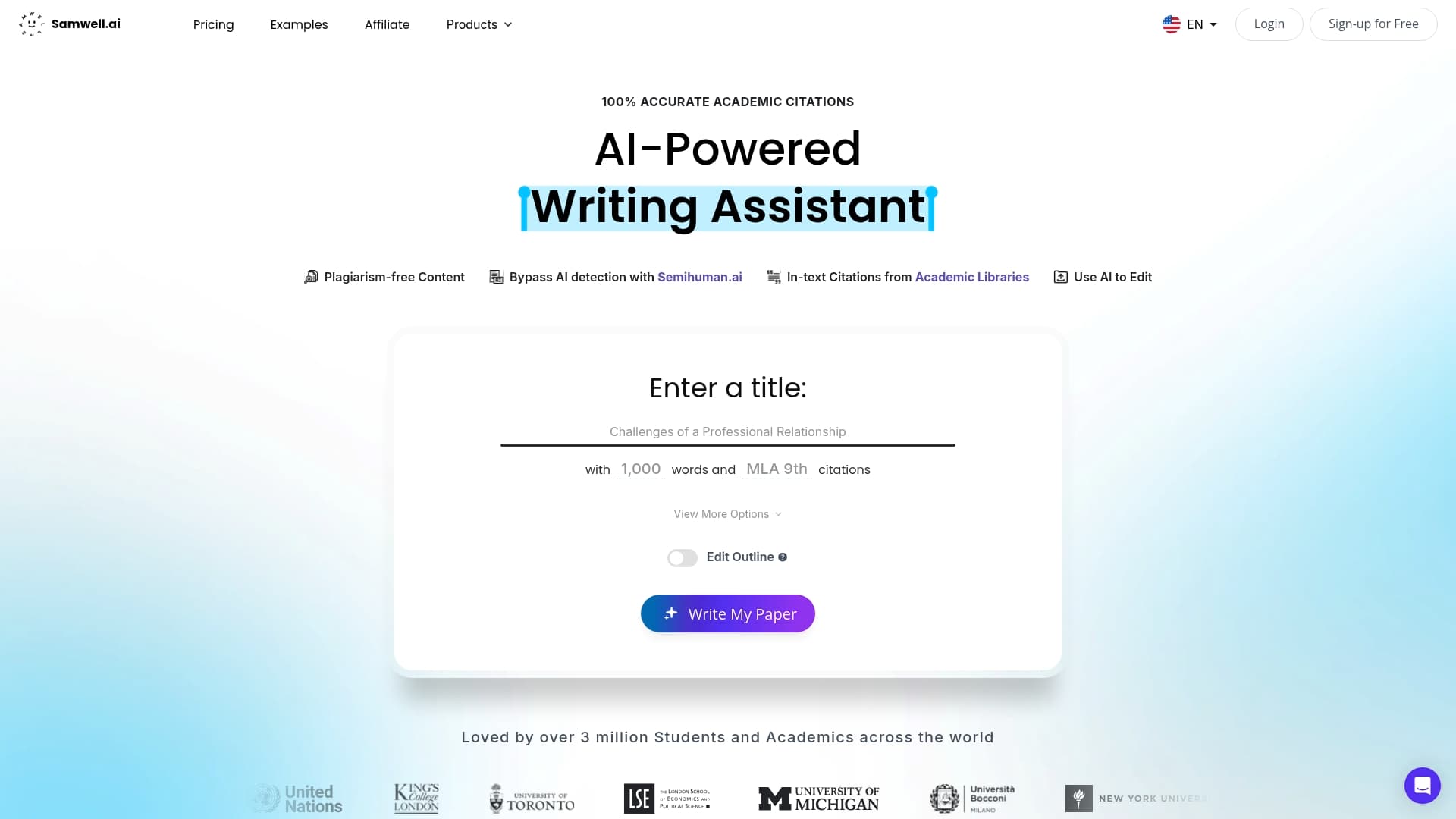
Take control of your essay writing process with Samwell.ai, an advanced AI-driven platform built specifically for students striving to maintain academic integrity while leveraging innovative tools. Utilize features like the 'Power Editor' and 'Guided Essays' to craft well-structured arguments that go beyond description and foster deeper analysis. Check your work in real time to ensure originality and compliance with citation standards, making the most of technology as an empowering force rather than a distraction.
Explore how Samwell.ai complements your understanding of technology's influence on learning by visiting Samwell.ai today and experience smarter essay writing designed for the modern academic landscape.
Technology in education today encompasses not just hardware like computers, but also software, systems, methodologies, and social structures that impact how knowledge is created and shared.
Technology enhances student engagement by utilizing interactive digital tools such as videos and simulations, allowing for personalized learning experiences that cater to individual pacing and styles.
Students face challenges such as distractions from devices, overreliance on technology diminishing critical thinking skills, and ethical concerns related to data privacy and academic integrity.
Understanding the different types of technology helps students choose appropriate tools for their assignments, enhancing their learning experiences and ensuring they use the right technologies for specific academic tasks.