Loading...

Writing about social media can feel overwhelming when definitions seem to shift with every new platform. University students face constant pressure to address complex questions involving privacy, mental health, and misinformation, while academic standards demand original thought and credible sources. With social media stretching from TikTok to global professional networks, this guide will help you build nuanced, research-based arguments that reflect both the diversity and the challenges of digital communication in your essays.
| Point | Details |
|---|---|
| Understanding Social Media's Role | Social media is a multi-faceted digital landscape enabling personal, professional, and educational interactions. It transcends mere entertainment, serving as a sophisticated communication tool. |
| Essay Types for Research | Various essay types, including argumentative and reflective essays, offer students opportunities to critically analyze social media and its impacts. Selecting a topic of genuine interest can enhance the research experience. |
| Platform Features Enhancing Engagement | Modern social platforms provide features like algorithmic recommendations and real-time messaging, significantly impacting user interaction and content engagement. Understanding these features can improve digital communication strategies. |
| Navigating Academic Integrity | Students must stay aware of plagiarism risks, particularly with AI-generated content, and prioritize originality and proper citation practices in their writing. Maintaining meticulous documentation is essential for academic integrity. |
Social media represents a complex digital ecosystem where users interact, share content, and connect across various online platforms. Diverse digital interactions encompass everything from personal networking to professional communication.
Understanding social media requires recognizing its multifaceted nature. At its core, social media comprises digital applications and websites enabling user-to-user, user-to-business, and user-to-community interactions. These platforms range from traditional social networks to modern media-sharing sites like Instagram and TikTok.
Key characteristics of social media include:
Academic perspectives reveal that social media definitions remain complex and multidimensional. Researchers approach social media through varied lenses: technology-centered, user-centered, and usage-centered perspectives. This diversity suggests social media transcends simple categorization.
Common myths about social media often misrepresent its true nature. Many people incorrectly assume social media is just about entertainment or personal connections. In reality, these platforms serve sophisticated communication, professional networking, educational, and business purposes.
Pro tip: Develop a critical and nuanced understanding of social media by exploring multiple platforms and analyzing their unique communication dynamics.
Writing about social media requires understanding the diverse essay types exploring digital communication. Academic papers on social media encompass multiple analytical approaches that help students critically examine the complex digital landscape.
Key essay types for social media research include:
Each essay type offers unique opportunities to analyze social media research topics. Argumentative essays, for instance, challenge students to present balanced perspectives on contentious issues like privacy, mental health, and digital communication ethics.
Here's a quick comparison of common social media essay types and what they help you analyze:
| Essay Type | Typical Focus Area | Skills Developed |
|---|---|---|
| Argumentative | Ethical dilemmas, regulation | Critical thinking, balanced view |
| Persuasive | Platform advocacy, policy | Rhetoric, persuasive writing |
| Cause and Effect | Societal impacts, behaviors | Analytical, logical reasoning |
| Reflective | Personal experience, growth | Self-assessment, introspection |
Popular social media essay topics span multiple disciplines, including psychology, sociology, communication studies, and political science. These topics typically focus on critical areas such as:
Successful social media essays require rigorous research, critical thinking, and an ability to synthesize complex information from diverse sources. Students must move beyond surface-level observations and provide nuanced, evidence-based arguments.
Pro tip: Select a social media essay topic that genuinely interests you and offers meaningful opportunities for original research and critical analysis.
Social platform features have transformed digital communication, offering users unprecedented ways to create, share, and interact with content. Modern platforms provide sophisticated tools that go far beyond simple messaging and connection.
Core Platform Features typically include:
Different social platforms specialize in unique interaction models. Web-based content sharing services enable users to contribute, modify, discuss, and exchange information across various digital environments. Platforms like YouTube focus on video content, while Instagram emphasizes visual storytelling, and Twitter (now X) prioritizes short-form text communication.
Leading social platforms offer increasingly sophisticated features that cater to specific user demographics and interaction preferences. Younger users gravitate toward platforms with dynamic, visually engaging experiences like TikTok and Snapchat, which emphasize ephemeral content and creative video editing tools.
Modern social platforms are characterized by their complex algorithms that curate personalized experiences, recommend content, and create engagement through sophisticated machine learning techniques. These systems analyze user behavior, preferences, and interactions to deliver increasingly targeted and compelling content.
The table below summarizes key platform features and their impact on user engagement:
| Platform Feature | User Benefit | Engagement Impact |
|---|---|---|
| Algorithmic Recommendation | Curated, relevant feeds | Higher attention retention |
| Real-Time Messaging | Immediate connection | More active daily participation |
| Media Sharing Tools | Easy content creation | Frequent creative interaction |
| Community/Group Formation | Niche interest networking | Stronger long-term loyalty |
Pro tip: Understand each platform's unique features and algorithmic design to maximize your digital communication strategy.
Social media's academic impact presents a complex landscape of both opportunities and challenges for students. The relationship between digital platforms and academic performance is nuanced, characterized by potential benefits and significant risks.
Key Academic Impacts of social media include:
Research indicates that social media usage has mixed consequences for academic achievement. Mental health and academic performance are interconnected, suggesting that strategic platform engagement can actually support psychological wellbeing and learning outcomes when managed carefully.
Students must develop critical digital literacy skills to navigate social media effectively. This involves understanding how to leverage platforms for educational purposes while maintaining boundaries that prevent digital distraction. The most successful students learn to use social media as a strategic tool for learning rather than allowing it to become a productivity obstacle.

Understanding individual platform dynamics is crucial. Different social media environments offer unique academic advantages, from research-sharing platforms to professional networking sites that can support career development and academic collaboration.
Pro tip: Implement structured time management techniques to transform social media from a potential distraction into a purposeful learning resource.
Digital ethics and plagiarism represent critical challenges in contemporary academic writing. The rise of social media and internet platforms has dramatically transformed how students research, create, and share content, introducing complex ethical considerations.
Key Plagiarism Risks in social media essays include:
Modern academic environments demand heightened awareness of digital originality. Students must develop sophisticated strategies to distinguish between acceptable research practices and unethical content reproduction. This involves understanding nuanced definitions of plagiarism that extend beyond traditional text-based copying to include complex digital interactions.
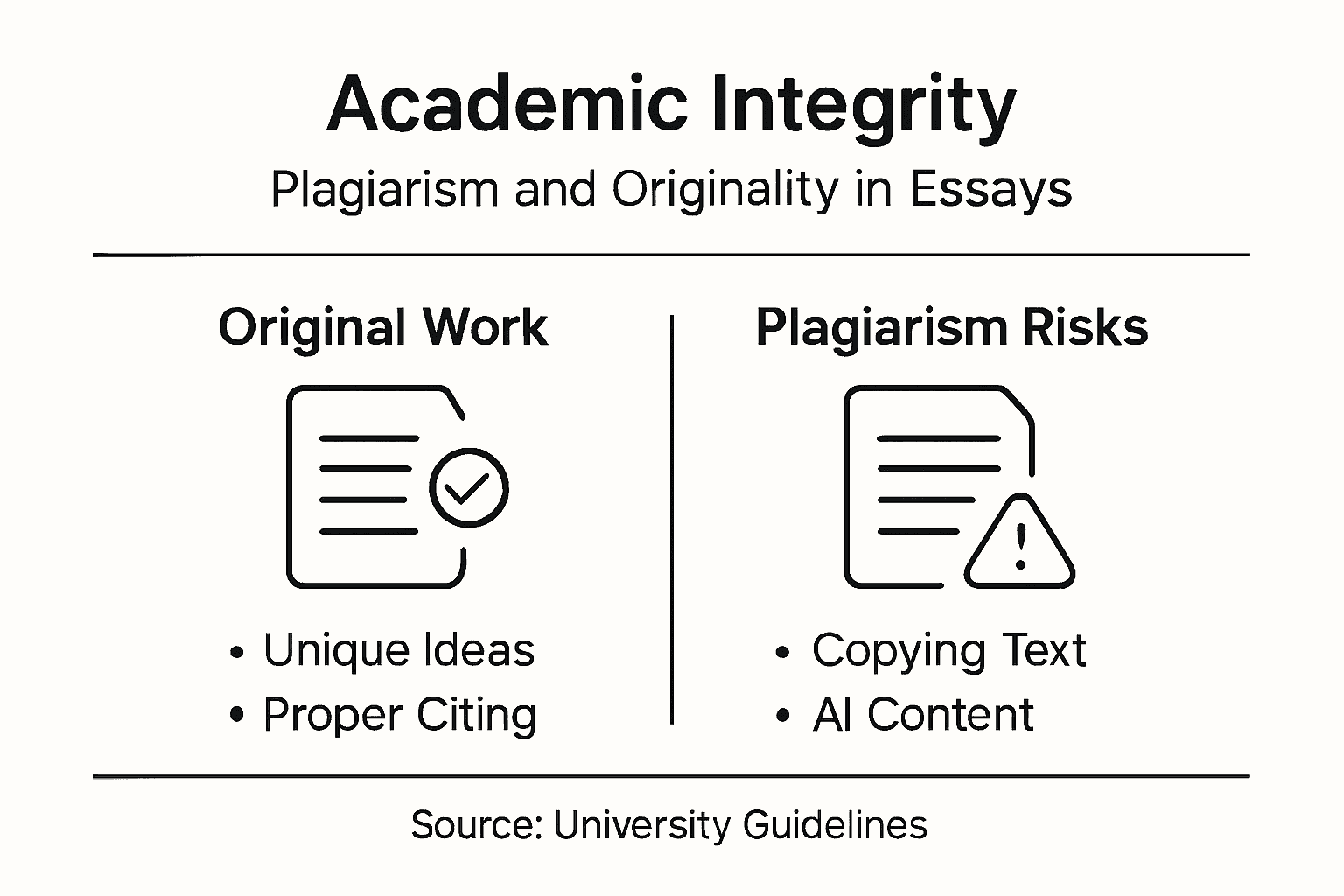
The emergence of artificial intelligence and content-generation tools further complicates plagiarism detection. Academic institutions increasingly require students to demonstrate not just citation accuracy, but also the intellectual process behind their research and writing. This means providing transparent evidence of original thinking and proper source engagement.
Technology now plays a crucial role in maintaining academic integrity. Sophisticated plagiarism detection software can identify subtle forms of content reproduction, encouraging students to develop robust research and writing skills that prioritize originality and critical thinking.
Pro tip: Always approach your research with intellectual curiosity and maintain meticulous documentation of your sources to ensure academic originality.
The article highlights the complex academic effects of social media usage including challenges like maintaining originality and avoiding plagiarism risks. If you want to craft essays that thoughtfully analyze social media's impact while ensuring your work meets rigorous academic standards, an intelligent writing solution is essential. Samwell.ai is designed to help you overcome obstacles such as digital ethics concerns, citation compliance, and maintaining critical thinking in your writing.
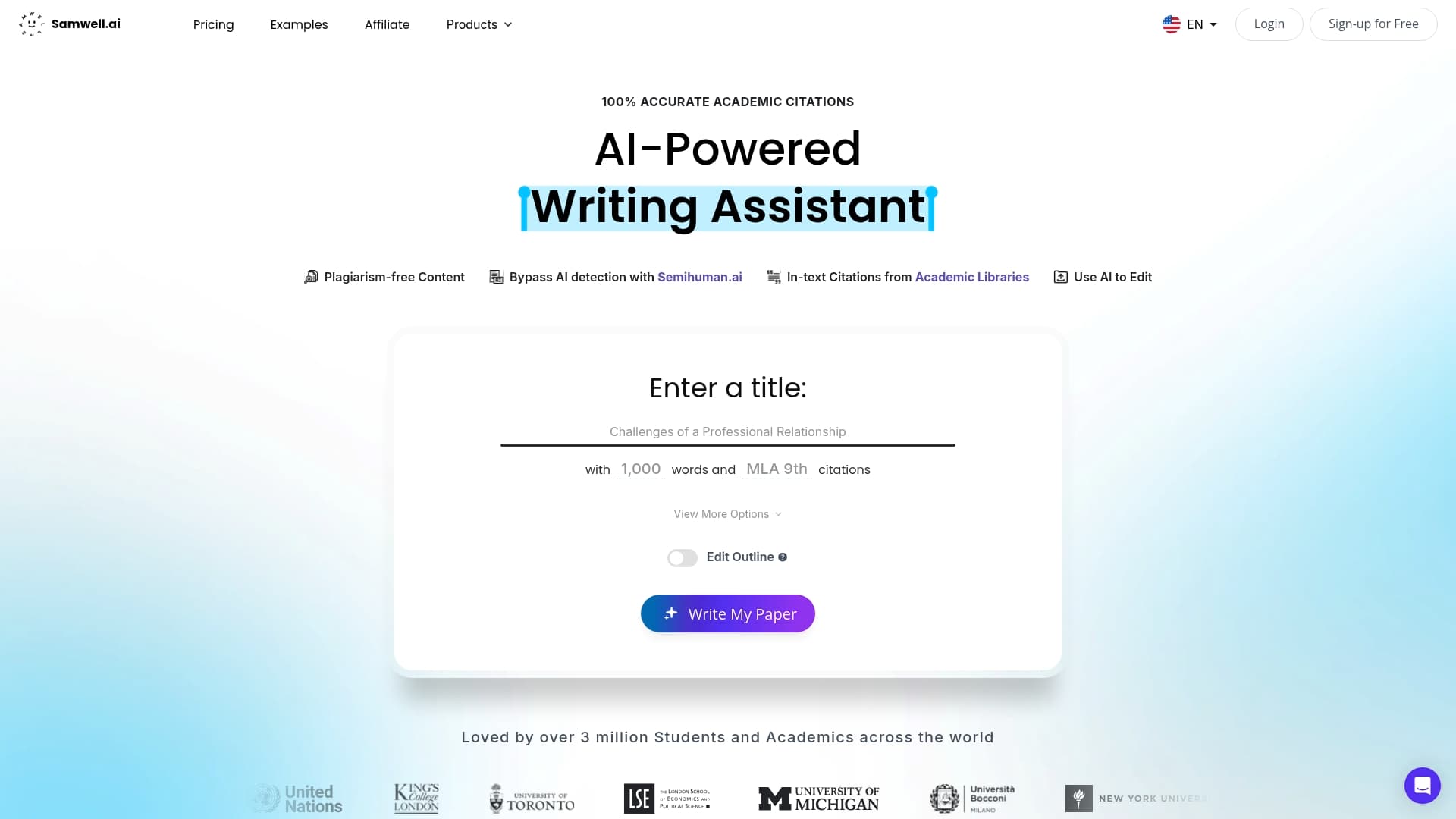
Experience how Samwell.ai’s Semihuman.ai technology minimizes plagiarism risks and empowers you to develop nuanced arguments that align with your essay topics. Use advanced features like the Power Editor for precise content enhancement and Guided Essays for structured outlines tailored to social media research. Start transforming your academic writing process today by visiting Samwell.ai. Don’t let the complexities of social media essays hold you back. Take the step to write with confidence and originality now.
Social media can have both positive and negative academic impacts, including opportunities for information sharing, collaboration, and networking, as well as risks like procrastination and reduced concentration.
Students can enhance their academic performance by leveraging social media for educational resources, networking with peers and professionals, and accessing diverse information, while maintaining boundaries to prevent distractions.
To avoid plagiarism, students should properly attribute sources, paraphrase content appropriately, document their research process, and use plagiarism detection tools to ensure originality.
Understanding digital ethics is crucial for academic writing as it helps students navigate the complexities of originality, citation practices, and the ethical use of online content, ensuring they maintain academic integrity.