Loading...

Struggling to turn your thoughts into a clear, academic essay is a common hurdle for many students at universities across the United States and Canada. The process often feels overwhelming, with obstacles ranging from building strong arguments to navigating the complex rules of scholarly writing. As new AI-powered tools become more accessible, students now have powerful options to tackle these challenges. This article explains the most common difficulties in academic writing and shows how smart technology can support you through every step, from brainstorming to polishing your final draft.
| Point | Details |
|---|---|
| Challenges in Academic Writing | Students face challenges such as insufficient training, language complexity, and structural issues that hinder academic communication. |
| Role of AI Tools | AI technologies provide support in drafting and idea generation but raise concerns about integrity and reliance on technology. |
| Maintaining Academic Integrity | Students must employ strategies like originality verification and ethical AI usage to ensure compliance with academic standards. |
| Skill Development Balance | A balanced approach that integrates technology while preserving critical thinking and writing skills is essential for academic success. |
Academic writing presents complex obstacles for students, particularly those navigating English as an additional language. Academic writing difficulties extend beyond simple language proficiency and involve sophisticated communication skills that challenge even experienced learners.
Understanding these challenges requires examining multiple dimensions of writing competence. The key difficulties students encounter include:
These challenges are particularly pronounced for international students and non-native English speakers. Language proficiency challenges stem from both internal factors like self-confidence and external factors including teaching methodologies and classroom environments.
Successful academic writing demands more than technical language skills. Students must develop critical thinking, research capabilities, and the ability to construct persuasive arguments within specific disciplinary frameworks. This requires comprehensive training that goes beyond traditional language instruction.
Pro tip: Develop a systematic approach to academic writing by seeking targeted writing workshops, utilizing campus writing centers, and practicing consistent scholarly communication techniques.
Academic writing challenges span multiple complex dimensions that impact students' ability to communicate effectively in scholarly contexts. Writing process difficulties manifest across various stages, creating significant obstacles for learners attempting to develop sophisticated communication skills.
Students encounter diverse writing challenges that can be categorized into several key areas:
Idea Generation
Struggling to develop original research topics
Difficulty brainstorming substantive academic concepts
Limited critical thinking skills
Structural Challenges
Weak paragraph organization
Inconsistent logical flow
Difficulty constructing coherent arguments
Technical Writing Skills
Complex grammatical structures
Inappropriate academic tone
Challenges with formal language conventions
ESL writing difficulties are particularly pronounced, with international students facing additional layers of complexity. These challenges extend beyond simple language proficiency, involving nuanced understanding of academic discourse, cultural communication norms, and discipline-specific writing expectations.

Successful academic writing requires developing a comprehensive skill set that integrates linguistic competence, critical thinking, and strategic communication. Students must learn to navigate complex writing processes, from initial research and idea development to final revision and editing.
Pro tip: Develop a systematic approach to writing by creating detailed outlines, seeking consistent feedback from instructors, and practicing writing across multiple drafts.
Generative AI technologies are fundamentally transforming the academic writing landscape, introducing complex dynamics that reshape how students approach research and composition. These innovative tools offer unprecedented support across multiple stages of the writing process, simultaneously presenting both remarkable opportunities and significant challenges.
The impact of AI tools on writing can be categorized into several key dimensions:
Drafting Assistance
Instant grammatical corrections
Suggested structural improvements
Real-time language enhancement
Idea Generation
Brainstorming content suggestions
Overcoming writer's block
Exploring alternative perspectives
Technical Writing Support
Advanced style recommendations
Coherence and flow optimization
Argumentation framework development
AI writing technologies provide nuanced feedback that goes beyond traditional writing assistance, offering personalized tutoring experiences. However, these tools simultaneously raise critical concerns about academic integrity, critical thinking development, and the potential erosion of original scholarly work.
Responsible AI integration demands a balanced approach that leverages technological capabilities while preserving fundamental academic skills. Students must view these tools as collaborative partners rather than replacements for personal intellectual engagement, maintaining a critical and discerning approach to AI-generated content.
Pro tip: Use AI writing tools as supplementary resources, always reviewing and critically evaluating suggestions to maintain your unique academic voice.
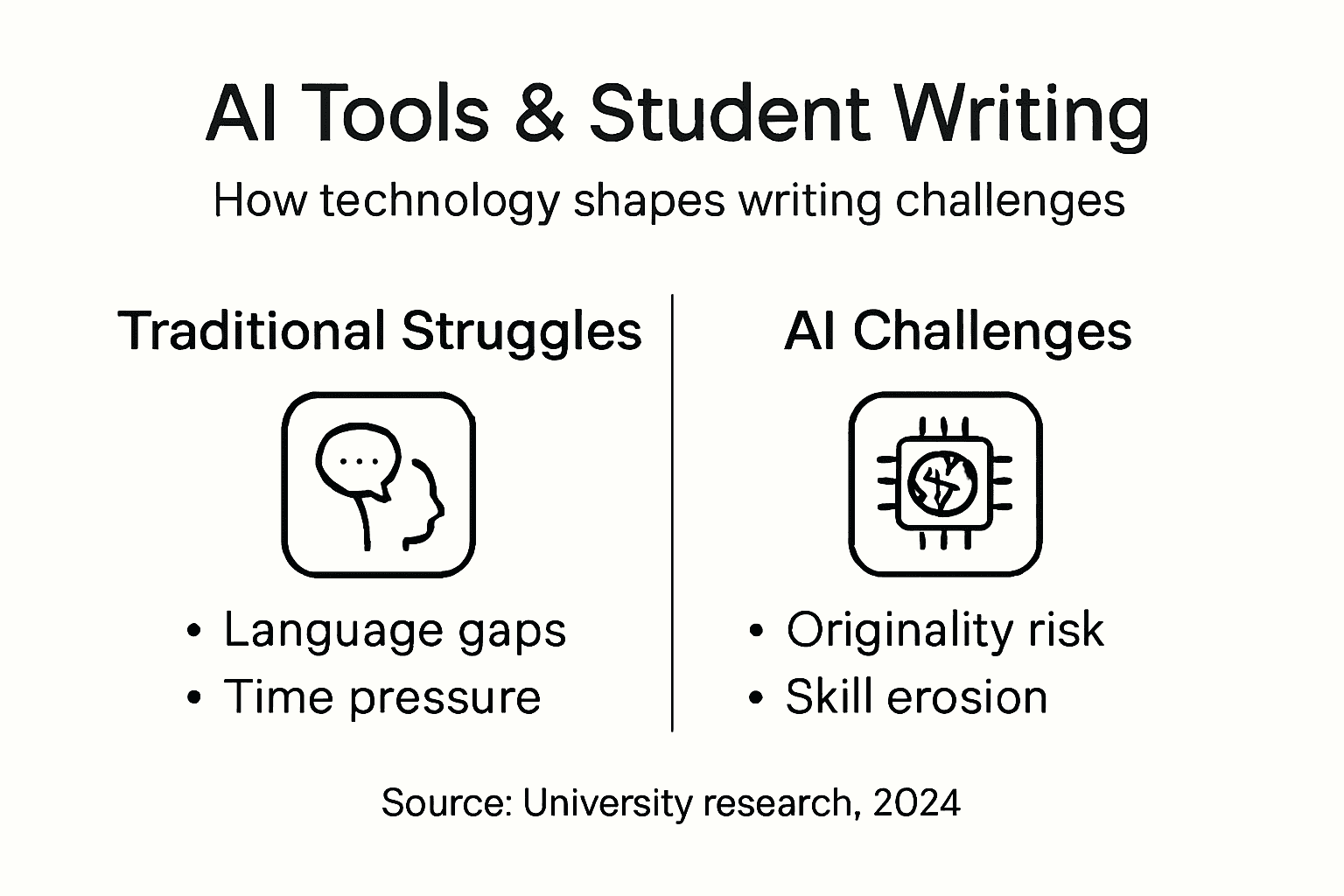
Here's a summary comparing traditional academic writing challenges with those introduced by AI tools:
| Aspect | Traditional Challenges | AI-Driven Challenges |
|---|---|---|
| Main Focus | Language and structure mastery | Integrity and critical engagement |
| Student Responsibilities | Develop writing skills consistently | Critically evaluate AI suggestions |
| Key Risks | Misunderstanding academic norms | Over-reliance on technology |
| Support Needed | Workshops and peer feedback | Guidance on ethical AI use |
Academic integrity frameworks are being fundamentally reimagined in response to emerging artificial intelligence technologies. The traditional paradigms of scholarly work now require sophisticated strategies that balance technological innovation with ethical scholarship, creating new challenges for students and educational institutions alike.
Students must develop comprehensive approaches to maintaining academic integrity in an AI-enhanced writing environment:
Originality Verification
Use plagiarism detection tools
Cross-reference AI-generated content
Document research methodologies
Ethical AI Usage
Transparently disclose AI tool assistance
Critically evaluate AI suggestions
Maintain personal intellectual contribution
Documentation Strategies
Cite AI tools as sources
Explain specific AI tool contributions
Demonstrate independent analysis
Educational approaches must evolve to incorporate AI as a collaborative tool rather than a shortcut. Institutions are developing innovative pedagogical strategies that promote responsible technology use while preserving the fundamental principles of scholarly work.
Successful academic integrity in the AI era requires a nuanced understanding of technological capabilities and ethical boundaries. Students must view AI as an assistive technology that enhances, rather than replaces, critical thinking and original scholarship.
Pro tip: Always maintain a clear audit trail of your writing process, documenting how and where AI tools were used to support your academic work.
Academic writing errors significantly undermine scholarly credibility and communication effectiveness. Students frequently encounter complex challenges that require strategic approaches to maintain professional writing standards.
The most prevalent academic writing mistakes can be categorized into several critical areas:
Language and Clarity
Vague or imprecise wording
Excessive academic jargon
Convoluted sentence structures
Inconsistent terminology
Technical Writing Errors
Improper citation techniques
Incomplete reference documentation
Inconsistent formatting
Mechanical writing mistakes
Structural Challenges
Weak argument development
Poor paragraph transitions
Insufficient evidence support
Unclear thesis statements
Professional academic writing demands meticulous attention to detail and a comprehensive understanding of scholarly communication conventions. Students must develop sophisticated strategies that go beyond basic grammar and syntax, focusing on nuanced communication skills that demonstrate intellectual rigor.
Navigating these challenges requires continuous learning, practice, and a willingness to seek constructive feedback from instructors, writing centers, and peer reviewers. Developing a systematic approach to identifying and correcting writing errors is crucial for academic success.
Pro tip: Create a personal editing checklist that systematically addresses language clarity, citation accuracy, and structural coherence before submitting any academic document.
AI-powered writing assistance presents a complex landscape of opportunities and challenges for academic writing development. Students must navigate a nuanced terrain where technological tools complement, rather than replace, fundamental writing skills and critical thinking capabilities.
Successful technology integration in academic writing involves strategic approaches across multiple dimensions:
Technological Skill Enhancement
Utilizing AI for targeted feedback
Identifying personal writing weaknesses
Developing adaptive learning strategies
Critical Skill Preservation
Maintaining independent thought processes
Developing original argumentation skills
Resisting over-reliance on technological assistance
Balanced Learning Approaches
Active self-editing techniques
Selective AI tool implementation
Continuous skill refinement
Academic writing technologies offer unprecedented opportunities for personalized learning and skill development. However, students must approach these tools with a discerning mindset, understanding that technology serves as a supportive mechanism rather than a comprehensive writing solution.
The ultimate goal is cultivating a symbiotic relationship between technological tools and individual writing capabilities. Students must develop metacognitive awareness that allows them to leverage AI resources while maintaining academic integrity and personal intellectual growth.
Pro tip: Treat AI writing tools as collaborative partners, consistently questioning and verifying their suggestions to ensure your unique voice and critical thinking remain at the forefront of your academic writing process.
The following table outlines best practices for balancing technology with fundamental writing skill development:
| Practice Area | Recommended Strategy | Benefit |
|---|---|---|
| Skill Enhancement | Use AI for targeted revision | Identifies weak areas efficiently |
| Critical Thinking | Edit and reflect independently | Maintains original voice |
| Technology Use | Select tools for specific needs | Maximizes constructive feedback |
The article highlights the growing impact of AI tools on students facing complex challenges such as maintaining academic integrity, developing critical thinking, and ensuring originality while meeting rigorous writing standards. If you struggle with balancing technology use and skill development or need help navigating the sophisticated demands of academic writing, Samwell.ai offers a tailored solution. Our platform combines advanced AI-driven assistance with cutting-edge plagiarism prevention to empower you to create high-quality essays and research papers that reflect your unique voice.
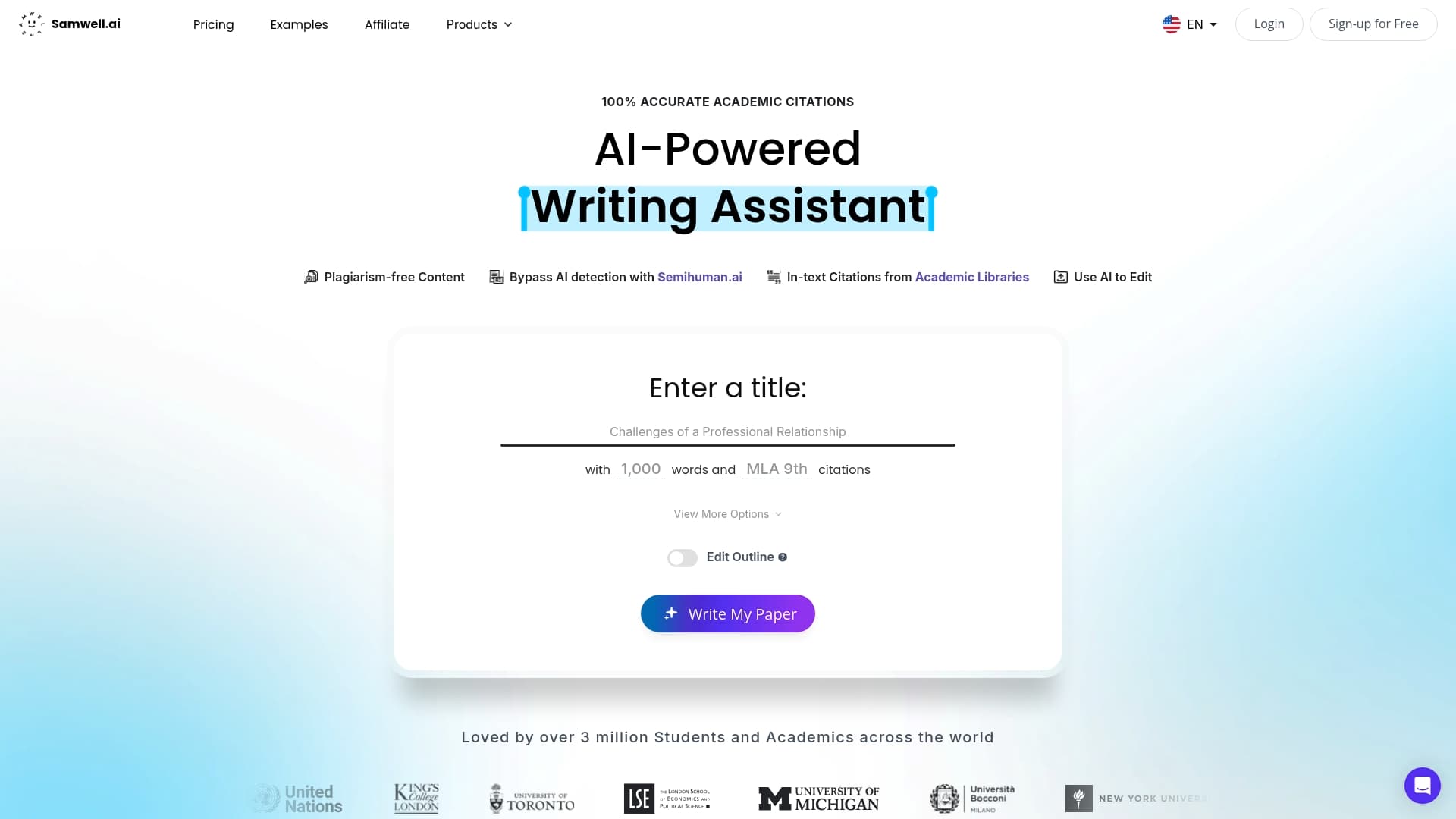
Experience how Samwell.ai's innovative features like the Power Editor and Guided Essays can transform your writing process for greater clarity, coherence, and compliance with citation standards. Join over 1,000,000 students and academics who trust Samwell.ai to enhance their scholarly work while upholding the highest levels of academic integrity. Take control of your writing challenges today by visiting Samwell.ai and discover smarter, responsible AI assistance designed specifically for your success.
Students often struggle with idea generation, structural challenges, technical writing skills, and language complexity, which impacts their ability to communicate effectively in academic contexts.
AI tools provide drafting assistance, generate ideas, and offer technical writing support, which helps students refine their drafts and improve their overall writing quality.
Key risks include reliance on technology, potential erosion of original thought, and challenges pertaining to academic integrity, especially regarding plagiarism and the authenticity of work.
Students should verify the originality of their work, transparently disclose the use of AI tools, critically evaluate AI suggestions, and ensure their personal contributions are evident in their writing.