Loading...

Many American students see academic referencing as a tedious chore, but the truth is far more significant. Over half of college plagiarism cases in the United States begin with basic referencing mistakes. Understanding how to credit sources correctly protects academic integrity and builds a foundation for trust in research. By exploring the real purpose of referencing and dispelling common misconceptions, you can avoid errors that threaten your academic reputation and future success.
| Point | Details |
|---|---|
| Importance of Referencing | Academic referencing is essential for establishing credibility, transparency, and intellectual integrity within scholarly work. |
| Common Mistakes | Errors such as misquoting, incomplete citations, and inconsistent formatting can undermine research quality and lead to academic misconduct. |
| Consequences of Improper Referencing | Failing to reference correctly can result in severe academic penalties, including reputational damage and loss of professional opportunities. |
| Mastering Citation Styles | Understanding and accurately applying various citation styles is crucial for effective scholarly communication and demonstrating academic versatility. |
Academic referencing represents a systematic approach to acknowledging intellectual contributions within scholarly work. At its core, the process involves accurately citing sources to substantiate claims, distinguishing objective research from personal opinion, and establishing credibility in academic discourse.
Contrary to common misconceptions, academic referencing goes far beyond simply listing sources at the end of a document. It is a nuanced practice that requires precision, integrity, and an understanding of different citation styles. While many students believe referencing is a tedious administrative task, it actually serves critical intellectual functions. Academic references provide transparency about research origins, enable readers to verify claims, and give proper credit to original scholars whose work informs current research.
Research indicates significant challenges in referencing practices. A comprehensive study revealed that while students generally understand referencing requirements, many struggle with complex citation scenarios, particularly when dealing with internet sources or tracking multiple references. These difficulties can lead to unintentional plagiarism or inconsistent citation formats. Students and researchers must recognize that proper referencing is not just a procedural requirement but an essential component of scholarly communication.
Effective academic referencing involves several key components:- Identifying and acknowledging original sources- Providing precise publication details- Maintaining consistent formatting- Demonstrating intellectual honesty- Enabling future research verification
By understanding these fundamental principles, researchers can transform referencing from a perceived bureaucratic burden into a powerful tool for academic dialogue and knowledge advancement.
Academic disciplines have developed distinct citation styles to address their unique communication needs. Research reveals that different citation formats are strategically designed to meet specific disciplinary requirements, with each style serving a precise scholarly purpose. The most prominent citation styles include Modern Language Association (MLA), American Psychological Association (APA), and Chicago Manual of Style.

MLA Style typically serves humanities disciplines like literature, language studies, and cultural research. It emphasizes author's name and page number in citations, focusing on how writers engage with textual sources. APA Style dominates social sciences, psychology, and education, prioritizing publication date and requiring a more structured reference approach. The Chicago Style, alternatively, provides two distinct reference systems: notes and bibliography for humanities and author-date format for scientific publications.
Comparative studies of citation styles demonstrate significant rhetorical and structural differences that extend beyond mere formatting conventions. Each style communicates disciplinary values through its referencing approach. For instance, APA's emphasis on publication date reflects social sciences' focus on current research, while MLA's text-centered approach mirrors humanities' interpretive traditions.
Selecting the appropriate citation style requires careful consideration:
Mastering multiple citation styles demonstrates academic versatility and professional scholarly communication skills.
Academic referencing serves multiple critical functions beyond simply acknowledging sources, fundamentally transforming scholarly communication. It acts as a sophisticated intellectual framework that validates research claims, provides transparency, and enables academic discourse through rigorous documentation of intellectual contributions.
Scholarly Credibility emerges as the primary purpose of referencing. By meticulously documenting sources, researchers demonstrate the intellectual lineage of their work, distinguishing evidence-based arguments from unsupported opinions. This practice allows readers to trace the origins of ideas, verify claims, and understand the contextual foundation of research. Citation practices essentially create a transparent intellectual ecosystem where knowledge builds systematically and collaboratively.
Scientific texts particularly rely on precise citation practices to maintain content authority and enable accurate reproduction of source publications. Beyond basic attribution, references perform several nuanced functions:
Moreover, referencing protects academic integrity by creating a clear distinction between original thoughts and borrowed insights. It represents a fundamental scholarly agreement that intellectual contributions deserve recognition, fostering a culture of respect, transparency, and collaborative knowledge advancement.
Academic referencing demands precision, with numerous potential pitfalls that can compromise research integrity. Understanding these common mistakes is crucial for maintaining scholarly credibility and avoiding unintentional academic misconduct. Researchers and students must develop a keen eye for referencing details that can easily slip through standard review processes.

Quotation errors represent one of the most significant challenges in academic writing. Misquoting sources, failing to use exact wording, or incorrectly attributing statements can fundamentally undermine the research's reliability. Precise quotation requires meticulous attention to original text, including punctuation, spelling, and context. Students often struggle with transforming source material into their own academic narrative while maintaining absolute fidelity to the original text.
Digital research environments have dramatically complicated reference tracking, particularly when citing internet sources, introducing new layers of complexity to academic documentation. Common referencing mistakes include:
Preventing referencing errors requires systematic approaches: develop consistent citation habits, use reference management tools, double-check every source, and maintain organized research documentation. Academic success hinges not just on research quality, but on the meticulous communication of that research through precise, transparent referencing practices.
Academic misconduct through improper referencing can trigger profound and lasting professional consequences, extending far beyond immediate academic penalties. The ripple effects of referencing errors can fundamentally undermine a researcher's credibility, potentially derailing entire academic and professional trajectories.
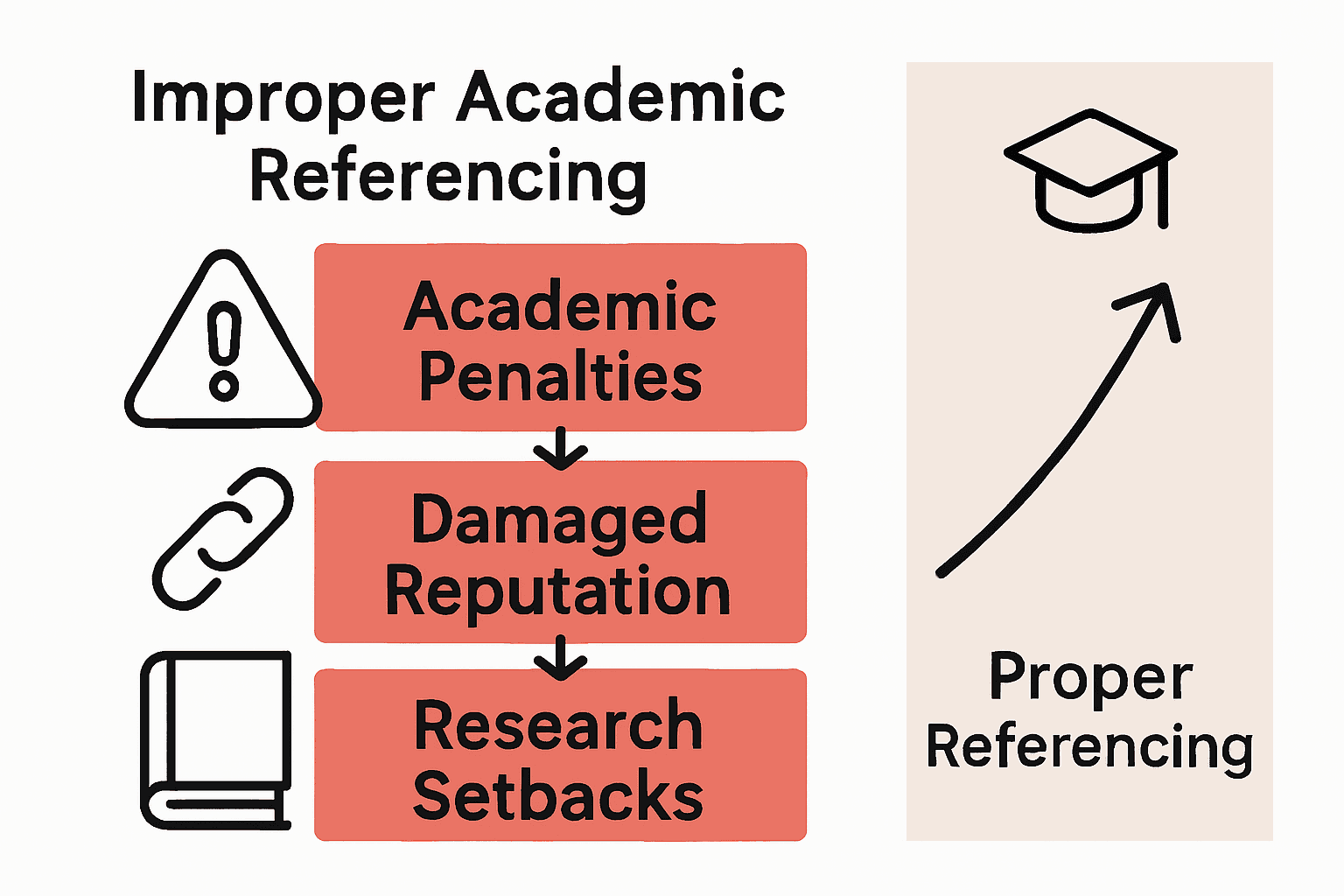
Academic Sanctions represent the most immediate repercussion of referencing mistakes. Universities and research institutions typically enforce strict policies against plagiarism, ranging from course failure to complete academic dismissal. These penalties are not merely punitive but serve as critical mechanisms for maintaining intellectual integrity. Researchers found guilty of intentional or repeated referencing violations may face additional consequences such as publication retractions, professional reputation damage, and significant barriers to future academic opportunities.
Research demonstrates that many referencing errors stem from inadequate citation skills rather than deliberate misconduct, highlighting the importance of comprehensive academic training. Potential consequences of improper referencing include:
Ultimately, proper referencing transcends technical compliance. It represents a fundamental commitment to scholarly ethics, intellectual transparency, and the collaborative advancement of human knowledge. Researchers must view referencing not as a bureaucratic requirement, but as a critical mechanism for maintaining the integrity of academic discourse.
Mastering academic referencing is essential to protect your research integrity and avoid common pitfalls such as inaccurate citations and unintentional plagiarism. If you find yourself overwhelmed by the complexity of citation styles like MLA or APA or concerned about the consequences of improper referencing, there is a powerful solution to ease your burden. Samwell.ai offers an advanced AI-driven platform tailored to help students and academics maintain flawless referencing while producing credible, high-quality research papers.
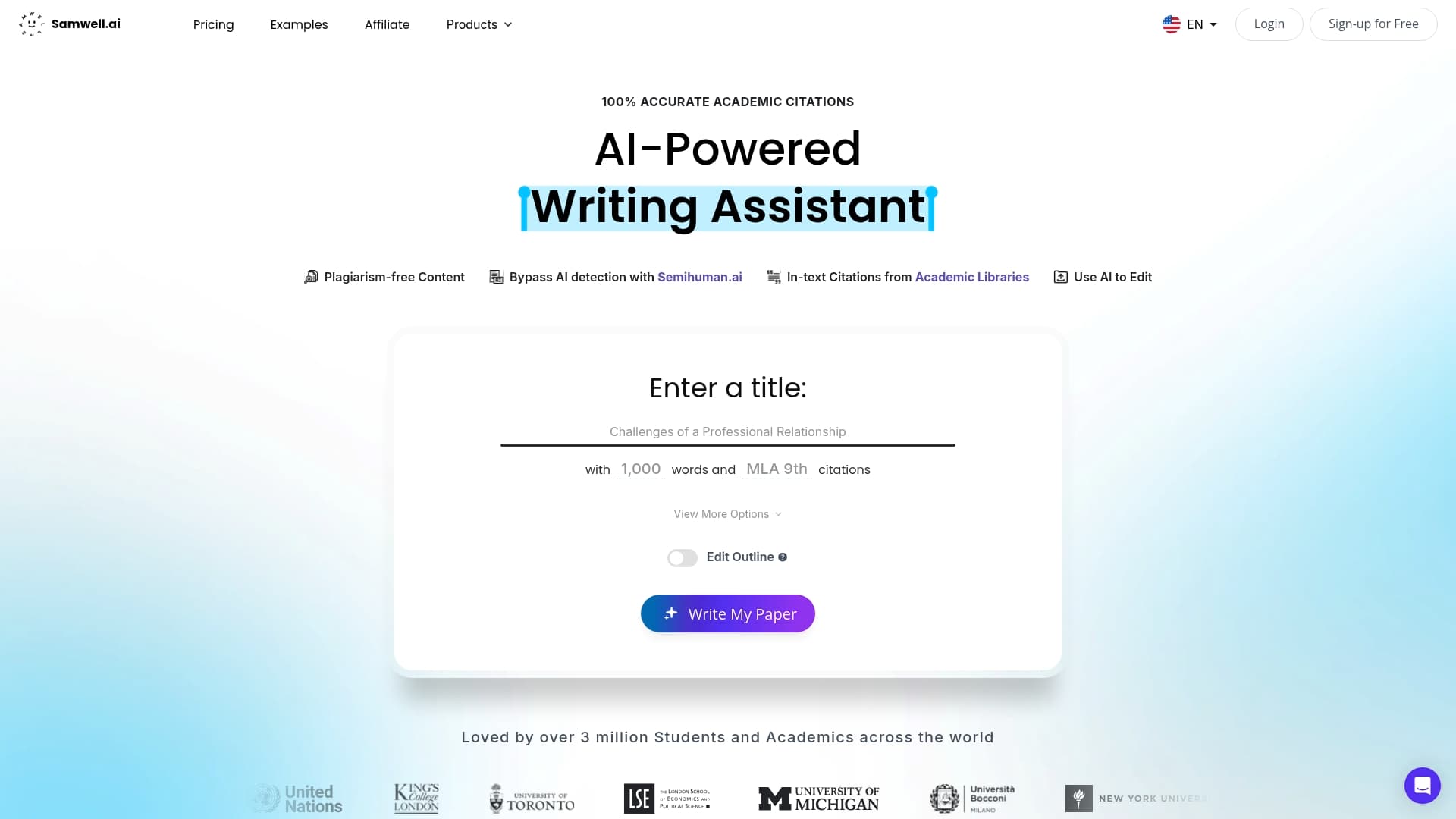
Take control of your academic work today by using Samwell.ai's unique Semihuman.ai technology and comprehensive suite of writing tools. From customized essay generation with exact source citation to a 'Power Editor' that polishes your content with discipline-specific standards, you can eliminate referencing errors before they impact your credibility. Visit Samwell.ai now and experience how seamless, transparent, and professionally compliant referencing can be. Don't wait until referencing challenges threaten your academic future. Empower your research with tools designed to uphold the highest standards of scholarly excellence.
Explore more about how Samwell.ai supports citation accuracy and academic integrity in your writing on the academic referencing info hub and discover citation style insights at citation styles guide.
Academic referencing is a systematic approach to acknowledging intellectual contributions within scholarly work. It is important because it helps substantiate claims, establishes credibility, allows readers to verify sources, and prevents plagiarism.
The most common citation styles include Modern Language Association (MLA), American Psychological Association (APA), and Chicago Manual of Style. Each serves different academic disciplines and has unique formatting requirements.
Common mistakes include incomplete bibliographic information, incorrect citation formatting, misquoting sources, and applying inconsistent reference styles. Attention to detail is crucial for maintaining research integrity.
Consequences can range from academic sanctions, such as course failure or dismissal, to long-term professional repercussions like loss of credibility, funding, or legal issues related to copyright infringement.