Loading...

Most American colleges report that academic plagiarism rates have risen sharply in recent years. This issue matters because a single mistake can cost students their reputation, academic standing, and even future careers. Learning the real facts about academic plagiarism, along with common myths and misconceptions, helps students protect their work, avoid harsh penalties, and better understand what universities truly expect.
| Point | Details |
|---|---|
| Understanding Plagiarism | Academic plagiarism involves more than just copying; it includes various forms of misattribution and unethical practices. |
| Types of Plagiarism | Familiarize yourself with different types, such as direct plagiarism, self-plagiarism, and accidental plagiarism, to avoid unintentional misconduct. |
| Detection and Prevention | Utilize advanced plagiarism detection tools and develop strong research skills to ensure originality in your work. |
| Consequences of Plagiarism | Be aware that plagiarism can lead to severe academic and professional repercussions, including loss of credibility and potential legal issues. |
Academic plagiarism represents a complex ethical breach that goes far beyond simple copying. At its core, plagiarism is the intentional or unintentional use of someone else's intellectual work, ideas, or words without proper acknowledgment. Understanding academic plagiarism's nuanced definitions reveals that context and intent play crucial roles in determining whether an academic work crosses ethical boundaries.
Common myths about plagiarism often mislead students and researchers. Many believe that plagiarism only occurs when entire paragraphs are copied verbatim. However, academic misconduct can involve subtler forms of intellectual theft, such as paraphrasing without citation, using someone's research methodology without credit, or presenting another scholar's ideas as original thinking. Research into academic integrity highlights that institutional perspectives on plagiarism can vary significantly, making it essential for students to understand their specific academic environment's standards.
To effectively avoid plagiarism, students must develop robust research and citation skills. Key strategies include:
Ultimately, academic integrity is about respect for intellectual property and the collaborative nature of scholarly work. By understanding plagiarism's true definition and implementing ethical research practices, students can protect their academic reputation and contribute meaningfully to their field of study.
Academic plagiarism encompasses numerous complex forms of intellectual dishonesty that extend far beyond simple copy-pasting. Detailed academic research reveals multiple nuanced plagiarism categories that students and researchers must understand to maintain scholarly integrity.
The primary types of academic plagiarism include:
Academic institutions recognize that plagiarism can occur through various sophisticated mechanisms, which makes understanding these categories critical. Mosaic plagiarism, for instance, represents a particularly insidious form where writers blend copied text from multiple sources, creating an illusion of originality while fundamentally misappropriating intellectual content.

Preventing plagiarism requires active engagement and strategic research practices. Students must develop comprehensive note-taking skills, maintain meticulous citation records, and cultivate a deep understanding of intellectual attribution. By recognizing the diverse manifestations of academic plagiarism, researchers can protect their academic reputation and contribute ethically to scholarly discourse.
Plagiarism detection has become increasingly sophisticated, leveraging advanced technological solutions to protect academic integrity. Comprehensive research explores multiple detection systems across different academic contexts, highlighting the complexity of identifying unauthorized intellectual borrowing.
Modern plagiarism prevention strategies typically employ multiple approaches:
Innovative detection techniques now combine mathematical content analysis with textual similarity checks, creating more robust systems for identifying potential academic misconduct. These sophisticated methods go beyond simple word-for-word matching, examining deeper structural and contextual similarities that might indicate inappropriate content reproduction.

Preventive measures are equally crucial in combating plagiarism. Students and researchers must develop strong academic writing skills, including proper citation techniques, critical thinking, and a deep understanding of intellectual attribution. Institutions increasingly implement proactive educational programs that teach research ethics, provide clear guidelines, and offer support in developing original scholarly work. By combining technological detection with comprehensive education, academic communities can effectively discourage plagiarism and promote a culture of intellectual honesty and original thinking.
Academic plagiarism represents a profound ethical breach with far-reaching consequences that can permanently derail educational and professional trajectories. Research reveals the devastating impact of academic misconduct on institutional integrity, demonstrating how a single instance of intellectual theft can unravel years of academic achievement.
The potential consequences of plagiarism span multiple critical domains:
Universities are increasingly confronting the rising tide of academic misconduct, implementing stricter detection and prevention mechanisms. The consequences extend beyond immediate punitive actions, fundamentally challenging an individual's academic and professional standing. A single plagiarism incident can create lasting ripple effects, potentially blocking future academic opportunities, research collaborations, and career advancement.
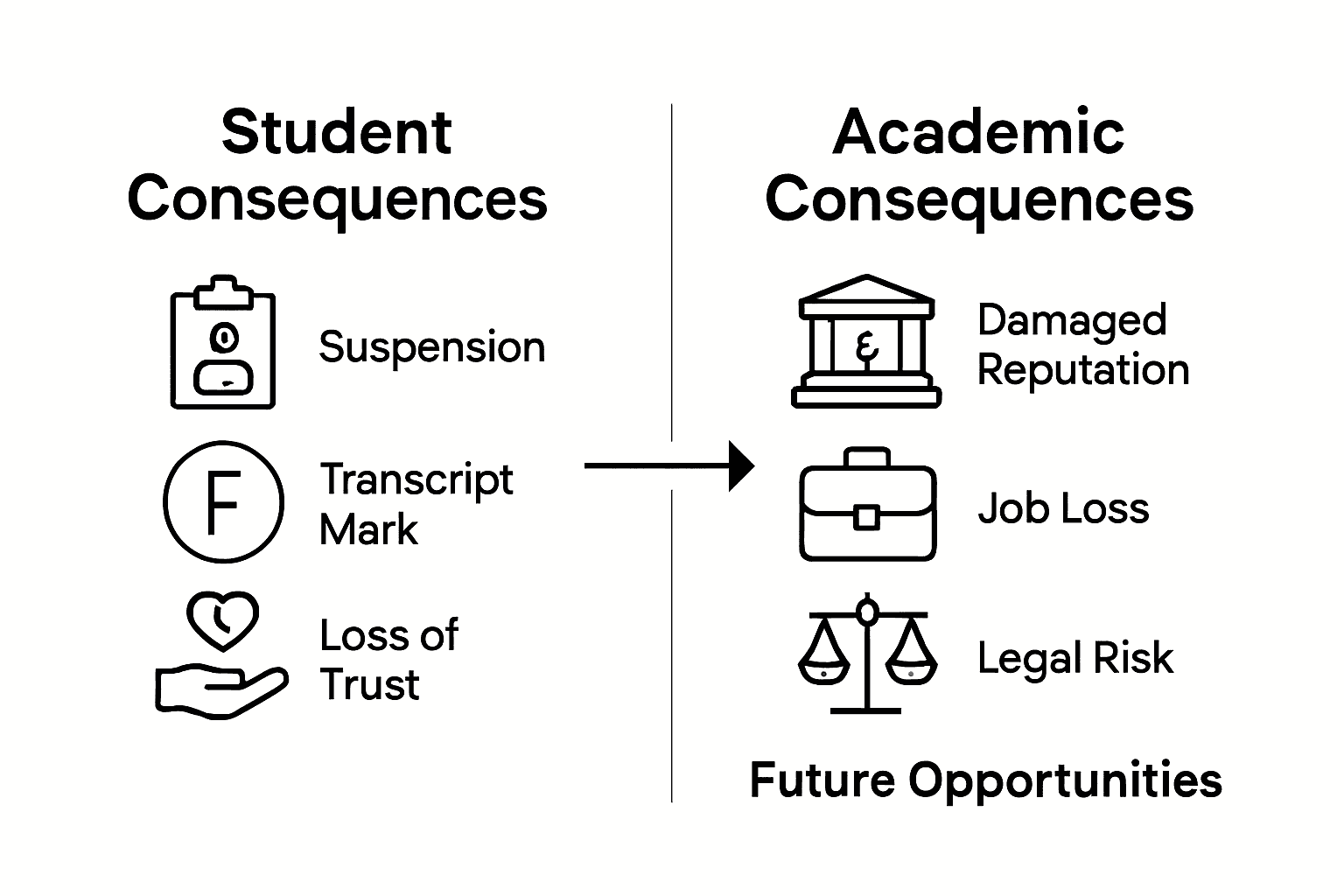
Ultimately, maintaining academic integrity requires personal commitment and institutional support. Students must understand that plagiarism is not just a procedural violation but an ethical breach that undermines the foundational principles of scholarly research and intellectual growth. By cultivating a culture of originality, proper attribution, and respect for intellectual property, academic communities can protect the fundamental values of knowledge creation and scholarly excellence.
Academic integrity represents a fundamental commitment to ethical scholarship that extends far beyond simple rule following. Emerging research explores innovative approaches to understanding and preventing academic misconduct, highlighting the complex landscape of scholarly ethics in the digital age.
Key strategies for maintaining academic integrity include:
Comprehensive prevention strategies emphasize creating a culture of academic honesty, which requires proactive approaches from both institutions and individual scholars. This involves implementing clear policies, providing ongoing education, and creating supportive environments that value original thinking and intellectual integrity.
Modern academic environments demand a nuanced approach to maintaining scholarly standards. Students and researchers must remain vigilant, continuously improving their understanding of ethical research practices. By embracing transparency, developing strong critical thinking skills, and respecting intellectual property, academic communities can foster an environment that values originality, creativity, and genuine intellectual contribution.
Plagiarism can threaten your academic success and reputation in ways you never expect. From subtle paraphrasing mistakes to accidental misattribution, even unintentional plagiarism can have serious consequences. That is why mastering proper citation and creating original content is critical to maintaining academic integrity and achieving your goals.
Take control of your writing process with Samwell.ai, an advanced AI-driven platform designed specifically to help students and academics produce plagiarism-free essays and research papers. Benefit from features like the Power Editor and Guided Essays that guide your critical thinking and citation accuracy while ensuring compliance with MLA, APA, and other standards. Start protecting your academic reputation today by visiting Samwell.ai and experience how our unique Semihuman.ai technology supports originality and ethical scholarship.
Academic plagiarism is the intentional or unintentional use of someone else's intellectual work, ideas, or words without proper acknowledgment, which violates ethical standards in academic research.
Common types of academic plagiarism include direct plagiarism, mosaic plagiarism, self-plagiarism, paraphrasing plagiarism, and accidental plagiarism.
Plagiarism can be detected using advanced text-matching software, citation cross-referencing, machine learning algorithms, and manual reviews by academic professionals.
Consequences of plagiarism can range from immediate academic penalties, such as course failure or assignment invalidation, to long-term repercussions like degree revocation and damage to one’s professional reputation.