Loading...

Most American universities report that nearly 40 percent of undergraduates face plagiarism-related issues at some point in their academic career. For students everywhere, academic integrity is not just about following rules—it shapes your reputation and future opportunities. Understanding plagiarism and knowing how to avoid it can transform your essay writing and keep you confident when submitting work, whether you study in Germany, Brazil, or South Africa.
| Takeaway | Explanation |
|---|---|
| 1. Understand all forms of plagiarism | Plagiarism includes direct copying, idea theft, and improper paraphrasing without citation. Recognizing these is crucial to maintain academic integrity. |
| 2. Always cite your sources | Proper citation shows academic honesty and respect for original work, preventing accidental plagiarism and enhancing your credibility in writing. |
| 3. Master the art of paraphrasing | Effective paraphrasing involves restructuring ideas using your own words while still giving proper credit to the original source, which is vital in academic writing. |
| 4. Utilize plagiarism detection tools | Running your work through plagiarism checkers can highlight potential issues and help you correct them before submission, safeguarding against unintentional misconduct. |
| 5. Manage your research and deadlines | Systematic tracking of sources during research, along with effective time management, prevents chaotic information gathering and reduces the risk of plagiarism. |
Plagiarism goes far beyond simply copying and pasting text. It is a complex academic misconduct that involves using someone else's ideas, words, or intellectual property without proper attribution. Understanding its nuanced definition is crucial for maintaining academic integrity.
At its core, plagiarism encompasses several critical dimensions. This includes word-for-word copying without quotation marks, presenting someone else's ideas as your own, and even subtle forms of intellectual theft like improperly paraphrasing content without citation.
Most students mistakenly believe plagiarism only happens when entire paragraphs are stolen. However, academic standards are much more stringent. Even using a single sentence or unique idea without acknowledging its source can constitute plagiarism. The intent matters less than the action itself.
Key Plagiarism Types to Recognize:
Research from academic integrity organizations reveals that plagiarism can result in severe consequences. These range from failing an assignment to potential academic suspension or degree revocation.
Pro tip: Always assume you need to cite a source unless you are presenting completely original research from your own groundbreaking work.
Citing sources is not just an academic requirement it is a fundamental way to give credit to original researchers and demonstrate the scholarly foundation of your work. Proper citation shows intellectual honesty and helps readers trace the origins of your information.
Every academic paper requires a consistent and accurate citation approach. Different disciplines prefer specific citation styles such as APA, MLA, or Chicago. Academic citation guidelines provide detailed instructions on how to correctly attribute sources both in text and in your reference list.
Key Citation Principles:
Whether you are quoting a sentence verbatim or summarizing an entire research paper, you must provide appropriate attribution. This means including the author's last name and publication year in parenthetical citations, and creating a full reference entry at the end of your document.
Understanding citation requirements prevents accidental plagiarism and demonstrates your ability to engage with scholarly research professionally.
Pro tip: Use citation management tools to automatically generate and track your references across different academic writing styles.
Paraphrasing is an essential academic skill that allows you to incorporate other scholars' ideas while maintaining your unique voice. Unlike direct quotation, paraphrasing requires you to restate complex information using your own language and sentence structure.
The art of effective paraphrasing goes beyond simply swapping out a few words. Mastering paraphrasing techniques/03%3A_The_Reading-Writing_Connection/3.09%3A_Paraphrazing_and_Summarizing) involves completely restructuring the original text while preserving its core meaning.
Key Paraphrasing Strategies:
Successful paraphrasing requires a deep understanding of the source material. Academic writing encourages paraphrasing over direct quotation as it demonstrates your ability to comprehend and synthesize complex ideas.
Remember that even when paraphrasing, you must still provide proper attribution to the original source. This means including an in-text citation with the author's name and publication year.
Pro tip: Practice paraphrasing by reading a passage, covering it, and then rewriting the main ideas in your own words without looking at the original text.
Plagiarism detection tools are your digital safeguard against unintentional academic misconduct. These advanced software solutions scan your documents against vast databases of academic and online content to identify potential instances of copied text.
Plagiarism detection technologies work by comparing your writing against millions of sources, highlighting areas that require citation or revision. They provide a critical safety net for students who want to maintain academic integrity.
Key Features of Plagiarism Detection Tools:
These tools do more than simply flag copied text. They educate users about proper citation practices and help develop stronger writing skills. By running your work through a plagiarism checker before submission, you can catch and correct potential issues that might otherwise go unnoticed.
Most academic institutions now require or recommend using plagiarism detection software as part of the standard writing process. Think of these tools as your personal academic integrity assistant.
Pro tip: Run your draft through a plagiarism detection tool at least twice before final submission one immediately after writing and a second time after making citations and revisions.
Research tracking is a critical skill that transforms chaotic information gathering into a structured academic process. Effective source management prevents plagiarism and streamlines your writing workflow.
Academic research strategies require systematic documentation of every source you encounter during your research journey. This means creating a comprehensive system that captures bibliographic details, key quotes, and your own insights.
Essential Source Tracking Methods:
Consider your research tracking system as a personal archive. Every article, book, or webpage you reference should be meticulously documented. This approach not only prevents accidental plagiarism but also saves significant time during the writing process.
Digital tools like reference management software can automate much of this process. They help you organize sources, generate citations, and maintain a clean research workflow.
Pro tip: Develop a consistent color coding or tagging system in your research notes to quickly distinguish between direct quotes, paraphrased information, and your original thoughts.
Quoting sources is an art form in academic writing that requires precision, intentionality, and respect for original scholarship. Not every piece of information needs to be quoted verbatim understanding when to use direct quotes is a critical skill.
Academic citation guidelines recommend using direct quotes sparingly and strategically. They should illuminate complex ideas, provide authoritative evidence, or showcase particularly eloquent language that cannot be effectively paraphrased.
Effective Quotation Strategies:
Short quotes can be incorporated directly into your text using quotation marks, while longer quotes typically require block indentation. The key is to ensure that the quote enhances your writing rather than interrupting its flow.
Remember that quotes are meant to support your ideas, not replace them. Your own analysis and interpretation should always take center stage in academic writing.
Pro tip: Before including a quote, ask yourself whether paraphrasing might communicate the idea more effectively or whether the exact wording is essential to your argument.
Successful academic writing demands more than just research and writing skills it requires strategic time management and deliberate planning. Preventing plagiarism starts with giving yourself enough time to complete assignments thoroughly and thoughtfully.
Effective time management strategies transform overwhelming projects into manageable tasks. By breaking down large assignments and setting realistic milestones, you create space for careful research, proper citation, and original thinking.
Strategic Planning Techniques:
Procrastination is the silent enemy of academic integrity. When you rush to complete an assignment at the last minute, you are more likely to take shortcuts that could lead to unintentional plagiarism. Giving yourself ample time allows for careful source documentation and original analysis.
Consider using digital tools like project management apps or academic planners to track your research and writing progress. These can help you visualize your workflow and ensure you stay on track.
Pro tip: Reverse engineer your project timeline by starting from the final deadline and working backward, allocating specific time blocks for research, drafting, citation checking, and final review.
Below is a comprehensive table summarizing the key points of the article related to effective practices for avoiding plagiarism and maintaining academic integrity in writing.
| Topic | Explanation | Actionable Tips |
|---|---|---|
| Definition and Aspects of Plagiarism | Plagiarism involves using someone else's intellectual property without proper acknowledgment. It includes copying text verbatim, rephrasing ideas improperly, or misrepresenting someone's concepts. | Recognize and avoid different types of plagiarism including direct copying, idea plagiarism, and mosaic plagiarism. |
| Citing Sources Properly | Proper citation credits original contributors and maintains academic integrity while enabling readers to trace sources. | Always cite direct quotes, paraphrased ideas, and include full citations in the reference list. |
| Paraphrasing Techniques | Paraphrasing involves rephrasing ideas in your own words while preserving the original meaning. | Comprehend source material fully, avoid simple word substitution, and always attribute the original source. |
| Using Plagiarism Detection Tools | Tools compare your work against extensive databases to ensure originality and identify potential issues. | Use tools like plagiarism detection software twice: immediately after drafting and post-citation edits. |
| Organizing Research and Sources | Maintaining records of source materials is crucial for proper attribution and streamlines the writing process. | Employ digital tools, keep a research journal, and maintain detailed notes with bibliographic details. |
| Quoting Original Text | Direct quotes should enhance the narrative and reflect original ideas accurately. | Use direct quotes sparingly, integrate quotes smoothly, and maintain the appropriate citation format. |
| Planning and Time Management | Allocating sufficient time ensures thorough and thoughtful work, reducing the risks of unintentional plagiarism. | Utilize project management techniques, create timelines, and prevent last-minute pressure by starting projects early. |
Navigating the challenge of avoiding plagiarism in student writing requires vigilance, proper citation, effective paraphrasing, and thorough source tracking. If you struggle with managing these aspects while aiming for originality and high-quality content, you're not alone. Common goals include maintaining academic integrity, saving time on cumbersome citation processes, and producing essays that confidently stand apart from plagiarism. Terms like "paraphrase plagiarism," "citation management," and "plagiarism detection tools" highlight key pain points that demand smart solutions.
At Samwell.ai, our advanced AI-driven platform is built precisely to meet these challenges head-on. Equipped with our unique Semihuman.ai technology, Samwell.ai helps minimize plagiarism risks by generating customized essays and research papers that comply with MLA, APA, and other citation standards. Features like the Power Editor refine your content with targeted editing and expansion while real-time AI detection ensures your work remains original and credible through every stage of writing.
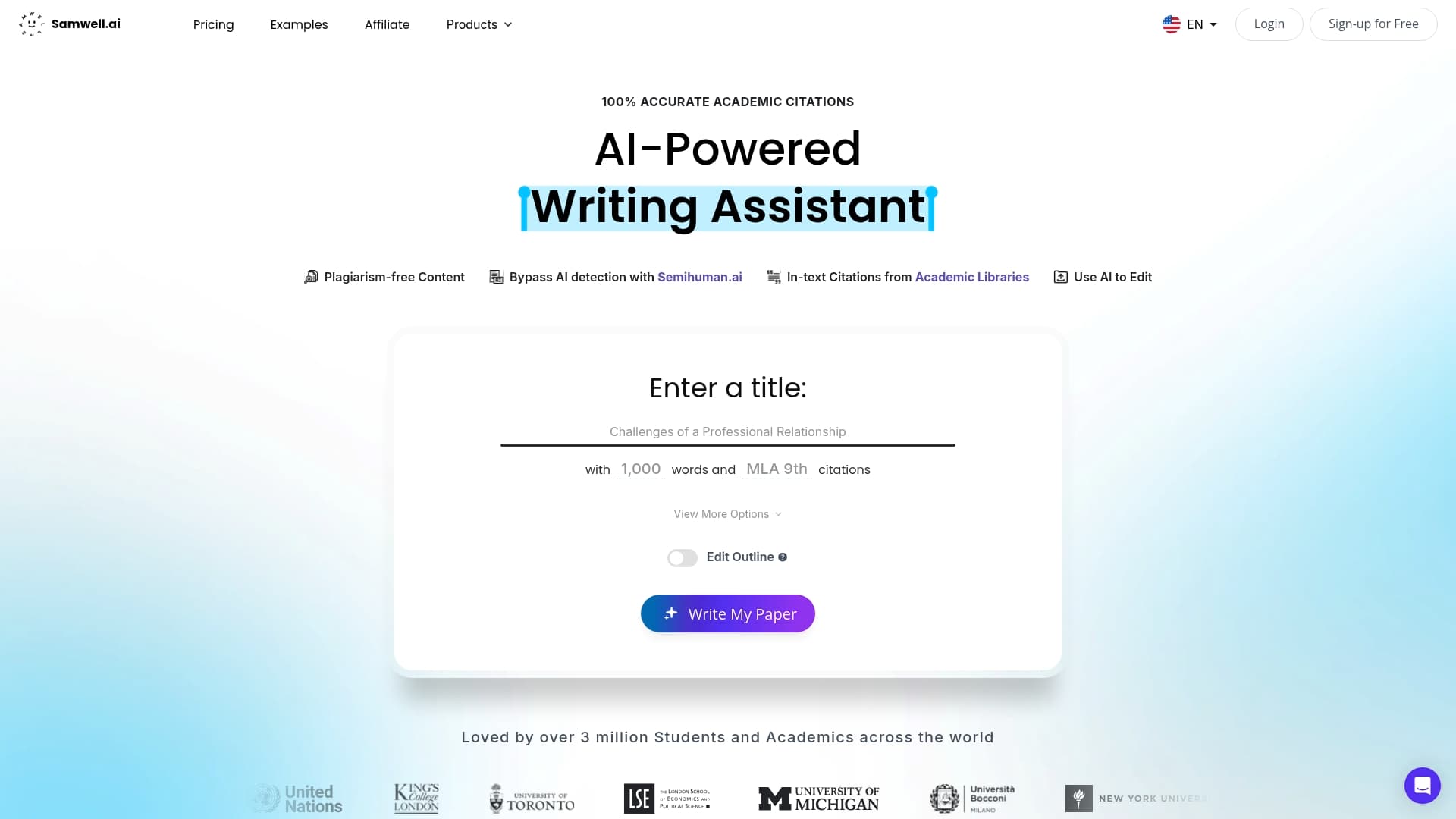
Experience how Samwell.ai transforms your academic writing process today. Take control of your deadlines, citation accuracy, and originality by visiting Samwell.ai now. Reinforce your commitment to integrity and produce standout papers effortlessly with our guided essay structures and plagiarism safeguards. Start your journey toward plagiarism-free writing with Samwell’s trusted technology today.
Plagiarism is using someone else's ideas, words, or work without proper acknowledgment. To avoid it, ensure you always cite your sources correctly, even when paraphrasing or summarizing, and utilize plagiarism detection tools before submission to check for any accidental matches.
To ensure proper citation, familiarize yourself with the citation style required for your discipline, like APA or MLA. Create a reference list that includes all sources cited in your text to maintain academic integrity and prevent plagiarism.
An effective strategy for paraphrasing involves reading the original text thoroughly, then closing the source and writing from memory using different sentence structures. Aim to keep the core meaning of the text while ensuring your version is entirely your own and includes proper citations.
You can keep track of sources by creating a digital research journal or using reference management software to document bibliographic details and notes. Record all necessary information immediately to streamline your writing process and prevent any unintentional plagiarism.
It is appropriate to use direct quotes when the wording is particularly eloquent, or when you want to highlight significant ideas or evidence. Keep quotes concise and relevant, ensuring each is well integrated into your writing and includes the proper attribution to the original source.
To effectively manage your time, create a project timeline that breaks down your work into manageable tasks, setting mini deadlines for each stage. This approach allows you to allocate ample time for research, writing, and proper source documentation, which reduces the risk of last-minute plagiarism.