Loading...
Choosing an academic writing assistant that supports verified citations and draft improvement remains confusing for students and researchers. Many alternatives either limit source verification, restrict collaboration features, or lock advanced tools behind higher-priced plans. This comparison reviews AI detection, citation management, and editing tools so students and researchers can pick the right fit for their workflow and budget.
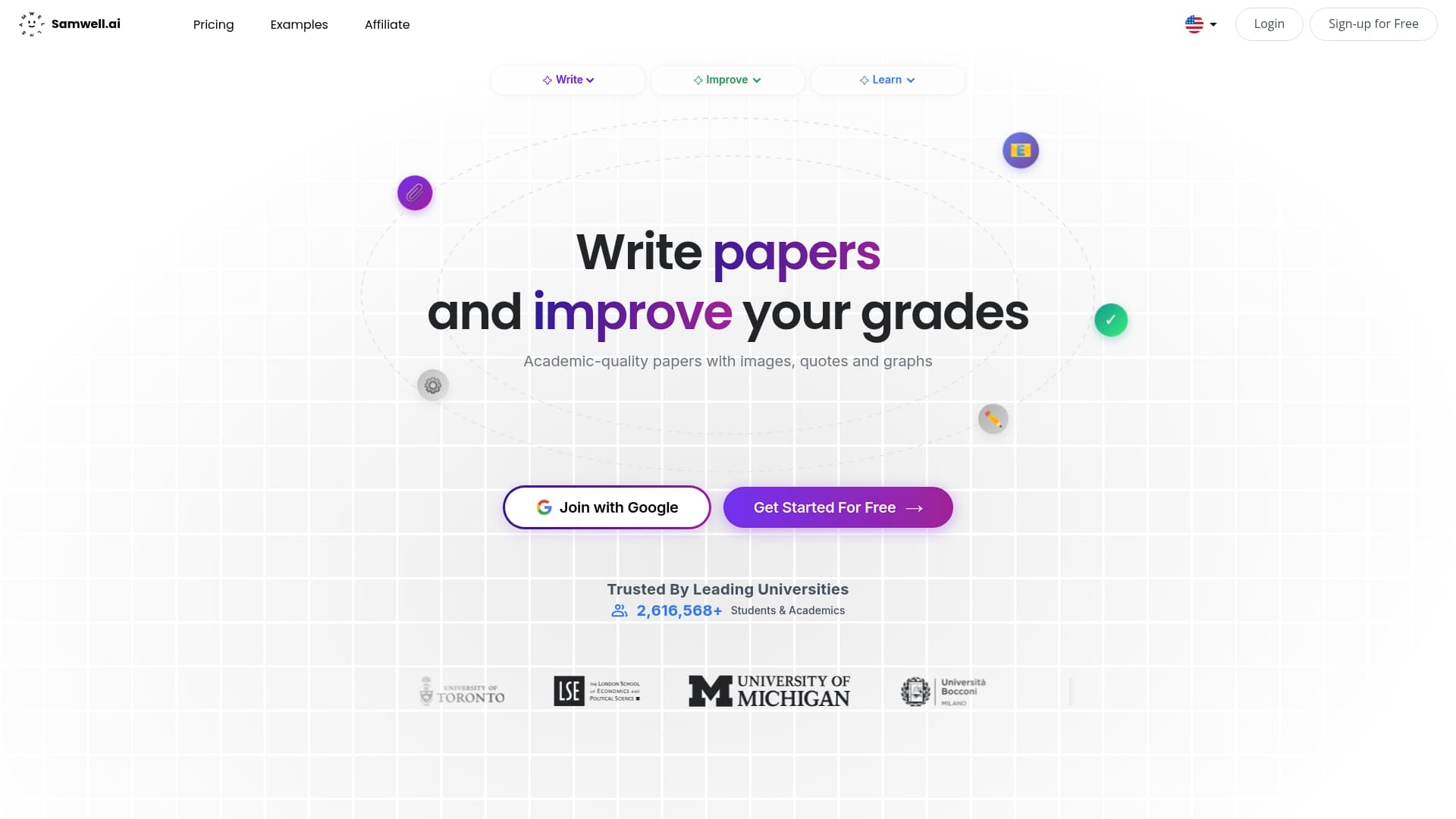
Samwell.ai reports a clientele of over 1,000,000 students and academic professionals from leading universities. The site targets academic formats such as essays, literature reviews, and scientific papers. It bundles targeted editing tools with real-time AI detection checks and source controls.
Samwell.ai supplies AI-powered academic writing assistance that can generate essays, research papers, literature reviews, and scientific papers while supporting images, quotes, and graphs. Users can upload existing essays for focused improvement, choose citation styles like MLA and APA, and sign in with a Google account for quick access. The platform also includes a Power Editor for targeted edits and Guided Essays for structured outlines, plus a Semihuman.ai layer to reduce plagiarism risks.
Samwell.ai centers features specifically on academic writing and research rather than general content creation. The toolset arranges content around scholarly needs such as citation alignment, source selection, and visual or quoted evidence. That academic focus alters how the platform composes, edits, and validates text for coursework and papers.
The platform supports a wide range of academic writing tasks from short essays to full literature reviews, which helps users move faster through drafts and revisions. Visual and quotation integration lets students include graphs, images, and sourced quotes without piecing those elements together manually. Easy onboarding with Google login and a free start option lowers the barrier for trial and classroom adoption.
Students and academics who need help drafting, structuring, and polishing academic work will find this comparison site useful. Instructors and educational programs that want a guided writing workflow and built-in citation checks can also use the platform for class assignments. People who need tight control over model behavior and audit trails may require additional safeguards.
The platform’s Power Editor provides a targeted editing workflow that helps expand paragraphs, tighten arguments, and align citations to MLA or APA formats. That capability shortens revision cycles and reduces time spent fixing structure or references. For writers focused on academic standards, this changes a draft into a submission-ready document without multiple external tools.
A university student drafts a research paper and runs it through Guided Essays to create a structured outline. They use Power Editor to expand weak sections and add quotes and graphs from selected sources. The student then checks the text with the real-time AI detection layer and exports a citation-aligned draft for submission.
Website: https://samwell.ai
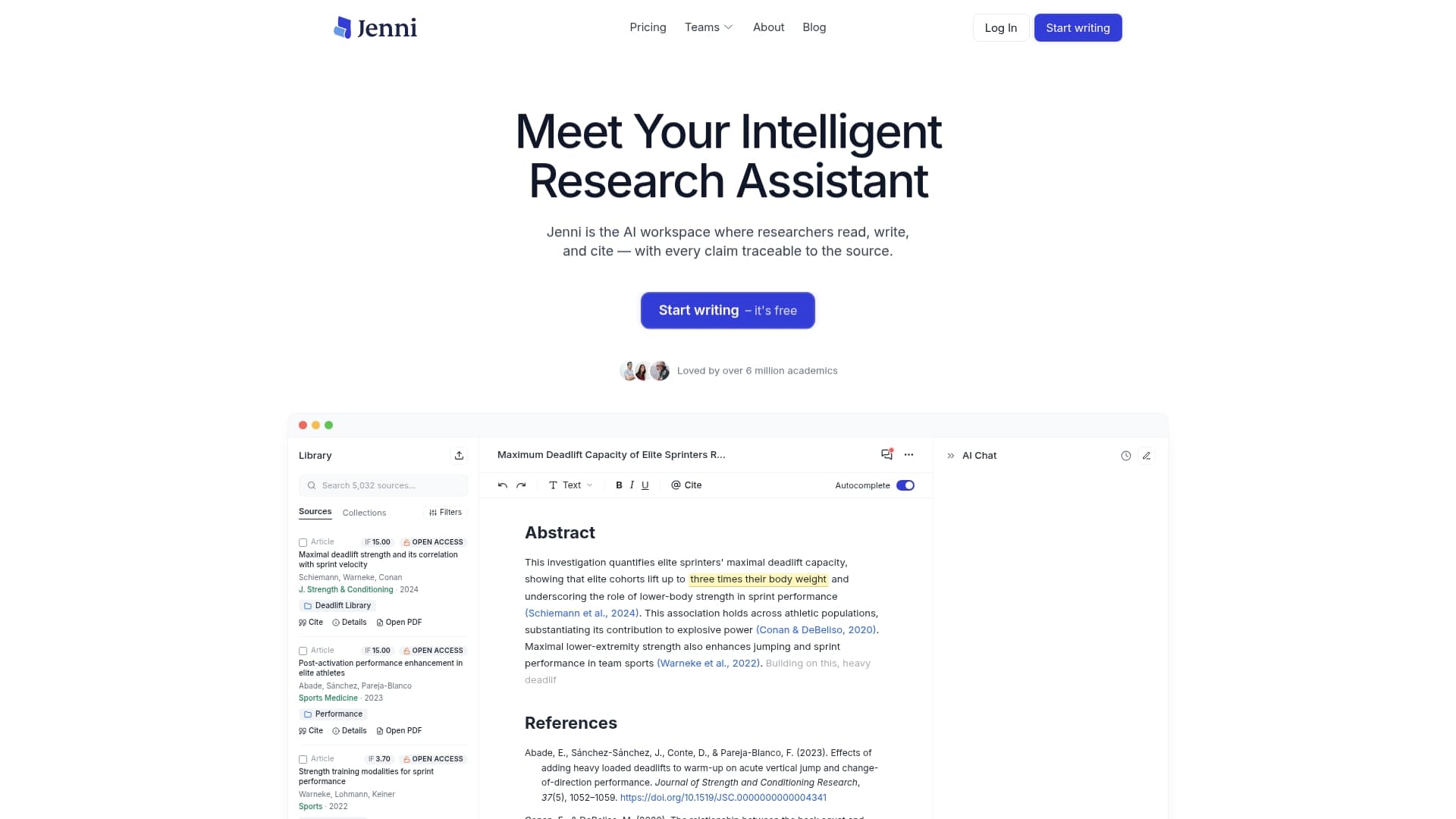
Every AI suggestion links back to the exact location in source PDFs, so you can verify each claim against the original document. The workspace combines outlining, citation management, and real time coauthor editing to hold research materials and drafts together. Jenni's marketing materials state it is trusted by over 6 million academics.
Jenni pairs traceable citations with a structured writing workspace that supports outlining, editing, and collaborative drafting in a single document. The app offers literature review generation tools and claims support for 10,000 citation styles, which helps match journal and institutional formatting. Coauthor collaboration happens live so teams can edit, comment, and track revisions together.
Every claim and citation in Jenni maps to the exact PDF and page location, which makes verification straightforward for reviewers and editors. That focus on source traceability narrows its appeal to researchers and academic teams who need provenance for each assertion rather than general purpose essay drafting.
Jenni provides transparent, source linked AI suggestions that reduce guesswork when compiling evidence and citations. The platform covers the full research writing workflow from literature synthesis to collaborative drafting and citation formatting. That user count above suggests broad adoption among academics, which often correlates with active documentation and community support.
If your work depends on primary data collection or reproducible statistical pipelines, Jenni may not cover those needs. Teams writing deeply technical methods sections or domain specific code examples may find the model less helpful. Individual researchers on tight budgets should weigh the paid tiers against required features.
Researchers, graduate students, and academic teams who require source verified writing and collaborative drafting will benefit most. It suits people preparing literature reviews, manuscript drafts, grant proposals, or collaborative syntheses that need traceable evidence for each claim.
A university research team drafts a manuscript with multiple coauthors using Jenni to gather citations, generate a literature review outline, and place source linked quotes directly next to draft paragraphs. Each claim in the draft points back to the original PDF location for reviewers.
Jenni offers a free tier for basic use. The paid plans start with Plus at $12/month and move to Pro at $29/month for advanced features and collaboration tools. Choose the plan that matches your team size and citation needs.
Website: https://jenni.ai
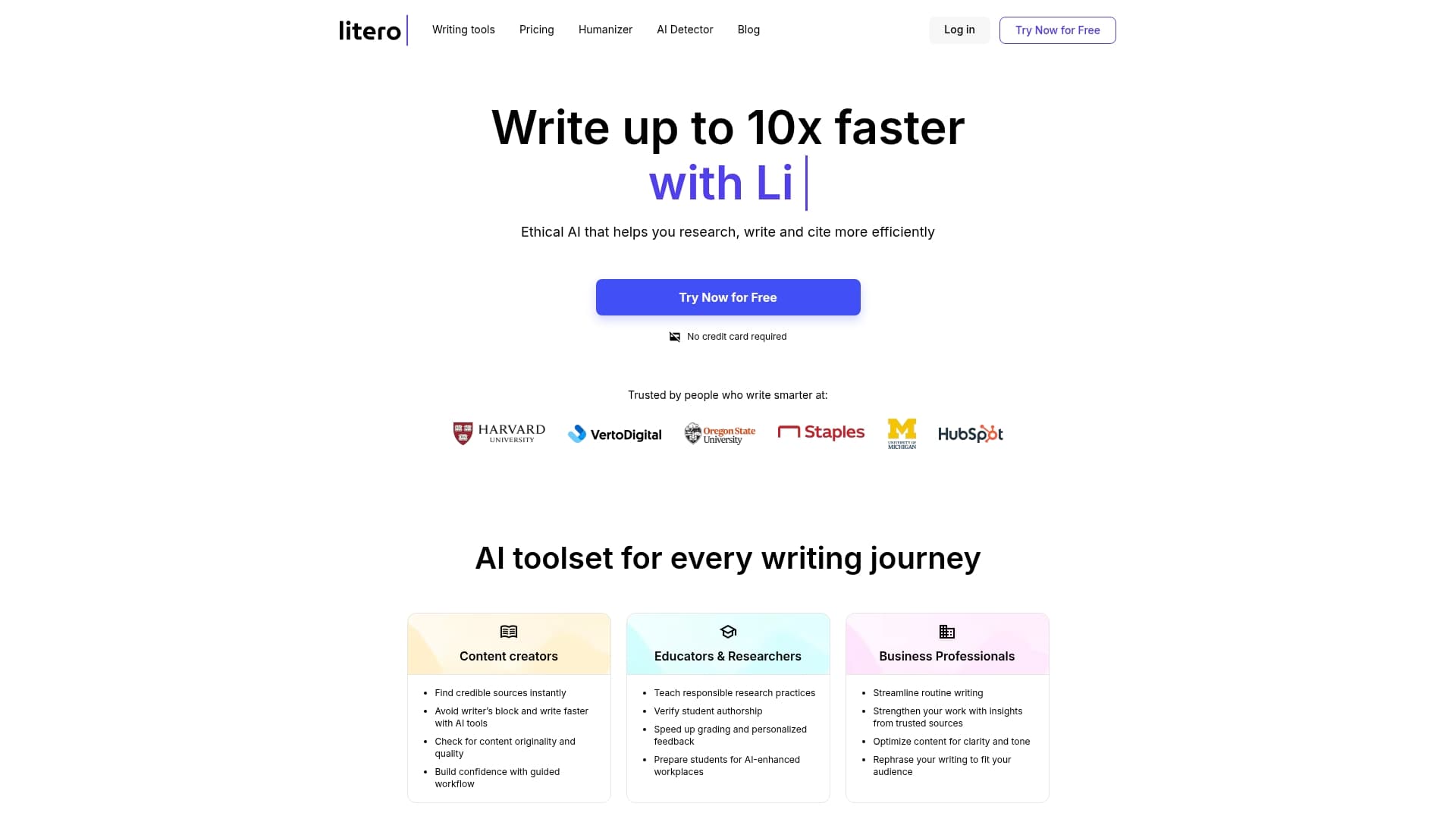
Litero AI reports access to over 10 million academic sources from JSTOR, Google Scholar, and DOI indexes. The platform focuses on source based, author driven writing with tools that span drafting to final edits. It highlights AI detection and citation support to help preserve originality in academic work.
Litero AI combines a citation tool, an outline builder, and an AI writing assistant so you can move from idea to draft without switching apps. The text polishing suite handles grammar, punctuation, paraphrasing, and rewording while the platform flags AI generated passages with inline detection highlights. Source management includes citation formatting and verification tied to scholarly databases.
The standout feature is the pairing of built in academic sources with integrated AI detection tools. That combination lets you attach verifiable references while checking for machine generated text in the same workflow. For academics and educators this reduces the friction of sourcing and authenticity checks during drafting and revision.
Litero AI gives you source based writing rather than blind AI output. Its citation tool connects to major scholarly indexes which helps when you must cite primary research. The guided workflows and polishing tools keep drafts tight, and the presence of AI detection tools supports responsible use of automated writing.
If you need fully automated bibliography formatting across niche citation styles, this tool may slow you down. Teams that rely on deep template customization or programmatic API access will find the platform limited. If you expect flawless AI detection without follow up verification, this product will not meet that expectation.
Students, researchers, and educators who prioritize verifiable sourcing and academic integrity will find Litero AI useful. Content creators and professionals who require source checks alongside editing tools can also benefit. The platform matches readers who accept some manual citation work in exchange for integrated source verification.
A graduate student builds an outline in Litero AI, pulls scholarly references into the draft, and uses the writing assistant to expand sections. They run the AI detection check and adjust passages flagged as machine generated before finalizing citations. The workflow keeps notes, sources, and revisions together for submission.
A free plan is available with limited features and source verification. The Premium subscription starts at $7.9/month when billed annually and unlocks unlimited tools and source checks. Volume or institutional pricing is not publicly listed.
Website: https://litero.ai
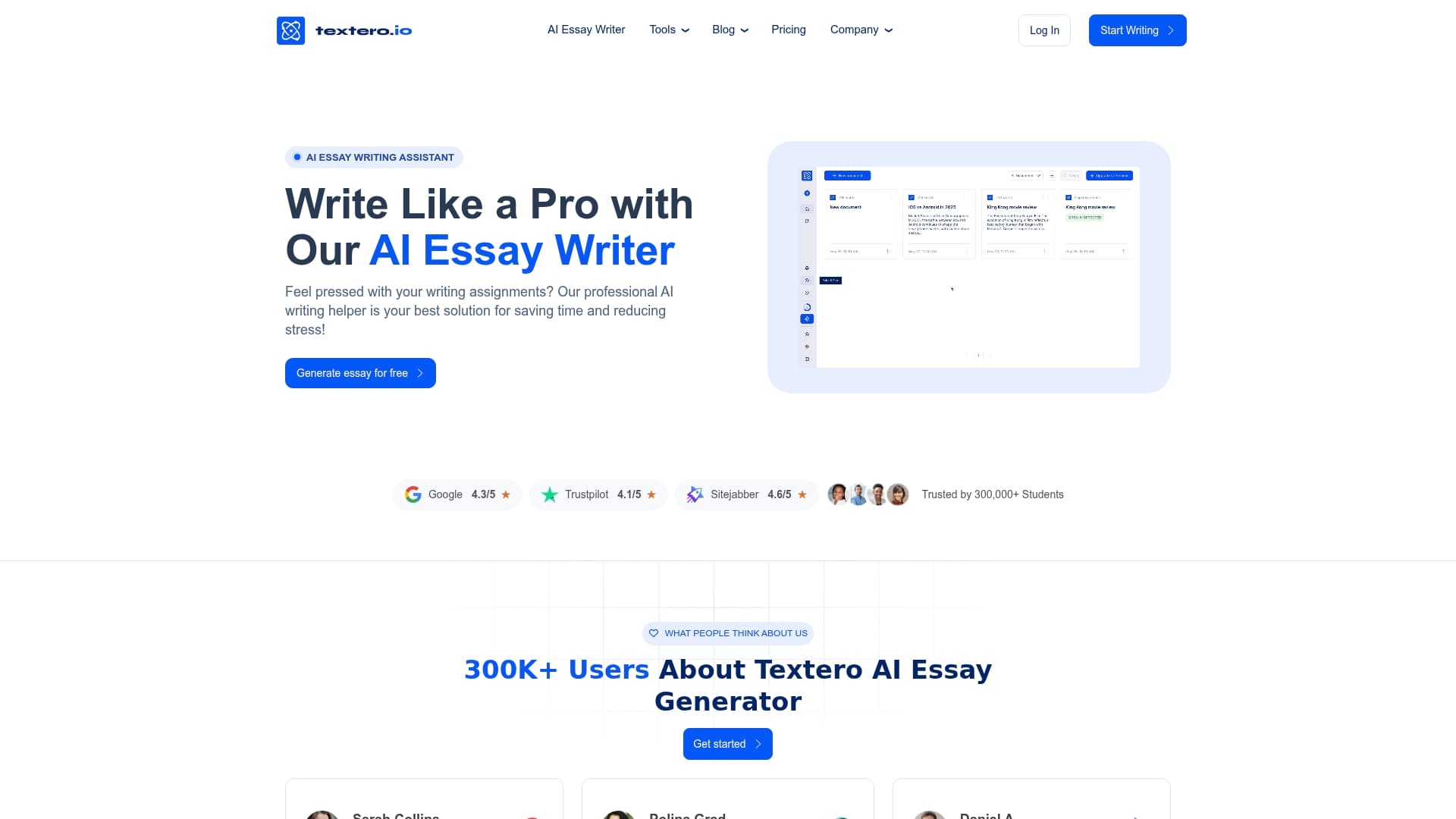
Textero reports over 300,000 users worldwide. That figure highlights its focus on academic workflows rather than casual copywriting. The product combines generation, citation support, and detection tools aimed at producing academically styled drafts quickly.
Textero generates essays and structured outlines and offers in text citations that reference scholarly sources. The editor accepts uploaded files and personal sources so you can incorporate specific research materials. Built in plagiarism and AI detection tools work alongside customizable content and structure controls to help maintain originality and citation accuracy.
Textero trains models on scholarly datasets and bundles citation handling with detection tools to support academic integrity. That pairing reduces the manual work of matching claims to sources while keeping citations formatted. The result is a tool oriented toward research driven writing rather than short marketing copy.
Textero produces academically styled content that reads closer to student and researcher expectations than general purpose generators. It supports multiple languages and handles larger document workflows, which is useful for long papers and literature reviews. The platform combines citation management and plagiarism checking inside the same editor, and the user base referenced above signals community adoption among students and researchers.
If you require copy that matches a distinct creative voice without edits, this tool will add work rather than remove it. Programs that need strict, verified primary sources for every claim will still require manual source checking despite the citation features. Students on tight budgets who write rarely may find the subscription tiers exceed their needs.
Students and researchers from undergraduate to PhD level who need help moving from outline to full draft will benefit most. People who want integrated citation handling and plagiarism checks alongside drafting will get the most value. Academics who prefer to craft every paragraph by hand will find less benefit.
A college student builds an outline in Textero, uploads articles from the university library, and generates a draft that includes in text citations. The student then edits language and verifies each source before applying the required formatting style. This workflow shortens drafting time while retaining full control over final arguments.
Pricing information is available at https://textero.io/pricing. The site lists a free tier plus monthly, quarterly, and yearly subscriptions. Each paid tier provides varying levels of credits and feature access appropriate for frequent academic writers.
Website: https://textero.io
Users evaluating tools for academic writing assistance will encounter distinct advantages among offerings including editing support, feature availability, and application integration. Below, we examine their distinguishing features, supported by the reviewed applications.
Each platform excels in its target use-case scenario. For instance, Samwell.ai provides a targeted academic editing toolkit including unique Power Editor functionalities to ensure text aligns with citation formats like MLA and APA. On the other hand, Jenni emphasizes traceable citations, embedding source origins directly into manuscript claims. The Litero AI suite combines integrated scholarly source verification and effective AI-detection mechanisms, aligning well with high standards of reference validation. Lastly, Textero focuses efforts on generating academic-style drafts coupled with internal detection tools and multilingual support. These feature contrasts can lead to decisions based on the individual priorities of academic professionals and students.
Cost is frequently a deciding factor among competitive writing solutions. Jenni and Litero AI offer structured subscription models, balancing free-tier access for budget-sensitive users with paid options for growing needs such as referencing tools and team collaboration. Contrastingly, Textero provides credit-based pricing tiers which cater to infrequent usage scenarios but may accumulate costs under regular usage patterns. Samwell.ai falls in line with straightforward entry and scalable functionalities tailored for ongoing academic participation.
Choosing a suitable academic writing assistant depends heavily on specific requirements. Samwell.ai offers a focused platform for producing structured academic content tailored to rigorous formatting expectations across various reference styles. However, when addressing needs such as citation traceability or high-volume collaborative projects, consider options like Jenni or Litero AI to achieve the best results.
Whether you're focusing on academic research composition or tailored editing features, the following comparison highlights tools suited for academic professionals and students writing scholarly content.
| Product | Core Feature | Key Differentiator | Pricing | Limitation |
|---|---|---|---|---|
| Samwell | Academic writing and editing | Scholarly-focused features | Price not published | Limited transparency on AI originality models |
| Jenni | Traceable citation management | PDF and page-location verification | From $12/month | Weaker performance in niche technical domains |
| Litero AI | Integrated citation and AI tools | Scholarly source verification | From $7.9/month annually | Manual citation linking in some styles |
| Textero AI Essay Writer | Structured draft generation | Academic-styled AI outputs | Price not published | Potential for factual inaccuracies |
Many students and academics need reliable tools that focus on academic standards and reduce plagiarism risks. Samwell offers an AI-driven platform tailored for essay and research paper writing with unique features like the Power Editor and Semihuman.ai technology to meet these needs. With real-time AI detection and support for MLA and APA citations, Samwell helps users produce well-structured, credible papers efficiently.
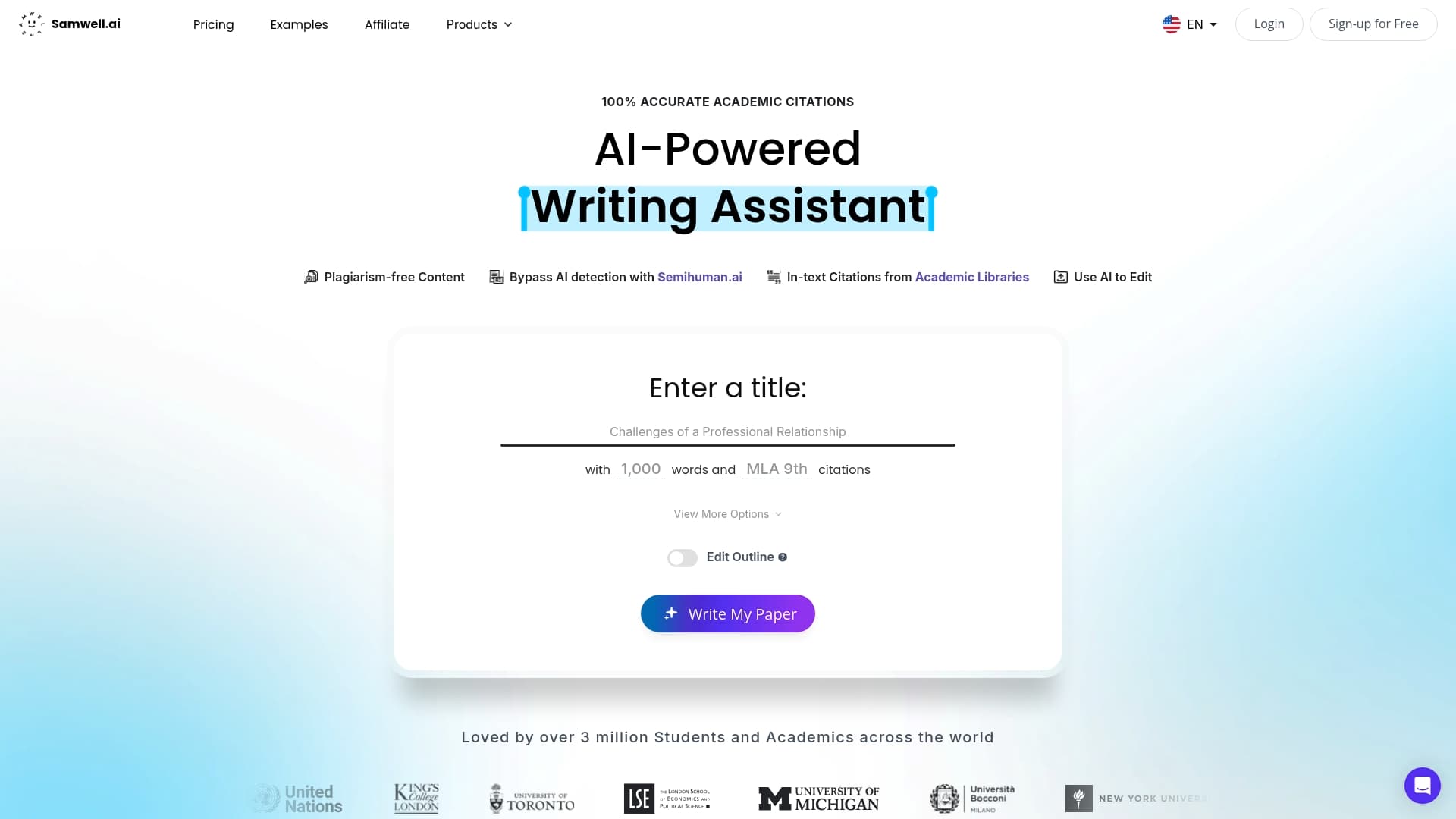
Explore how Samwell can simplify your academic writing process. Visit Samwell.ai to start improving your drafts with Guided Essays, expand your paragraphs with the Power Editor, and maintain originality—turn your ideas into submission-ready work with confidence.
Samwell excels at generating essays, literature reviews, and scientific papers. It offers targeted editing tools with real-time AI detection checks and source controls, making it well-suited for academic writing tasks.
Jenni is known for its live coauthor collaboration, allowing multiple users to edit and comment together. Samwell, while also offering strong editing tools, focuses more on providing structured outlines and targeted edits, which may appeal more to individual students needing guidance in structuring their work.
Samwell does not specify its pricing structure in the article, but it does offer a free start option to help users test its features. This allows academic users to try the platform without immediate financial commitment.
Yes, Samwell includes citation features that support styles like MLA and APA, which streamlines the process of ensuring proper formatting. This functionality helps academic users maintain accuracy in their references while drafting.
The Power Editor helps users expand paragraphs and align citations, making the editing workflow more efficient. This feature reduces the time spent revising drafts, which is particularly beneficial for students and researchers under deadline pressure.