Loading...

Olhar para uma lista de referências em branco após assistir horas de vídeos no YouTube para o seu trabalho de pesquisa pode ser frustrante. Citar vídeos digitais no estilo APA requer atenção aos mínimos detalhes—desde o nome do canal até a data exata de upload—para atender às expectativas acadêmicas em universidades canadenses e americanas. Ao entender como identificar, formatar e integrar fontes de vídeo, você pode evitar o plágio e mostrar que seu trabalho atende aos padrões acadêmicos profissionais.
| Insight Principal | Explicação |
|---|---|
| 1. Reúna os Metadados do Vídeo Cuidadosamente | Colete detalhes como nome do canal, data de upload e título do vídeo para uma citação APA precisa. |
| 2. Use o Formato de Citação Adequado | Aplique formatos narrativos ou parentéticos para garantir clareza e adesão às diretrizes APA. |
| 3. Integre as Citações Suavemente | Incorpore as citações em sua escrita naturalmente para melhorar o fluxo e apoiar seus argumentos de forma eficaz. |
| 4. Verifique a Conformidade da Citação | Verifique todas as citações para consistência e precisão para manter a integridade acadêmica. |
Citar um vídeo no formato APA requer atenção precisa aos detalhes. Você precisará localizar e reunir informações específicas da fonte do vídeo para criar uma referência precisa. Este passo detalha exatamente como identificar os metadados críticos necessários para uma citação acadêmica adequada.
Comece examinando a página do vídeo minuciosamente. No YouTube, você deve coletar detalhes chave como o nome do canal, a data de upload e o título completo do vídeo. As diretrizes APA recomendam identificar o uploader como o autor principal quando nenhum criador individual específico é nomeado. Observe atentamente o nome do canal exibido sob o player de vídeo e anote a data exata de upload mostrada perto das visualizações do vídeo. O título do vídeo deve ser capturado exatamente como aparece, incluindo qualquer capitalização ou pontuação.
Se o vídeo apresentar um criador específico diferente do canal de upload, você precisará incluir essa informação separadamente. Para documentários, entrevistas ou conteúdo profissionalmente produzido, o especialista ou criador apresentado pode ter precedência como autor principal. Simply Psychology recomenda extrair cuidadosamente todos os metadados relevantes da fonte para garantir a integridade da citação.
Dica profissional: Sempre faça uma captura de tela ou salve os detalhes da página do vídeo antes de fechar para garantir que você tenha informações precisas de citação para o seu trabalho de pesquisa.
Colocar citações corretamente no seu trabalho de pesquisa é crucial para manter a credibilidade acadêmica e dar o devido crédito às suas fontes. Neste passo, você aprenderá como posicionar estrategicamente as citações no texto dentro da sua escrita para apoiar efetivamente seus argumentos e manter as diretrizes do estilo APA.

As diretrizes de citação APA fornecem dois métodos principais para integrar fontes no seu texto: citações narrativas e parentéticas. As citações narrativas introduzem o nome do autor diretamente na frase, enquanto as citações parentéticas colocam o autor e o ano entre parênteses no final da informação referenciada. Ao usar citações narrativas, inclua o sobrenome do autor e o ano de publicação dentro da estrutura da frase. Para citações parentéticas, coloque os detalhes completos da referência entre parênteses imediatamente após o material parafraseado ou citado.
O guia Purdue OWL enfatiza que a colocação adequada da citação é essencial para a escrita acadêmica. Você deve inserir a citação o mais próximo possível da informação que está referenciando, garantindo que os leitores possam facilmente rastrear a fonte da sua informação. Para citações diretas, inclua o número da página junto com o autor e o ano. Lembre-se de que o objetivo é criar uma integração perfeita de fontes que apoie seu argumento sem interromper o fluxo da sua escrita.
Dica profissional: Sempre verifique a colocação das suas citações imediatamente após escrever cada seção para garantir precisão e consistência ao longo do seu trabalho de pesquisa.
Formatar citações de vídeo no estilo APA requer precisão e atenção a regras específicas. Este passo irá guiá-lo na criação de citações no texto precisas para fontes de vídeo que atendam aos padrões de escrita acadêmica e ajudem você a creditar adequadamente suas referências.
As diretrizes de citação APA fornecem duas abordagens principais de formatação para citações de vídeo no texto: narrativa e parentética. Em uma citação narrativa, incorpore o nome do canal ou do criador diretamente na sua frase, seguido pelo ano entre parênteses. Por exemplo, você pode escrever: Smith (2022) discute o impacto da mídia digital em sua análise abrangente de vídeo. As citações parentéticas colocam tanto o autor quanto o ano entre parênteses no final da informação referenciada, como: Estudos recentes destacam o potencial transformador da comunicação digital (Smith, 2022).
Aqui está uma referência rápida comparando citações narrativas e parentéticas no texto em APA para fontes de vídeo:
| Tipo de Citação | Como Formatar | Exemplo de Uso |
|---|---|---|
| Citação Narrativa | Nome do autor na frase, ano em ( ) | Smith (2022) explica... |
| Parentética | Autor & ano juntos entre parênteses | ...mídia digital (Smith, 2022). |
Quando o criador do vídeo não é facilmente identificável, Simply Psychology recomenda usar o nome do canal ou nome de tela como o autor. Se não houver um autor claro, use o nome do canal no lugar de um criador individual. Lembre-se de ser consistente com seu estilo de citação ao longo do seu trabalho de pesquisa e garantir que cada citação no texto corresponda diretamente a uma entrada de referência completa na sua bibliografia.
Dica profissional: Crie uma folha de referência rápida com seu estilo de citação para manter a consistência e reduzir a probabilidade de erros de formatação na sua escrita acadêmica.
Dominar a arte da integração suave de citações é crucial para criar um trabalho de pesquisa profissional e academicamente rigoroso. Este passo irá ajudá-lo a incorporar citações de vídeo em sua escrita sem interromper o fluxo natural de seus argumentos.
As diretrizes de citação APA enfatizam a importância de contextualizar suas fontes. Ao integrar citações de vídeo, pense nelas como evidências de apoio que melhoram seu argumento em vez de interrompê-lo. Use citações narrativas para introduzir a fonte naturalmente dentro da sua frase. Por exemplo, em vez de inserir abruptamente uma citação, você pode escrever: Johnson (2022) explora as implicações tecnológicas demonstrando como a mídia digital transforma estratégias de comunicação.
O Purdue OWL destaca que as técnicas de integração de citações devem manter o ritmo intelectual da sua escrita. Varie suas abordagens de citação para manter seu texto envolvente. Às vezes, coloque o nome do autor no início da frase, outras vezes introduza a citação parenteticamente no final. Certifique-se de que cada citação forneça um contexto claro e apoie o ponto específico que você está fazendo. Seu objetivo é criar uma conversa acadêmica contínua onde fontes externas pareçam extensões naturais de sua própria análise.
Dica profissional: Leia seu trabalho em voz alta para verificar se as citações fluem naturalmente e não interrompem a experiência de leitura.
Garantir que suas citações de vídeo atendam aos padrões APA é o passo final crítico para manter a integridade acadêmica. Este processo requer verificação cuidadosa de cada detalhe da citação para garantir que seu trabalho de pesquisa atenda aos requisitos acadêmicos profissionais.
As diretrizes de citação APA enfatizam a meticulosa verificação cruzada entre citações no texto e sua lista de referências. Revise sistematicamente cada citação de vídeo para confirmar que os nomes dos autores, anos de publicação e formatação correspondem exatamente entre seu texto e a página de referência. Verifique se cada fonte citada em seu trabalho aparece na lista de referências e se cada entrada da lista de referências corresponde a uma citação no texto. Preste atenção especial à consistência de capitalização, pontuação e ao formato autor-data específico do estilo APA.

O Purdue OWL recomenda verificação abrangente de referências para manter a credibilidade acadêmica. Crie uma lista de verificação que inclua a verificação de recuos suspensos, ordem alfabética das referências, datas correspondentes e garantia de que todas as informações da fonte estão completas. Dê espaço duplo às suas entradas de referência e confirme que as fontes de vídeo incluem todos os elementos necessários, como o nome do canal, data de upload, título do vídeo e URL completo. Uma abordagem metódica ajuda a prevenir erros potenciais de citação que poderiam comprometer a qualidade acadêmica do seu trabalho.
Detalhes chave para verificar a conformidade da citação de vídeo em APA:
| Detalhe a Verificar | Por Que É Importante | Como Verificar |
|---|---|---|
| Consistência do Nome do Autor | Previne citações incompatíveis | Correspondência no texto e lista de referências |
| Ano de Publicação | Garante rastreabilidade da fonte | Verifique a data de upload |
| Precisão do Título | Mantém a integridade da citação | Use a redação e formatação exatas |
| URL e Nome do Canal | Permite que leitores encontrem o original | Teste o URL e confirme o canal |
Dica profissional: Use uma ferramenta de gerenciamento de referências digital para rastrear e verificar automaticamente suas citações para máxima precisão e eficiência.
Dominar citações de vídeo no texto em APA pode ser desafiador, especialmente ao buscar precisão e integração perfeita em seus trabalhos de pesquisa. O estresse de verificar nomes de autores, datas de publicação e detalhes de formatação muitas vezes desacelera seu processo de escrita e ameaça a integridade acadêmica. Se você deseja evitar erros de citação e manter um fluxo de escrita suave, você precisa de ferramentas inteligentes projetadas para apoiar suas necessidades específicas na criação de citações impecáveis e trabalhos bem elaborados.
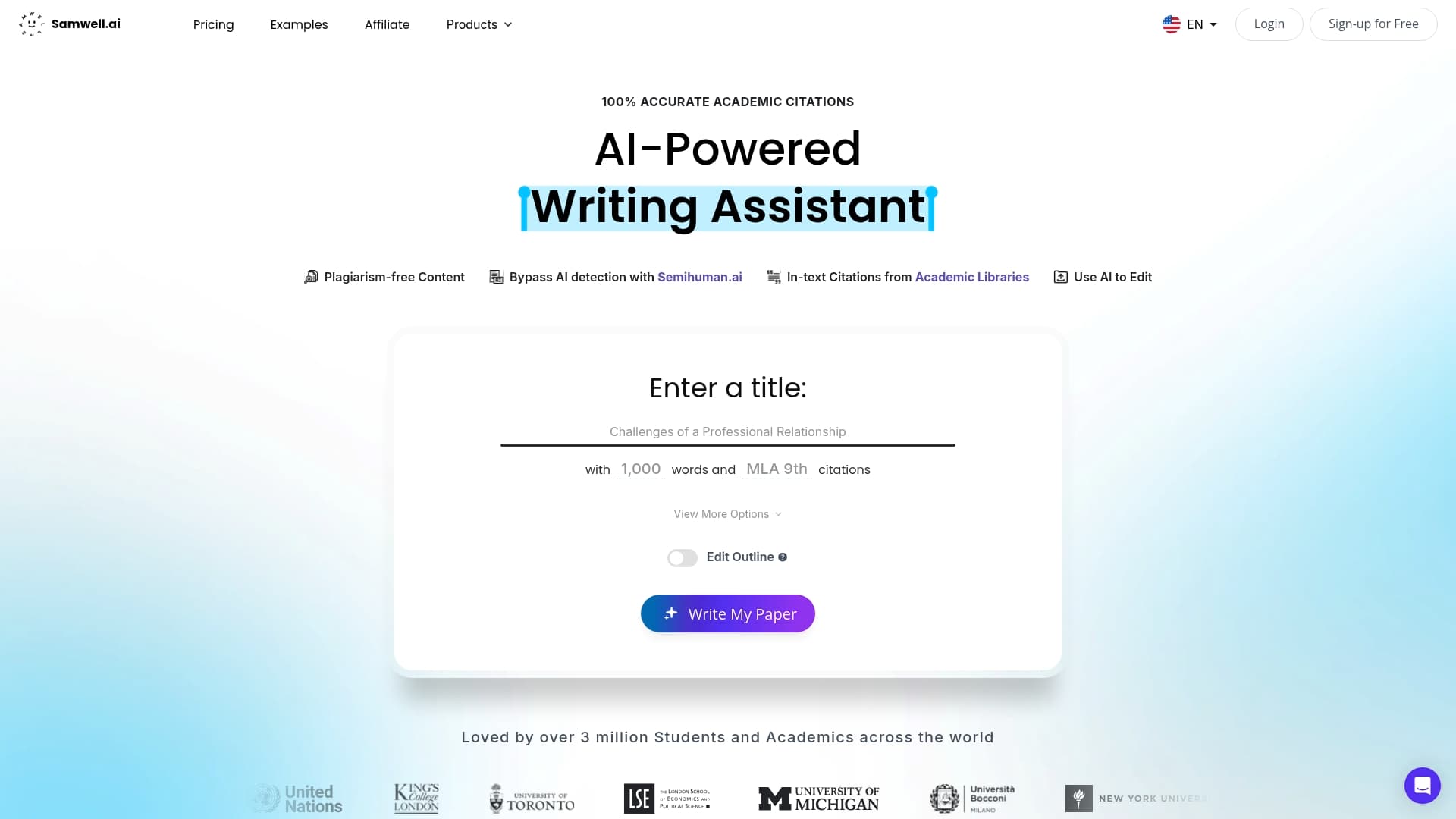
Desbloqueie o poder do Samwell.ai, uma plataforma impulsionada por IA voltada para estudantes e acadêmicos que buscam precisão e originalidade. Com recursos como um Editor de Poder sofisticado, Ensaios Guiados e detecção de IA em tempo real, o Samwell.ai ajuda você a gerar, editar e verificar suas citações, incluindo formatos complexos como referências de vídeo em APA. Não deixe que os desafios de citação atrasem seu progresso. Visite Samwell.ai agora e assuma o controle de sua escrita acadêmica com confiança.
Para começar a citar um vídeo no formato APA, identifique a fonte e reúna detalhes específicos como o nome do canal, data de upload e título do vídeo. Examine a página do vídeo cuidadosamente e anote essas informações antes de prosseguir para criar sua citação.
No estilo APA, uma citação narrativa inclui o nome do autor diretamente na frase, enquanto uma citação parentética coloca o autor e o ano entre parênteses no final da informação referenciada. Por exemplo, escreva Johnson (2022) apresenta... para uma citação narrativa ou ...como observado no vídeo (Johnson, 2022) para uma parentética.
Para garantir a conformidade com as diretrizes APA, verifique se suas citações no texto incluem o autor e o ano corretos com base nos detalhes originais do vídeo. Revise suas citações em relação à sua lista de referências para confirmar a consistência no formato de nome e data—este passo ajuda a manter a credibilidade acadêmica no seu trabalho.
Se não houver um criador específico para um vídeo, use o nome do canal como o autor na sua citação. Isso permite que você dê o devido crédito e garante que suas citações sejam precisas.
Para verificar a precisão das citações, faça uma verificação cruzada de suas citações no texto com sua lista de referências para garantir que cada fonte esteja corretamente correspondida. Use uma lista de verificação para confirmar detalhes como nomes de autores, anos e requisitos de formatação—este processo de revisão minuciosa pode reduzir significativamente erros potenciais antes da submissão.
Para integrar citações de vídeo suavemente, introduza a fonte naturalmente dentro de suas frases em vez de inseri-las abruptamente. Procure variar os métodos de citação ao longo do seu trabalho para manter a experiência de leitura envolvente enquanto reforça seus argumentos.