Loading...

Every American graduate student knows the pressure of balancing research quality with strict academic integrity standards. In fact, over 85 percent of graduate students in North America report feeling overwhelmed by the demands of organizing sources, drafting structured outlines, and maintaining originality in their academic writing. Efficiently managing your research paper workflow is not just about saving time but also about protecting your reputation as a scholar. This guide explores practical steps and strategic use of AI assisted tools to help you stay on top of your research while honoring academic values.
| Main Insight | Detailed Explanation |
|---|---|
| 1. Organize your sources systematically | Establish a digital filing system and consider using management software for effective source tracking and organization. |
| 2. Utilize AI for outline development | Input your research notes into AI tools to generate structured outlines that enhance your writing process. |
| 3. Maintain academic integrity through citation | Create original content while properly citing sources using accurate references to uphold scholarly standards. |
| 4. Implement advanced editing techniques | Use AI-assisted editing tools to enhance clarity, coherence, and depth in your research paper. |
| 5. Conduct thorough originality checks | Validate your work with plagiarism detection tools and peer review to ensure originality and adherence to academic standards. |
Successful research begins with a systematic approach to collecting and managing your academic sources. The key is creating a structured method that allows quick retrieval and comprehensive tracking of all research materials.
Start by establishing a digital filing system that categorizes sources by topic, relevance, and research stage. Use specialized academic research management tools or create dedicated folders on your computer. Effective research management involves critically evaluating each source for credibility and scholarly merit. Prioritize peer reviewed academic journals, scholarly books, and authoritative publications over generic internet sources. For each source, record essential bibliographic details including author, publication date, title, and publication venue.
Consider creating a master spreadsheet or using reference management software to track your sources comprehensively. Include columns for source type, publication details, key themes, potential quotes, and your personal research notes. This approach transforms source management from a chaotic process into a streamlined academic workflow.
Pro Tip: Create a consistent naming convention for your digital research files that includes date, source type, and primary topic to enable rapid information retrieval.
Here's a quick comparison of popular reference management tools for organizing academic sources:
| Tool Name | Key Features | Academic Use Case | Notable Limitation |
|---|---|---|---|
| Zotero | Browser integration | Easy citation collection | Limited advanced analytics |
| Mendeley | PDF annotation | Collaborative research groups | Interface can be slow |
| EndNote | Robust citation styles | Complex bibliographies | Higher cost for full version |
| RefWorks | Cloud access | Large institutional settings | Less customization options |
Creating a robust research paper outline is crucial for organizing your thoughts and establishing a clear academic narrative. This step transforms your initial research ideas into a coherent roadmap that guides your writing process effectively.

AI technologies for research support can significantly streamline your outline development. Begin by inputting your research notes, key themes, and primary arguments into an AI assisted writing tool. These advanced platforms help you generate structured section headers, identify potential logical connections between ideas, and suggest comprehensive content frameworks. Focus on creating a hierarchical outline that breaks down complex topics into manageable subsections with clear relationships.
Ensure your AI generated outline maintains academic integrity by critically reviewing and personalizing each suggested section. Use the AI output as a starting point rather than a definitive document. Manually refine the structure, adjust section weights, and align the outline with your specific research goals. Pay special attention to creating smooth transitions between sections and maintaining a logical flow that supports your central thesis argument.
Pro Tip: Always cross reference your AI generated outline with your original research sources to verify accuracy and maintain scholarly credibility.
Crafting an academic paper requires a delicate balance between presenting original insights and properly acknowledging intellectual contributions from other scholars. Your goal is to create a scholarly narrative that demonstrates both creativity and academic rigor.
Academic integrity guidelines emphasize the critical importance of developing unique content while meticulously documenting source materials. Begin by synthesizing your research notes into original arguments that build upon existing scholarship. When incorporating external ideas, use direct quotes sparingly and focus on paraphrasing with precise citations. Each reference should add substantive value to your argument and demonstrate your critical engagement with the existing academic discourse.
Carefully track your sources throughout the writing process by maintaining a comprehensive reference log. Use citation management software to record bibliographic details, capture direct quotes, and ensure accurate attributions. Always distinguish between your original thoughts and external contributions by using clear in text citations and a corresponding reference list. Verify that each source is credible, relevant, and directly supports the specific claims you are making in your research paper.
Pro Tip: Create a color coded annotation system in your research notes to immediately distinguish between direct quotes, paraphrased content, and your original analysis.
Transforming a first draft into a polished research paper requires strategic editing that goes beyond basic grammar and spelling corrections. Your goal is to elevate the intellectual depth and clarity of your academic argument.

Advanced editing techniques help researchers systematically improve their manuscript. Start by analyzing the structural coherence of your paper, ensuring each paragraph builds logically upon the previous one and directly supports your central thesis. Use AI assisted editing tools to identify potential gaps in argumentation, detect redundant language, and highlight areas where your arguments could be more precisely articulated. Pay close attention to paragraph transitions, looking for opportunities to strengthen the connections between your key ideas.
Carefully review each section with a critical eye toward scholarly precision. Challenge your own arguments by identifying potential counterpoints and addressing them proactively. Eliminate vague statements and replace them with specific evidence, scholarly citations, and clear analytical insights. Consider reading your draft aloud or requesting peer review to gain additional perspectives on your argumentative structure and clarity. Remember that effective editing is an iterative process that requires multiple rounds of thoughtful revision.
Pro Tip: Create a separate document to track your editing changes and rationale, helping you understand your own revision process and maintain a clear intellectual trail.
This table summarizes the main editing tools and their impact on academic writing refinement:
| Editing Tool | Primary Function | Impact on Paper Quality |
|---|---|---|
| Grammarly | Grammar correction | Improves clarity and accuracy |
| Turnitin Draft Coach | Plagiarism checking | Ensures originality |
| Hemingway Editor | Readability optimization | Increases content engagement |
| Citation Machine | Reference formatting | Prevents citation errors |
The final stage of your research paper workflow involves a rigorous verification process that ensures academic integrity and prevents potential misconduct. Your objective is to validate the authenticity and scholarly credibility of your work before submission.
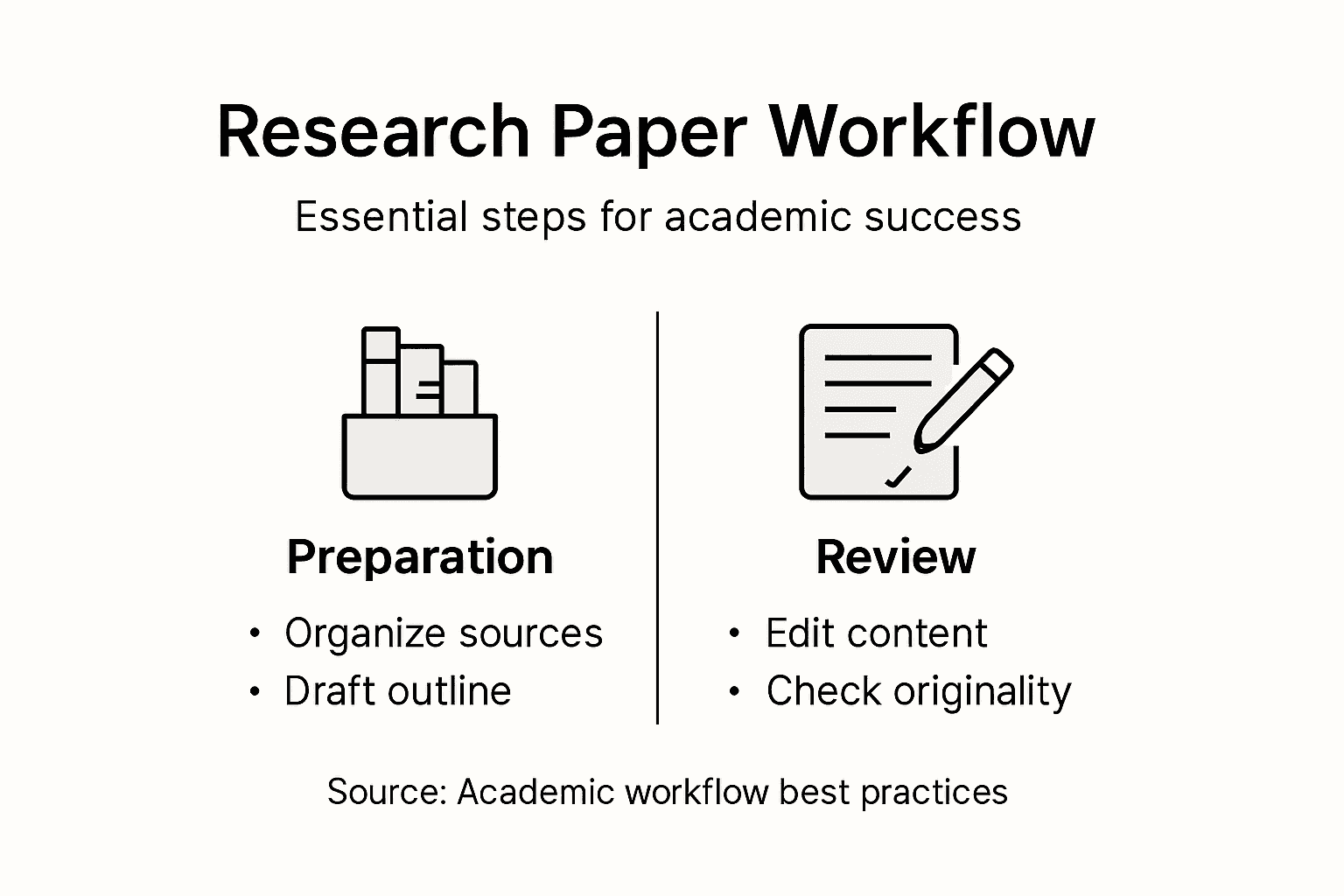
Research integrity protocols require a comprehensive originality check that goes beyond simple plagiarism detection. Utilize multiple verification tools to cross reference your document against academic databases, ensuring that every quote, paraphrase, and reference meets scholarly standards. Run your manuscript through advanced plagiarism detection software that can identify potential textual matches, improper citations, and unintentional similarities with existing academic work. Pay special attention to your reference list, confirming that each source is accurately cited and directly supports the arguments presented in your paper.
Beyond technological checks, conduct a personal ethical review of your research process. Examine your methodology for potential biases, verify the accuracy of data representations, and ensure that all contributions from other scholars are appropriately acknowledged. Consider seeking feedback from academic mentors or peer reviewers who can provide an external perspective on your work's originality and scholarly rigor. Remember that academic integrity is not just about avoiding plagiarism but demonstrating intellectual honesty and respect for the scholarly community.
Pro Tip: Create a separate documentation log tracking all originality checks and verification steps to demonstrate your commitment to research integrity.
Mastering your research paper workflow requires not only organization and diligent editing but also the right tools to maintain originality and citation compliance. The article highlights key challenges such as managing sources efficiently, developing structured outlines, and refining arguments while ensuring academic integrity. If you find yourself overwhelmed by tracking citations or worried about plagiarism risks, these common hurdles can slow your progress and increase stress.
Samwell.ai offers an advanced AI-driven platform built to tackle these exact pain points. With its unique Semihuman.ai technology, you can generate high-quality content customized with your sources while maintaining compliance with MLA and APA standards. The 'Power Editor' empowers you to expand and refine your arguments precisely. Plus, the real-time AI detection checks give you confidence in your paper's authenticity.
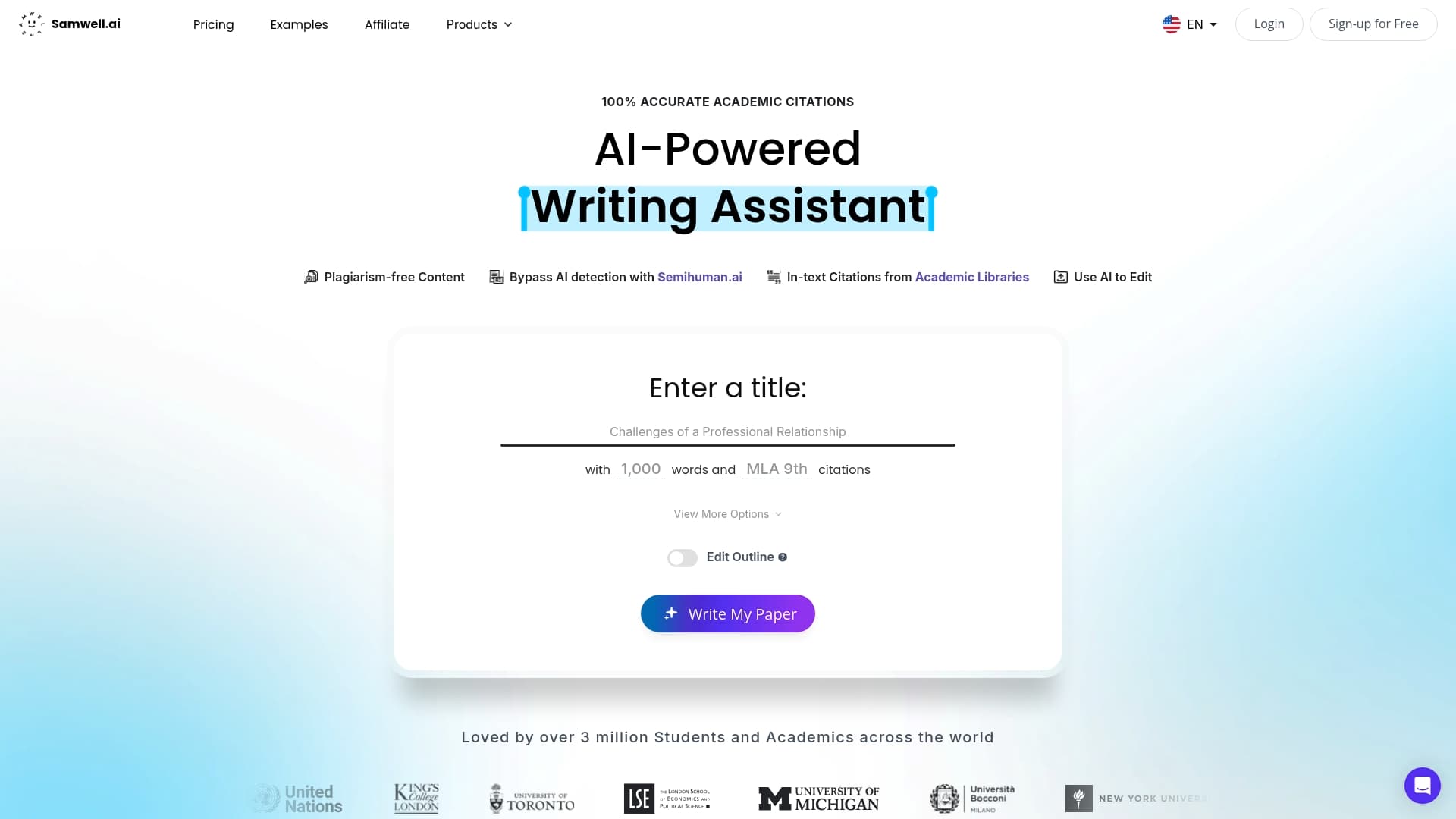
Take control of your academic writing process today. Explore the benefits of structured essay support through Samwell.ai and experience how AI can simplify your research management, outline creation, and content polishing. Start now to transform your research paper workflow into a smooth, efficient path toward academic success.
To organize your academic sources, create a digital filing system that categorizes materials by topic and relevance. Use dedicated folders on your computer or consider utilizing reference management software to easily track and retrieve your sources.
Creating a research paper outline involves using AI technologies to generate structured section headers and highlight logical connections between ideas. Start by inputting your research notes into an AI tool and then customize the generated outline to align with your specific research goals.
To maintain academic integrity, focus on presenting original insights while accurately documenting all sources. Always track your references, use in-text citations correctly, and double-check your references to ensure they support your arguments clearly.
Utilize advanced editing techniques by analyzing your paper’s structure and refining your arguments through multiple review rounds. Consider employing editing tools to identify gaps and redundant language, helping enhance the clarity and depth of your writing.
To verify the originality of your research paper, run it through plagiarism detection software and check your references for accuracy. Conduct a thorough personal review of your methodology and seek feedback from peers to ensure your work reflects intellectual honesty and respect for scholarly standards.