Loading...

Over 90 percent of American universities are now experimenting with artificial intelligence to reshape academic writing. The urgency to adapt is clear as AI-powered tools are transforming how research papers and essays are created. With trends like personalized writing assistance and advanced plagiarism detection, students and scholars face a new set of opportunities—and challenges. This article explores which innovations will define the next year and reveals how American academia is preparing for dramatic changes in writing standards.
| Point | Details |
|---|---|
| AI Adoption in Academic Writing | AI technologies are transforming academic writing, enhancing clarity and compliance with formal conventions across diverse disciplines. |
| Personalized and Adaptive Learning | The future of writing will focus on personalized AI tools that adapt to individual writing styles and needs, promoting collaborative environments. |
| Plagiarism Detection Advancements | Modern AI plagiarism detection systems provide comprehensive originality checks, elevating accountability in academic integrity. |
| Ethical Challenges | The rise of AI in academic settings raises significant ethical concerns, including academic authenticity and the prevention of over-reliance on technology. |
Academic writing is experiencing a profound transformation driven by artificial intelligence technologies. Research indicates AI-powered writing tools are fundamentally reshaping how scholars and students approach research documentation and manuscript preparation. The landscape of academic writing is no longer static but dynamically evolving through sophisticated language models and intelligent assistance.
The emerging trends reveal striking patterns of AI adoption across different academic domains. According to recent studies, generative AI revisions are dramatically enhancing manuscript clarity and adherence to formal writing conventions. Researchers are discovering that AI tools are particularly effective in improving readability, grammar checking, and stylistic refinement. Interestingly, usage varies significantly between native and non-native English speakers, suggesting a nuanced technological integration.
Key AI writing trends for 2025 will likely center around several critical developments:
As academic institutions grapple with these technological shifts, the fundamental challenge remains maintaining academic integrity while leveraging AI's transformative potential. Personalization strategies will be crucial in developing ethical and effective AI writing tools that support rather than replace human creativity and critical thinking.
Academic writing is undergoing a radical transformation through cutting-edge artificial intelligence technologies that are reshaping traditional research and documentation processes. Generative AI systems are introducing unprecedented capabilities for academic writers, enabling more sophisticated approaches to research, writing, and feedback integration.

Research reveals fascinating insights into how advanced language models are changing academic writing methodologies. Doctoral-level studies demonstrate that AI tools are not merely editing assistants but collaborative partners in the writing process. These technologies are disrupting conventional notions of authorship by providing nuanced, contextual support across different writing stages, from initial research conceptualization to final manuscript refinement.
Key emerging technologies transforming academic writing include:
AI writing technologies represent more than just a technological upgrade. They signify a fundamental shift in how academic knowledge is researched, developed, and communicated, challenging traditional boundaries between human creativity and artificial intelligence.
The future of academic writing is increasingly defined by intelligent systems that can adapt and personalize content creation experiences. Recent workplace surveys reveal a stunning 92% of young professionals desire AI tools capable of understanding and mirroring individual writing styles, signaling a profound shift towards more nuanced and contextually aware technological assistance.
Adaptive learning technologies are revolutionizing how academic writers interact with AI-powered writing platforms. Advanced writing assistance tools now offer sophisticated features like personalized citation finding, intelligent grammar analysis, and context-specific writing recommendations. These innovations go beyond simple editing, creating collaborative environments where AI acts as an intelligent writing partner that understands individual learning curves and writing challenges.
Key components of personalized AI writing technologies include:
Content creation strategies are rapidly evolving, transforming AI from a generic writing tool into a sophisticated, personalized learning companion that respects individual creativity while providing intelligent, targeted support.
The landscape of academic integrity is rapidly transforming with the emergence of sophisticated plagiarism detection platforms that leverage advanced artificial intelligence technologies. These cutting-edge systems are designed to identify unoriginal content across multiple formats, providing unprecedented transparency and accountability in academic and professional writing environments.
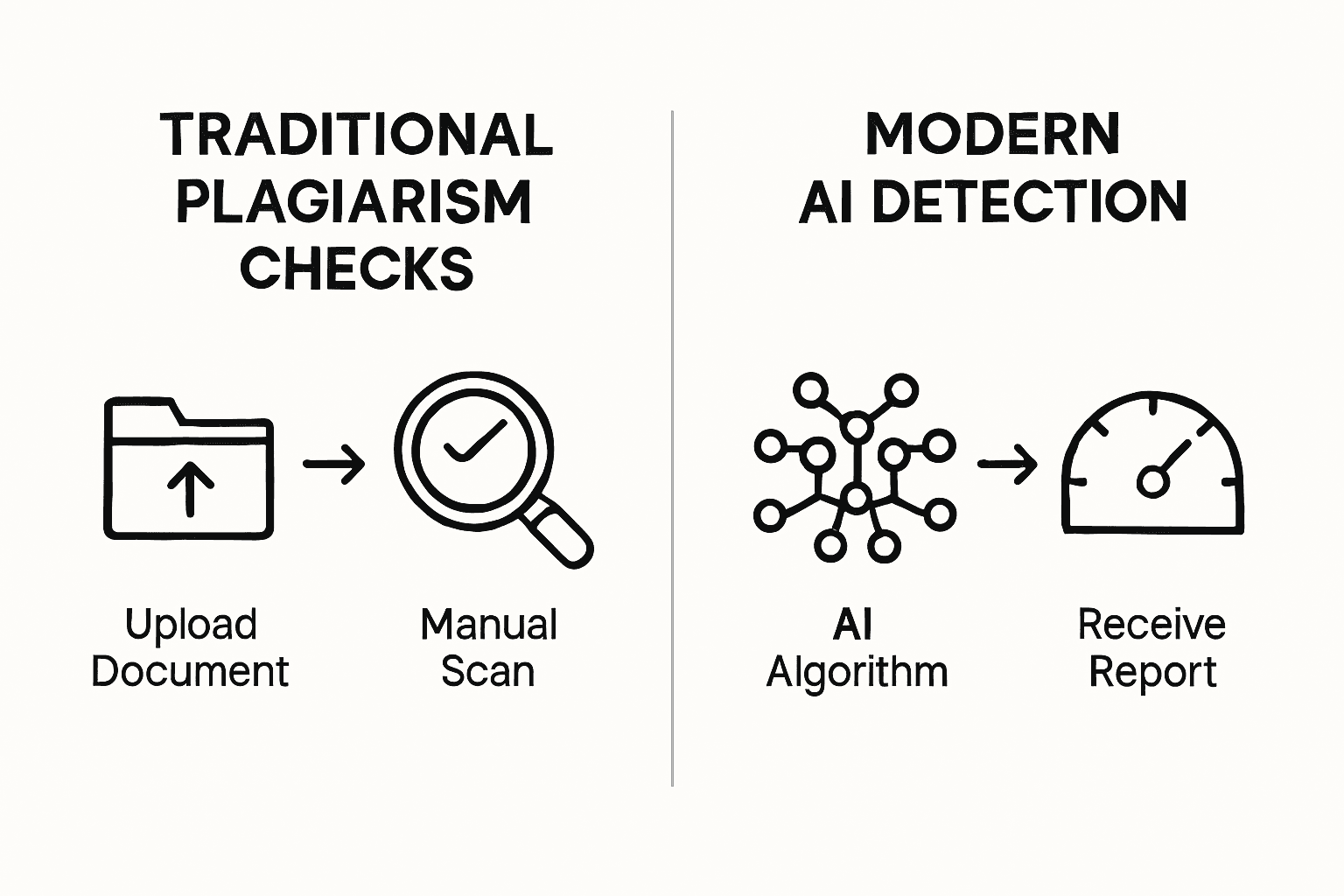
Plagiarism detection software has evolved far beyond simple text comparison, now incorporating complex AI algorithms capable of distinguishing between human-generated and AI-generated content. These intelligent systems analyze writing patterns, contextual nuances, and stylistic variations to provide comprehensive originality assessments that go beyond traditional database comparisons.
Key features of modern AI detection systems include:
Academic dishonesty prevention strategies are becoming increasingly sophisticated, transforming plagiarism detection from a punitive process to an educational opportunity that helps students understand the importance of original thinking and ethical writing practices.
The integration of artificial intelligence in academic environments has triggered profound ethical dilemmas that challenge traditional learning paradigms. Widespread AI tool usage is compelling educational institutions to fundamentally reexamine academic integrity, with educators reporting a significant surge in AI-enabled academic misconduct.
Emerging research reveals complex ethical challenges surrounding AI deployment in educational settings. As institutions increasingly adopt AI for assessment and curriculum development, critical questions arise about the boundaries of technological assistance and academic authenticity. The potential for AI to inadvertently undermine learning processes creates a nuanced landscape of technological opportunity and ethical risk.
Key ethical challenges in academic AI use include:
Decoding AI technologies requires a balanced approach that recognizes both the transformative potential and inherent risks of artificial intelligence in academic contexts, emphasizing responsible implementation and ethical guidelines.
The 2025 trends in AI writing highlight a clear challenge: balancing powerful AI assistance with maintaining academic integrity and originality. Scholars and students face increasing pressure to produce clear, personalized, and ethically sound papers while navigating advanced plagiarism detection and evolving AI writing standards. Samwell.ai directly addresses these pain points by blending innovative Semihuman.ai technology with a commitment to originality and ethical writing practices. Our platform understands your need for personalized writing assistance, real-time plagiarism checks, and tools that adapt to your unique style. Whether you want to expand ideas with our Power Editor or rely on structured help through Guided Essays, Samwell.ai supports every step of your academic journey.
Take control of your academic work today and experience how AI can enhance your writing without compromising your integrity. Visit Samwell.ai to explore our full suite of tools and learn more about personalization strategies that empower your unique voice. Don’t let ethical challenges or technological risks hold you back—discover how intelligent, adaptive AI writing solutions can elevate your research and writing now.
Key trends include personalized writing assistance, advanced plagiarism detection, real-time language enhancement, and multilingual writing support. These trends indicate a significant shift in how academic writing is approached, emphasizing individual user needs and ethical use of AI tools.
AI enhances academic writing by improving readability, checking grammar, and offering stylistic refinements. Advanced language models act as collaborative partners, providing contextual support at various writing stages, from research conceptualization to manuscript completion.
Ethical challenges in AI use include maintaining academic authenticity, preventing over-reliance on technology, ensuring skill development, and safeguarding student privacy. These concerns raise important questions about the balance between technological assistance and genuine learning experiences.
AI aids plagiarism detection through advanced textual analysis that identifies unoriginal content and distinguishes between human-generated and AI-generated material. These systems offer real-time originality tracking and comprehensive assessments that promote academic integrity.