Loading...
Finding an academic writing assistant that streamlines citations, source verification, and originality checks without manual setup remains difficult. Many tools restrict citation style choices, limit free access, or require users to switch apps for detection and editing. This comparison lists features, citation support, and pricing across six academic writing assistants so students and researchers can match a tool to their workflow needs.
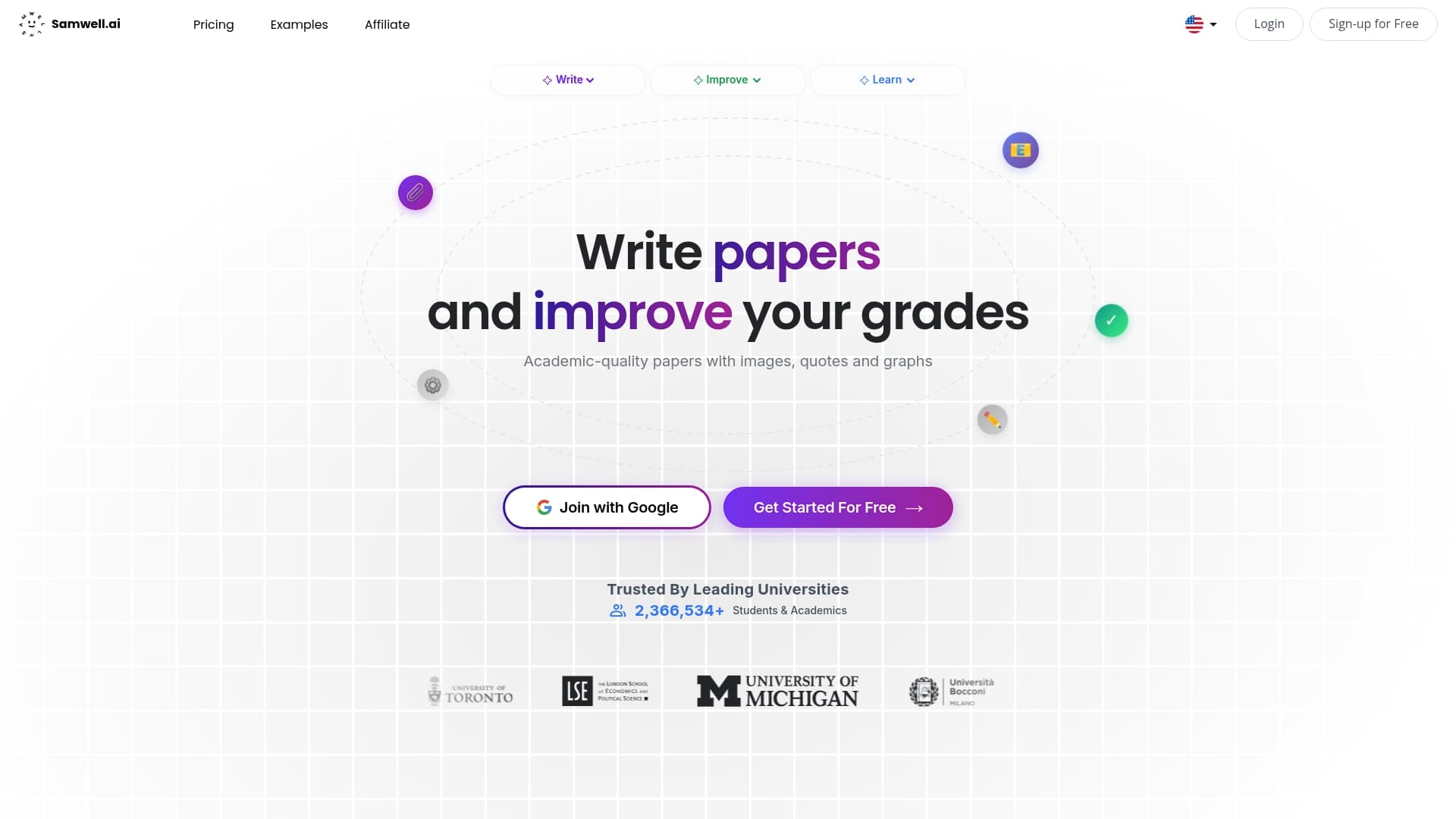
Samwell.ai's marketing materials state a clientele of over 1,000,000 students and academic professionals. The platform lets users start for free via Google authentication and supports essay, paper, and literature review workflows. It also advertises tools to combine text with images, quotes, and graphs inside one document.
Samwell.ai provides AI-assisted drafting for essays, research papers, literature reviews, and scientific manuscripts, with editing tools aimed at clarity and structure. The product supports integrated multimedia, letting you add images, quotes, and graphs without switching apps. Key workflow tools include Power Editor, Guided Essays, and real-time AI detection checks that align with changing detection methods.
Integrated multimedia content creation within the writing flow sets Samwell.ai apart from typical text-only academic assistants. You can request specific sources and embed charts or images directly into drafts. That capability keeps research artifacts together with prose during revision and citation.
Samwell.ai reports wide acceptance among leading universities and a sizable user base, which suggests the product targets academic needs. The sign-up path is simple with Google sign-in, and the vendor allows users to get started for free. The tool suite adapts to several academic formats and supports MLA and APA citation standards.
Students and academic researchers who draft essays, theses, or review articles will find the feature mix focused and practical. Graduate students and early-career researchers who need to combine figures and citations with prose will benefit most. People seeking generalist copywriting tools outside academic formats may find the scope narrower.
Semihuman.ai technology underpins Samwell.ai and aims to reduce plagiarism risks during automated generation. That mechanism lets you request source-backed drafts and then refine them using the Power Editor. For academic workflows, that produces drafts that pair citations, figures, and structured outlines in one session.
A university student drafts a research paper by asking Samwell.ai to include two graphs and three quoted sources. The student revises the draft inside the Power Editor and exports sections formatted to MLA. The final submission keeps figures and references aligned with the text.
Not applicable. The vendor describes the offering as informational only and lets new users join for free via Google authentication. No public tiered pricing or subscription details are listed.
Website: https://samwell.ai
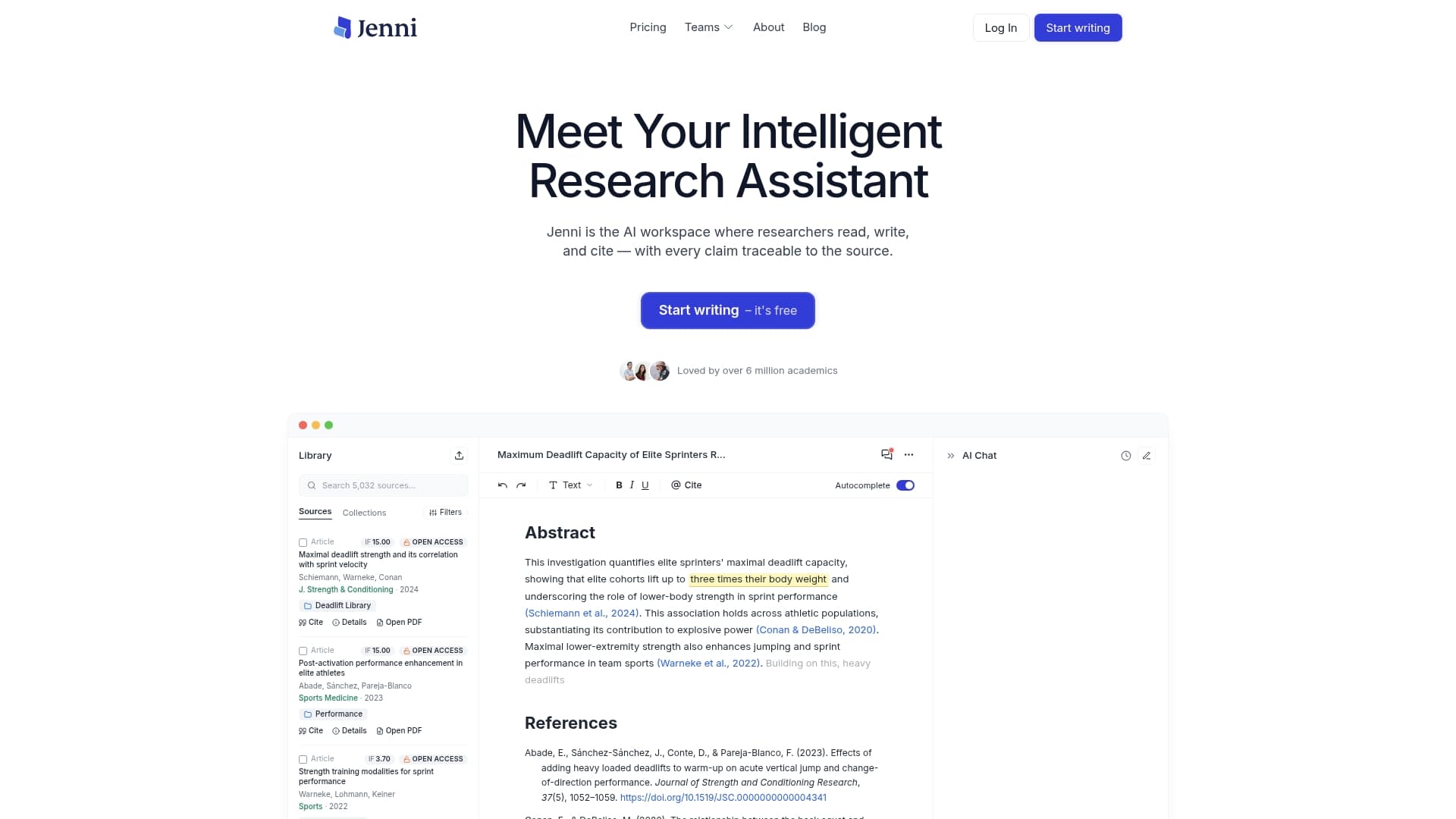
Jenni reports it is trusted by over 6 million academics worldwide. The workspace links claims directly to source PDFs so every assertion can point back to an original document. It also supports over 10,000 citation styles, which covers major journal and departmental formats.
Jenni links claims to source PDFs and provides inline citation insertion inside the document so you can trace a statement to its origin. The platform includes literature review generation, source and PDF management, and citation management across many styles. Real time collaboration, comments, and version control help teams draft and revise shared manuscripts.
Jenni stands out for its emphasis on source traceability. Claims are tied to PDFs rather than floating as unattributed text, which makes verification faster during drafting and peer review. That trace-to-source approach reduces the work needed to validate references during submission.
The product centers on traceability, which reduces the chance of misattributed claims and speeds up verification during peer review. Its literature review tools and citation manager help organize source pools and export references in journal formats. Collaboration features keep coauthors synced with comments and version history while the interface remains easy to use for researchers.
If you prefer a completely automated source discovery flow, Jenni may feel manual because it relies on user uploads and imports. Teams that expect immediate out-of-the-box peer review workflows may need time to set up processes. Groups that lack technical onboarding resources could find the claim confidence tools harder to use without training.
Academic researchers, graduate students, and research teams that require a verifiable writing environment will find Jenni most useful. It fits projects where traceable citations and managed literature reviews matter, such as systematic reviews and grant proposals. Use fits best when teams can commit a bit of time to source curation.
A university research team drafts a systematic review in Jenni. Each claim links to a PDF stored in the project library and citations export in the target journal style. Reviewers use inline comments and the version history to track changes through rounds of revision.
Plans start with a Free tier. Paid options are Plus at $12/month and Pro at $29/month. Paid tiers lift usage limits and add higher quotas for uploads and collaboration.
Website: https://jenni.ai
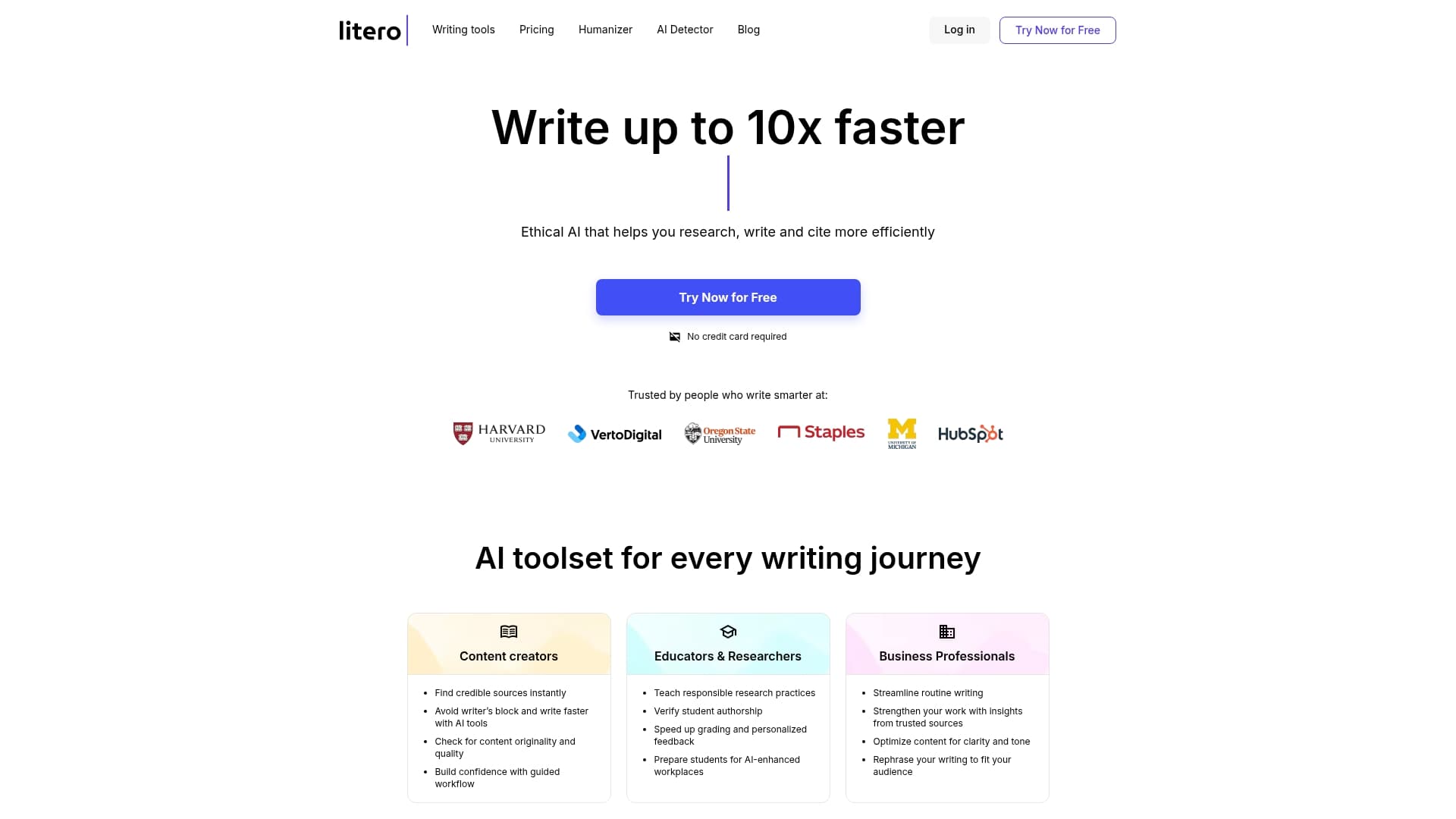
The vendor advertises that Litero can reduce writing time by 40% for a single research workflow. The product pairs source based writing assistance with tools that flag AI generated text and check for plagiarism. It targets writers who need verifiable citations and rapid drafting without losing attention to attribution.
Litero centers on source based assistance that ties writing suggestions to academic sources while offering citation formatting in APA, MLA, and Harvard. The platform includes a built in AI detector, a plagiarism checker, and an outline builder that helps structure drafts before detailed editing. It also provides grammar and style checks plus autosuggest features to speed sentence and paragraph development.
The clearest distinction is Litero’s emphasis on source verification alongside AI detection tools. This design links research and citation mechanics directly to writing suggestions so users can trace claims back to sources. That focus suits academic and research workflows that prioritize traceability and ethical AI use.
Litero helps produce original, well cited drafts faster by combining research, citation, and editing tools in one place. Its source verification and plagiarism checker reduce the risk of unintentional copying and make reference management less manual. The platform highlights AI generated text so writers can review and rewrite flagged passages, supporting responsible AI use. A free tier exists, and the vendor reports paid plans start at an affordable rate, which makes trial and scale practical for students and small teams.
If you need reliable, push button integration with reference databases or citation managers, Litero may not meet that need. Teams that work primarily on mobile devices will find the lack of a dedicated app restrictive. If unconditional AI detection accuracy is critical for compliance workflows, the variable detection accuracy makes Litero less suitable without supplemental review.
Academics, researchers, graduate students, and professional writers who prioritize verifiable citations will benefit most from Litero. Educators and thesis authors who must track sources and highlight potential AI generated passages will find the tool aligned with their workflows. It suits users who prefer desktop research and hands on source management.
A graduate student drafts a literature review by using the outline builder, then pulls citations into the draft while the plagiarism checker runs. The company describes the same scenario as yielding the claimed time reduction; that figure should be treated as the vendor claim. Writers still perform manual review for flagged AI generated text and citation completeness.
A free tier is available for basic use and trial work. Paid plans start at $7.9/month when billed annually and grant unlimited access to most features. The pricing model favors individual students and small research teams who need ongoing access to citation and detection tools.
Website: https://litero.ai
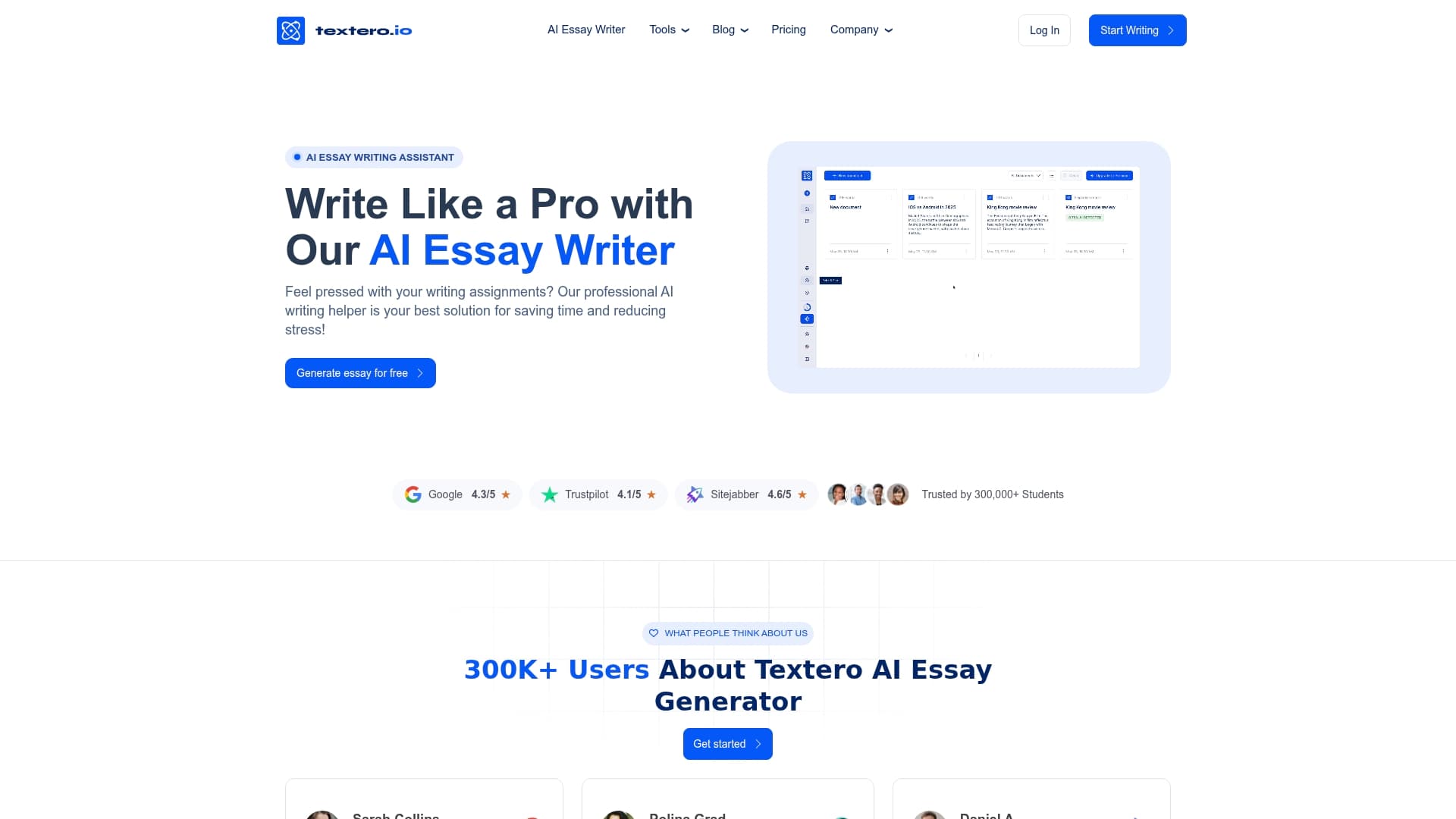
Textero reports over 300,000 users worldwide. It accepts custom source uploads and weaves citations directly into drafts. Built-in AI detection and plagiarism checks aim to protect academic integrity.
Textero generates essays aligned with academic standards while offering tools for outline generation, editing, summarizing, and proofreading. You can upload original sources and insert citations through the editor, and the platform runs plagiarism checks alongside an AI detection tool. The interface supports English, Spanish, and Portuguese for multi language workflows.
Textero was trained on extensive academic datasets and lets you integrate original sources directly into generated drafts. That source integration produces citation rich content and reduces the amount of manual reference work you must do. The approach targets citation accuracy rather than purely template based output.
Textero produces structured, academically oriented drafts that speed initial research and drafting while still letting you edit tone and argument. Its integrated citation management and plagiarism checks keep references organized and visible during revisions. The platform supports large document uploads and multiple language support, so you can work across English, Spanish, and Portuguese without switching tools.
Textero cannot fully replace human judgment for complex research tasks or original creative writing. Academic settings that forbid any AI assistance may still flag outputs despite the platform's checks. If you need an offline editor or a free tool with advanced capabilities, Textero may not match that workflow.
Students and researchers who need a reliable, citation backed writing assistant will get the most value from Textero. Professors and academic staff who edit drafts or suggest structural changes can use its reference tools for faster reviews. Educational programs that permit AI assisted drafting will find it useful for coursework support.
A university student uploads assignment guidelines and several academic sources to Textero. The tool generates a first draft with inline citations and a suggested outline. The student then revises phrasing and argumentation before submitting the personalized paper.
Textero offers free basic tools alongside subscription plans. Paid access starts at $19.99/month for unlimited access, with discounts available for quarterly and yearly payments. The free tier covers simple checks and limited drafts, while subscriptions unlock the full toolset.
Website: https://textero.io
Uniwriter's marketing materials state it offers guaranteed undergraduate-level essays with paid options for higher grades and longer word counts. The service produces custom, referenced essays that follow academic structure and UK citation norms. It also includes template customization, optional grading reports, and a secure account area for stored essays.
Uniwriter generates structured academic output that aligns with UK standards, and it adapts essays to user notes and instructions. The platform offers a grade guarantee and optional independent grading reports to support paid submissions. Account tools cover secure storage and straightforward payment handling for account management.
The vendor advertises that its process pairs referencing and third-party grading with its grade guarantee. That emphasis on an auditable grading report sets Uniwriter apart from generic essay generators. According to the company, the service is guided by decades of essay writing industry experience.
Uniwriter delivers essays framed to UK academic structure, which helps students meet course formatting and citation expectations. Paid options add confidentiality and the grade guarantee, plus independent grading reports for a documented quality check. Multiple subscription plans and simple account flows make it fast to request and retrieve essays.
Primarily aimed at undergraduate work. It is not suitable for PhD or master's level dissertations.
Generates AI-based content with no in-house human editing. That raises ethical or quality-control concerns for some instructors.
Limited language support. The service focuses mainly on English.
No built-in human proofreading or editor assignment. Users who need human oversight must seek external help.
If you are writing a dissertation or advanced postgraduate thesis, Uniwriter is the wrong fit because it targets undergraduate assignments. If you require human editing or supervised collaboration, the lack of direct human oversight will frustrate your workflow. The platform also falls short for multilingual projects because it focuses on English content.
Undergraduate students who want a fast, referenced essay draft that follows UK academic norms will get the most value. Tutors and educators can use the service to check structure and referencing against course expectations. Students who plan to revise drafts themselves will benefit from the template customization and stored essays.
A university student generates a reference-backed essay draft ahead of coursework submission to review arguments and citations. The optional grading report helps the student identify weak sections before revision. The secure account area stores versions for further edits or instructor review.
Pricing starts from £9.99/month for basic access, and the vendor lists additional subscription levels that begin at £4.99/month. Paid tiers unlock confidentiality, grading reports, and higher-grade options depending on plan selection.
Website: https://uniwriter.ai
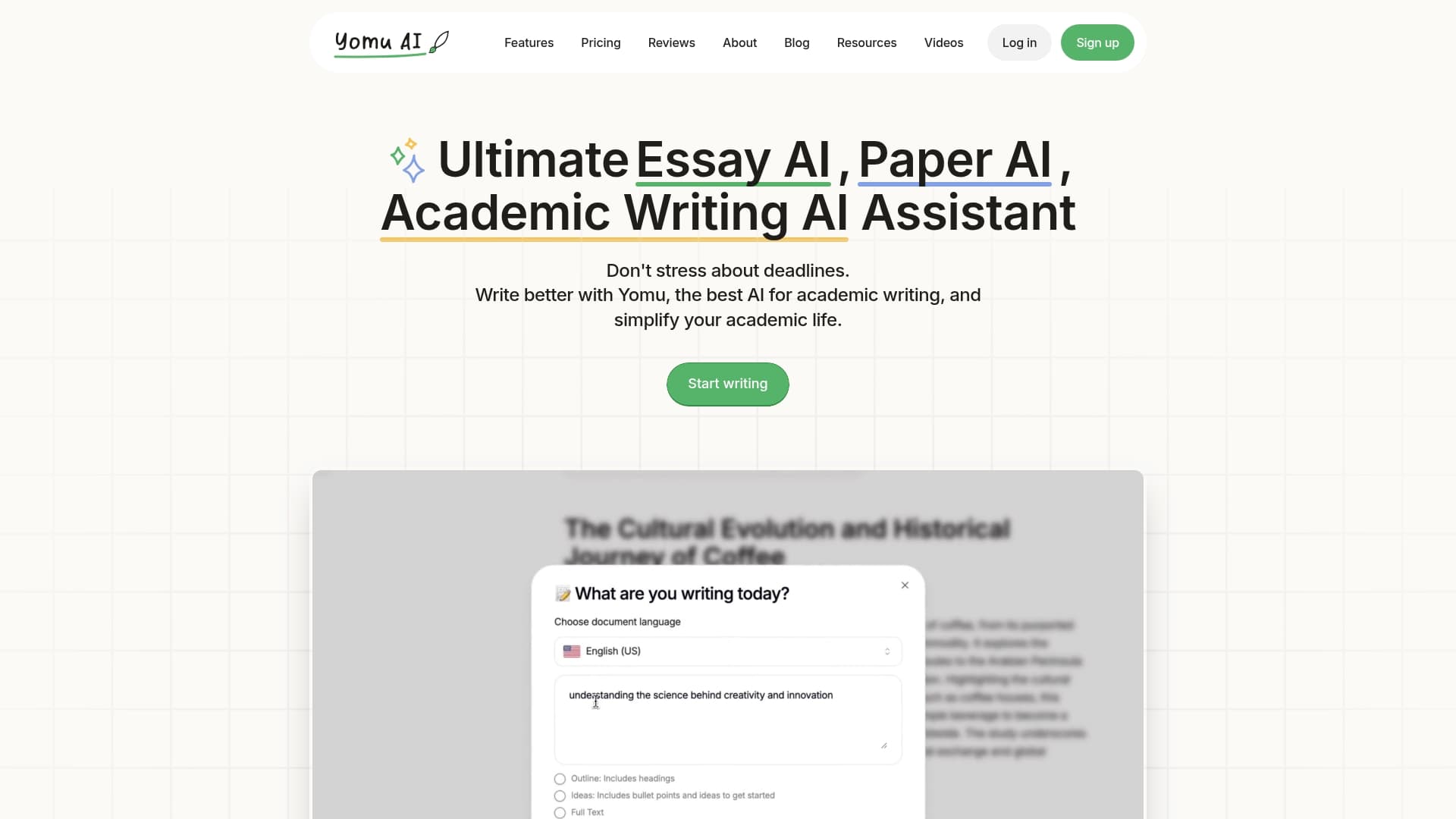
Yomu.ai reports support for 700+ citation styles through a Sourcely integration. That level of citation coverage can cut manual formatting work for complex papers. The editor combines drafting, editing, citation management, and originality checks in one workspace to keep research tasks together.
An AI powered document assistant can draft full sections and a sentence autocomplete speeds composition. Text editing tools let you paraphrase, expand, shorten, and summarize while grammar and style checks refine language. Citation management via Sourcely, plagiarism detection, a reusable source library, chat with PDFs and images, and figure and table support handle common academic workflows.
Yomu.ai bundles drafting, editing, citation management, and originality checking into a single editor. That consolidation reduces app switching for students and researchers who draft and cite in the same document. The integrated approach targets academic work that mixes literature review, data display, and formal citation demands.
The AI tools move stalled drafts forward with section generation and sentence completion that keep momentum. A clean, user friendly interface makes editing and source management faster for people who juggle multiple papers. Built in plagiarism checks and citation features reduce the need to export content to separate tools. The vendor advertises ongoing updates for grammar correction and source handling, and users report meaningful time savings when drafting and revising.
Limited public detail on which features are free or gated behind paid plans. This makes procurement planning harder for departments.
The tool can be misused, and that misuse may affect academic integrity when oversight is absent. Institutions will need guidance and policies.
Available materials give little detail on multi language support, which matters for non native English speakers and multilingual research teams.
If your institution requires transparent licensing and a clear pricing schedule, this offering may be a poor match because pricing information is not listed. Teams that need explicit multi language guarantees should look elsewhere. Also, programs that require strict, audited workflows may prefer an editor with formal compliance statements.
Yomu.ai integrates with Sourcely for citation management and style handling. That integration supplies the citation style breadth mentioned above. The connection keeps references and formatted citations inside the same editor rather than forcing external citation tools.
Students, researchers, and academic professionals who want a single tool for drafting, citing, and checking originality will find the workflow appealing. Non native English speakers who need grammar and style help also gain value. Departments that prioritize centralized source libraries will appreciate the built in citation management.
A university student drafts a research paper inside the editor, uses sentence autocomplete to finish paragraphs, and adds sources from the reusable library. The student runs an originality check and formats citations through Sourcely before exporting a submission. That process reduces manual citation edits and speeds final proofreading.
Pricing is not publicly listed; the product data marks pricing as not applicable and informational only. Prospective buyers should contact Yomu.ai for plan details, academic discounts, or institutional licensing information.
Website: https://yomu.ai
Samwell.ai offers unique multimedia integration making it the preferred tool for producing academically enriched documents which include figures, graphs, images, and citations alongside text. However, competitors such as Jenni.ai and Litero.ai also excel in specific areas that serve diverse academic needs.
Jenni.ai demonstrates leadership in citation traceability by enabling claims to link directly to original PDFs. This feature facilitates manuscript verification, particularly valuable during peer review workflows. For originality detection, Litero.ai combines plagiarism checking with AI detection, helping prepare compliance-conscious academic drafts. Users benefit from Litero's source verification workflows but may need additional time for manual citation imports.
Textero AI Essay Writer provides fast structure generation for academic texts with inline citation features, offering a streamlined editing process. Uniwriter targets undergraduate students focused on guaranteed grades for essays but lacks advanced features suitable for postgraduate work. Yomu.ai consolidates document drafting and citation tools, though limited public pricing data could pose challenges to institutional adoption.
Samwell.ai stands out for its unique feature of integrating multimedia elements within its academic workflows. This capability ensures that figures, charts, and accompanying citations remain together throughout the editing and formatting stages—a critical need for advanced academic projects. While excellent for multimedia workflows, people emphasizing individual citation management may find Jenni.ai more suitable.
Users seeking an academic writing assistant will consider core features, multimedia integration, citation workflows, and pricing.
| Product | Key Differentiator | Best For | Pricing | Limitation |
|---|---|---|---|---|
| Samwell.ai | Integrated multimedia content creation | Academic workflows needing visuals | Price not published | Limited detail on originality checks |
| Jenni.ai | Claims tied directly to PDF sources | Systematic reviews and traceable citations | Free / $12-$29/month | Manual effort required for source curation |
| Litero.ai | Source verification with AI detection | Ethics-focused AI writing workflow | Free / $7.9/month | No mobile app |
| Textero | Direct integration of user-uploaded sources | Structured citation-driven paper drafting | Free / $19.99/month | Limited offline functionality |
| Uniwriter | Guarantee with grading report option | Undergraduate essays with UK standards | £4.99-£9.99/month | Limited language and scope for postgraduate work |
| Yomu.ai | All-in-one drafting and citation tool | Centralized academic research workflows | Price not published | Lack of multilingual support |
Choosing an AI writing paragraph tool that balances academic integrity and efficiency is difficult. Many users want a solution that helps draft essays with accurate citations while reducing plagiarism risks. Samwell meets that need by using Semihuman.ai technology to create source-backed content with MLA and APA compliance. It empowers students and academic researchers with tools like the Power Editor and Guided Essays to structure and polish work effectively.
Samwell offers:
Explore how Samwell works and see how it can simplify your essay and research paper writing. Take a moment to try Samwell and improve your writing while maintaining originality and citation accuracy.
Samwell provides AI-assisted drafting for essays, research papers, literature reviews, and scientific manuscripts. Its Power Editor, Guided Essays, and real-time AI detection checks help users maintain clarity and structure in their writing.
Jenni excels in linking claims directly to source PDFs, making verification easier during drafting and peer review. Samwell offers integrated multimedia content creation, allowing users to embed figures and citations within their text, which is particularly beneficial for comprehensive academic documents.
Samwell does not emphasize real-time collaboration features like some competitors. Users looking for team collaboration may find platforms like Jenni more suitable due to its inline commenting and version control options.
Samwell allows new users to get started for free via Google authentication, but does not publicly list tiered pricing or subscription details, making it accessible for those wanting to try the service before committing.
Samwell supports major citation standards like MLA and APA, making it a good fit for those in academic settings. Users should expect consistent formatting assistance for these commonly used styles.