Loading...

Over 80 percent of American college students report difficulty mastering the essentials of academic writing. Whether tackling essays or research papers, knowing the right steps can save you hours of frustration and elevate your work. Understanding everything from a strong thesis to proper citation not only helps you meet academic standards but also builds skills that last a lifetime. This guide breaks down practical strategies and tools that every American student needs for successful academic writing.
| Key Insight | Explanation |
|---|---|
| 1. Craft a Strong Thesis Statement | A well-crafted thesis is specific, arguable, and concise, guiding your entire academic paper's argument and structure. |
| 2. Organize Ideas with Outlines | Use structured outlines to transform scattered thoughts into a coherent document, showcasing logical flow and supporting your thesis. |
| 3. Support Arguments with Credible Sources | Rely on authoritative sources to substantiate your claims, enhancing the credibility and rigor of your academic work. |
| 4. Use Proper Citation Styles | Proper citations ensure academic integrity and allow readers to trace your sources, essential for maintaining scholarly credibility. |
| 5. Maintain Academic Integrity | Uphold ethical scholarship by citing properly, avoiding plagiarism, and developing your unique voice in academic writing. |
A thesis statement is the roadmap that guides your entire academic paper. Think of it as the central argument that anchors your research and provides readers with a precise understanding of what your work will explore.
At its core, a strong thesis statement does more than simply announce your topic. As academic writing experts from Brandeis University emphasize, it serves as the backbone that guides the argument and structure of your paper. An effective thesis is specific, arguable, and concise.
Crafting a powerful thesis requires strategic thinking. Start by narrowing your topic to a focused claim that you can thoroughly explore within your paper's scope. According to writing guidelines, your thesis should be precise enough to make a clear argument while leaving room for substantive discussion.
Practical implementation involves several key steps:
How to Develop a Strong Thesis:
Remember that a great thesis statement transforms a generic paper into a compelling academic work. It signals to readers exactly what insights and arguments they can expect, creating a clear intellectual contract between you and your audience.
By investing time in developing a clear, focused thesis, you set the foundation for a rigorous and persuasive academic paper.
A structured outline transforms scattered thoughts into a coherent academic masterpiece. By strategically mapping your ideas before writing, you create a clear path that guides your research and writing process.
Effective academic writing strategies emphasize the importance of planning before diving into your paper. A well constructed outline acts as a roadmap, helping you maintain logical flow and prevent your arguments from wandering off track.
Creating a robust outline involves more than simply listing topics. It requires strategic organization that breaks down complex ideas into digestible components. Think of your outline as the skeleton of your academic paper, providing structure and supporting your central argument.
Key Components of a Strong Academic Outline:
Start by brainstorming your core ideas. Capture every potential argument or insight, then systematically organize them from broad concepts to specific details. Academic outline techniques can help you categorize and prioritize your thoughts effectively.
Use hierarchical structures to demonstrate relationships between ideas. Roman numerals for main points, capital letters for subpoints, and numbers for specific details create a clear visual representation of your argument's architecture.
Remember that an outline is a flexible tool. As you research and write, be prepared to adjust your initial structure. The best academic papers evolve through careful refinement and thoughtful reorganization.
Every academic paper stands or falls on the strength of its evidence. Credible sources transform your writing from mere opinion into a rigorous scholarly argument that demands serious consideration.
Academic writing strategies emphasize that supporting arguments requires more than surface level references. You must select sources that are authoritative, current, and directly relevant to your research question.
Essential Criteria for Source Selection:
Understanding source credibility involves examining several key factors. Scholarly sources should demonstrate academic rigor through clear methodologies, transparent research processes, and verifiable data. Developing strong counterarguments can further strengthen your academic writing by showing nuanced understanding.
When evaluating sources, consider their publication date, author credentials, research methodology, and potential biases. Recent publications typically provide more current insights, while established researchers bring depth of expertise.
Remember that quality trumps quantity. Five meticulously selected scholarly sources will always outperform twenty questionable references. Your goal is building a robust intellectual argument that withstands critical academic scrutiny.
Citation styles are the unsung heroes of academic writing. They transform raw research into a credible scholarly work by providing a standardized method for acknowledging intellectual contributions.
Academic writing strategies underscore the critical importance of proper citation as more than just a technical requirement. It is a fundamental aspect of academic integrity that gives proper credit to original researchers and allows readers to trace the intellectual lineage of your arguments.
Primary Citation Style Families:
Choosing the right citation style depends on your academic discipline. Humanities typically use MLA, social sciences prefer APA, while scientific fields often utilize IEEE or Chicago styles. Maintaining academic integrity requires consistent and accurate referencing.
Practical implementation involves mastering the specific formatting requirements for in text citations and reference lists. Pay close attention to punctuation, italicization, and the precise order of author names, publication dates, and source information.
Technology has simplified citation management. Digital tools and reference managers can help you generate accurate citations quickly. However, always review automatically generated references to ensure accuracy and adherence to your specific style guide.
Academic integrity is the cornerstone of scholarly work. It represents a commitment to honesty, trust, and ethical scholarship that goes far beyond simply avoiding plagiarism.
Academic writing strategies emphasize that maintaining academic integrity requires careful attention to how you use and acknowledge other researchers' work. Plagiarism is not just about copying text verbatim it encompasses any unacknowledged use of someone else's ideas, research, or language.
Key Strategies for Academic Integrity:
Recognizing the various forms of plagiarism is crucial. Understanding academic dishonesty helps you avoid unintentional misconduct. This includes everything from direct copying to more subtle forms like mosaic plagiarism where you mix copied text with your own words without proper citation.
Practical prevention involves developing strong research and writing habits. Take detailed notes during research, clearly marking which ideas are your own and which come from sources. Use citation management tools to track your references and ensure proper attribution.
Remember that academic integrity is about more than avoiding punishment. It is about respecting intellectual property, contributing to scholarly dialogue, and building your credibility as a researcher and writer.
Editing transforms good writing into exceptional academic work. It is the crucial final step that polishes your research and ensures your ideas communicate with precision and impact.
Academic writing strategies highlight editing as more than just fixing grammatical errors. It is a comprehensive process of refining your intellectual argument, enhancing readability, and presenting your research in the most professional manner possible.
Essential Editing Focus Areas:
Effective editing requires multiple passes with different objectives. First, focus on structural edits examining the overall argument and paragraph organization. Then conduct a line by line review targeting grammatical precision and identifying potential writing improvements.
Practical editing techniques include reading your work aloud, using digital grammar tools, and seeking feedback from peers or academic mentors. Create distance between writing and editing by setting your draft aside for a few hours or days. This allows you to approach the text with fresh perspective and more critical eye.
Remember that academic writing demands clarity above all. Every sentence should serve a clear purpose communicate your research findings with maximum efficiency and minimum confusion.
Technology has revolutionized academic writing, providing sophisticated tools that can dramatically improve research and composition processes. Advanced writing tools are no longer optional they are essential resources for modern scholars.
Academic writing strategies emphasize the importance of leveraging technology to enhance writing quality and efficiency. These tools go beyond simple spell checking, offering comprehensive support for grammar, style, and research documentation.
Key Advanced Writing Tools:
The landscape of AI writing technologies continues to evolve, providing increasingly sophisticated support for academic writers. These tools can help identify complex grammatical issues, suggest stylistic improvements, and streamline the research and writing process.
Practical implementation involves selecting tools that align with your specific academic needs. Look for platforms that integrate seamlessly with your workflow, offer robust privacy protections, and provide comprehensive support across different citation styles and academic disciplines.
Remember that while advanced tools are powerful, they should supplement rather than replace critical thinking and personal writing skills. Use these technologies as supportive resources that enhance your academic writing capabilities.
Below is a comprehensive table summarizing the key strategies for effective academic writing discussed throughout the article.
| Strategy | Key Points & Actions | Benefits/Outcomes |
|---|---|---|
| Thesis Statement | Be specific, arguable, concise; support with evidence; revise as needed. | Provides a clear roadmap and strengthens the argument. |
| Structured Outlines | Organize main thesis and arguments; use transitions and hierarchy. | Ensures logical flow and clear argument structure. |
| Credible Sources | Use peer-reviewed journals, books by scholars, and reputable databases. | Builds a robust scholarly argument. |
| Citation Styles | Use APA, MLA, Chicago, etc.; ensure accurate formatting. | Maintains academic integrity and credibility. |
| Academic Integrity | Always cite; use quotes and paraphrasing with attribution. | Respects intellectual property and avoids plagiarism. |
| Editing | Focus on clarity, grammar, style; seek feedback. | Enhances readability and professionalism. |
| Writing Tools | Use grammar checkers, reference managers, AI tools. | Improves efficiency and writing quality. |
Struggling to develop a clear thesis, organize ideas effectively, or maintain academic integrity can slow down your writing process and reduce the impact of your research. This article highlights crucial best practices like crafting focused theses, supporting arguments with credible sources, and proper citation — all challenges that every student and educator faces. Imagine having an intelligent partner that helps you overcome these hurdles, ensures plagiarism-free content, and guides you through complex citation styles with ease.
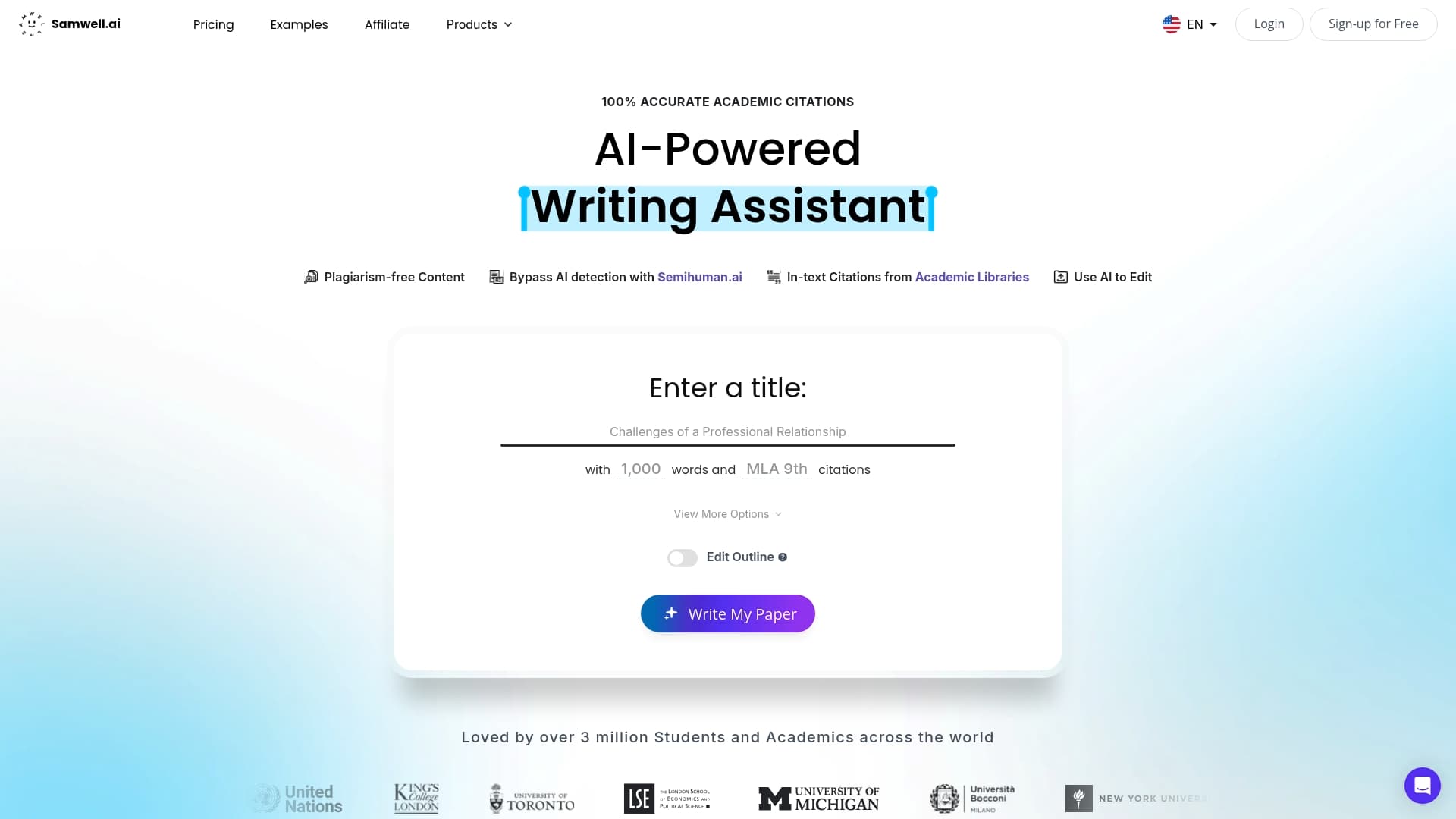
Experience how Samwell.ai transforms your academic writing by offering tools such as Guided Essays for structured outlines, a Power Editor for targeted improvements, and real-time AI detection to maintain originality. Don't wait until deadlines loom to improve your writing process. Start now at Samwell.ai, where advanced AI and semihuman technology empower you to produce high-quality, credible papers every time.
A thesis statement is the central argument that guides your paper. To create one, identify your main argument, make sure it is specific and debatable, and ensure it can be supported by evidence. Aim for a concise statement that sets clear expectations for your readers.
To organize your ideas, create a structured outline that includes your main thesis, primary arguments, and supporting evidence. Start by brainstorming your core ideas and then arrange them logically from broad concepts to specific details, ensuring clear transitions between sections.
You should use credible sources such as peer-reviewed academic journals, published books by recognized scholars, and government research reports. Prioritize sources that demonstrate academic rigor and are directly relevant to your research question.
Proper citation is essential for maintaining academic integrity and acknowledging the contributions of other researchers. Ensure you follow the appropriate citation style for your discipline, such as APA or MLA, and maintain consistent formatting throughout your paper.
To avoid plagiarism, always cite your sources, use quotation marks for direct quotes, and paraphrase with proper attribution. Develop strong research habits by clearly distinguishing between your ideas and those from other sources to maintain originality in your work.
Best practices for editing include focusing on clarity, grammar, and logical flow. Read your paper multiple times, starting with structural edits before moving to grammatical accuracy, and consider seeking feedback from peers for an additional perspective.