Blog
Learning Materials
Top 3 Writer AI Alternatives 2026
Updated: June 30, 2026
Finding an academic writing assistant that produces citation-ready drafts without risking plagiarism is difficult for students and researchers. Many platforms gate advanced citation and plagiarism tools behind paid plans or force manual verification for long documents. This comparison outlines citation, plagiarism, and collaboration features so students, researchers, and instructors can match an assistant to their academic workflow.
Table of Contents
Samwell.ai
At a Glance
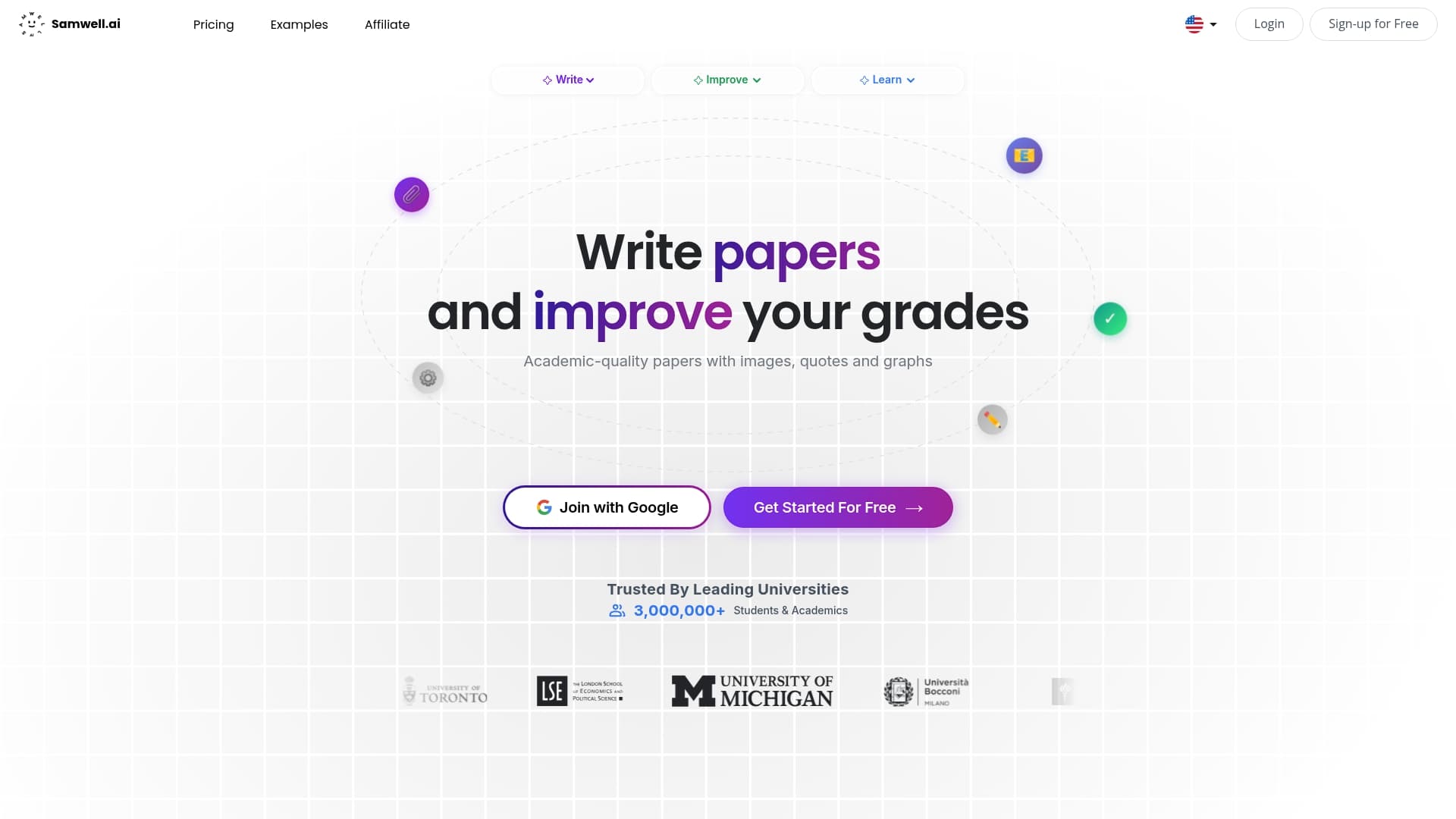
Samwell.ai reports more than 3 million students and researchers as clients. The platform uses Semihuman.ai technology to reduce plagiarism risk while keeping academic phrasing natural. It offers long form support and built‑in citation checks that target MLA and APA styles.
Core Features
Samwell.ai generates academic essays, literature reviews, and research papers and pulls proper citations from over 20 academic sources. The platform includes collaboration tools for real time editing and comments, citation and bibliography management, and content humanization to bypass AI detection tools while preserving a scholarly voice.
The suite also contains a Power Editor for targeted edits and a Guided Essays workflow for structured outlines, plus real time AI detection checks to monitor generated text.
Key Differentiator
Built specifically for academic integrity, Samwell.ai combines authentic citations, long form support, and content humanization tools aimed at reducing AI detection risk while preserving scholarly standards. That focus makes it practical for thesis drafting, literature reviews, and multiauthor classroom projects.
Pros
Samwell.ai ties generated text directly to academic sources, which improves reference credibility and speeds verification. The platform supports collaboration for group projects and instructor feedback, and the Power Editor helps you expand or tighten sections without losing citation links. Content humanization features let you adjust tone and phrasing to match academic expectations, and the system supports long documents up to 50 pages.
Cons
- Engineering-specific source databases are limited, which may reduce coverage for niche technical topics.
Who It's For
Samwell.ai fits higher education students, university researchers, and instructors who write or manage long academic documents. Thesis writers and research teams who need source-linked drafts and shared editing will find the platform practical. Instructors grading group work will value the collaboration and citation tracking.
Unique Value Proposition
Semihuman.ai technology that minimizes plagiarism risk sets Samwell.ai apart by combining source-backed generation with tools to make output read like human academic writing. The result streamlines draft creation while keeping citations intact, so you spend less time cleaning references and more time refining argumentation.
This approach changes the workflow for thesis-scale projects. You can produce a cited draft, edit with the Power Editor, and run detection checks inside the same workspace.
Real World Use Case
A university professor assigns a semester project and uses Samwell.ai to seed literature reviews for student teams. The teams expand drafts with the Guided Essays outline, add figures and citations, and return versions for instructor comments in the shared editor. Plagiarism checks and citation exports speed grading and revision.
Pricing
The basic plan is free and includes 1,000 words of generation. The Academic Plan is $12/month and includes 200,000 words. Custom enterprise plans are available for institutional licensing and larger word quotas.
Website: https://samwell.ai
Grammarly
At a Glance
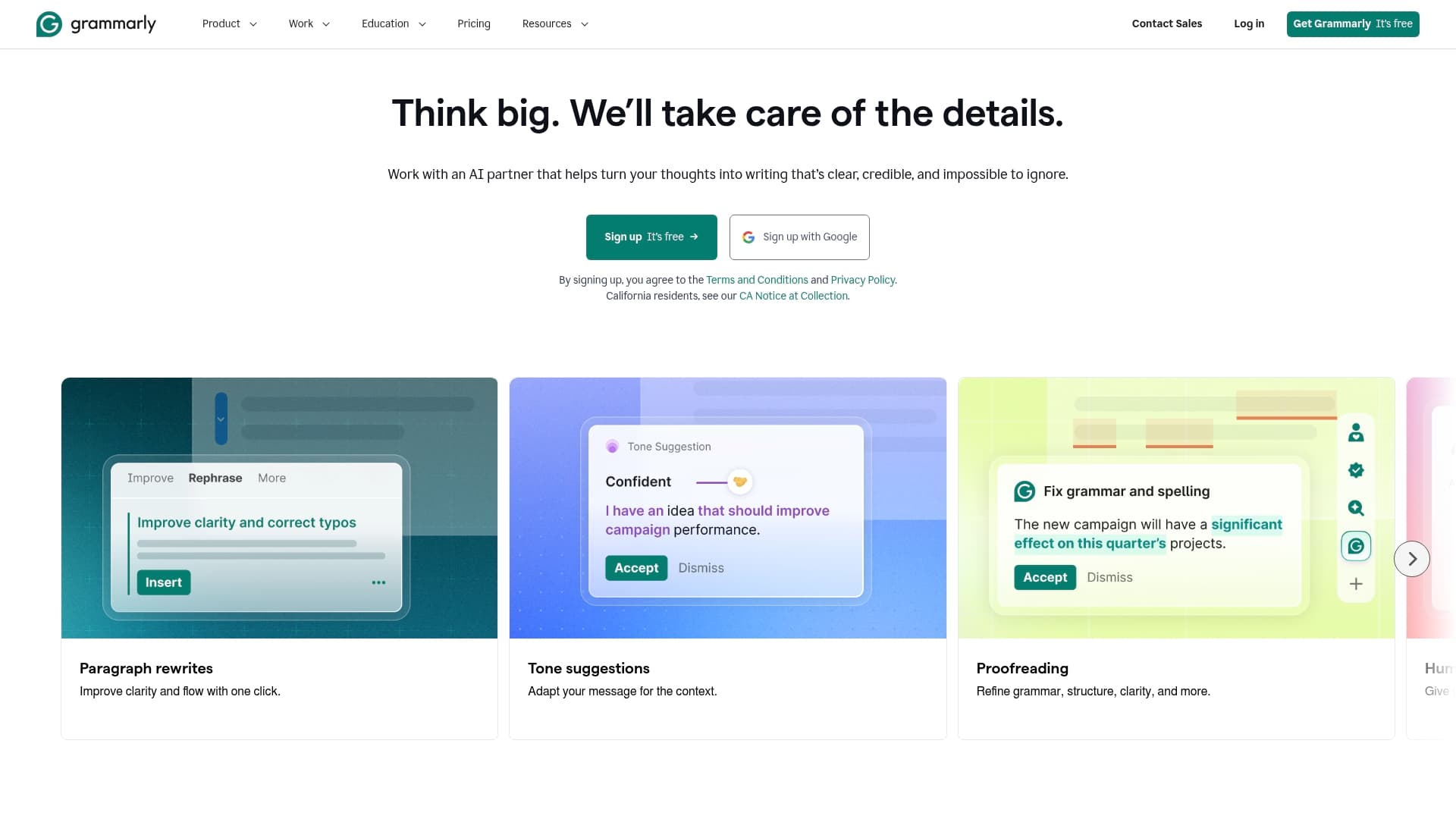
Includes a citation generator and an AI humanizer to adjust tone and phrasing for different audiences. The tool also offers plagiarism detection alongside grammar and clarity checks. That mix makes it practical for academic drafts and polished professional documents.
Core Features
Grammarly pairs Grammar and spell checking with Tone and clarity suggestions to help you refine sentences and paragraph flow. It includes a Plagiarism detection engine, style guide snippets, an AI rewriting tool, and basic citation generation. The product works across browser, desktop, and mobile environments so you can edit in place.
Key Differentiator
Grammarly adapts suggestions to your stated tone and preferred style across platforms rather than offering a single generic check. The system remembers style choices and applies them in browser extensions, Office plugins, and mobile editors. That continuity matters when you switch between an academic paper and a polished resume.
Pros
Grammarly gives targeted feedback that addresses sentence clarity and word choice while catching common grammar errors. Its integrations let you edit directly inside Google Docs and Microsoft Office, which saves time compared with copying text between apps. The product emphasizes security and responsible AI use, which is reassuring for academic and institutional settings.
Cons
- Some suggestions miss nuanced or highly technical phrasing. Expect occasional false positives when language is discipline specific.
- Premium features require a paid subscription. The free tier limits advanced rewriting and citation tools.
- Tone and style customization remains limited in the free plan. You must upgrade to tailor brand voice and advanced controls.
When It May Not Fit
If your work relies on highly technical jargon or field specific conventions, Grammarly may misinterpret meaning and offer unsuitable edits. Teams that need heavy customization of brand voice will find limits unless they choose an enterprise plan. Budget constrained students who need full rewriting and citation features may prefer alternate free tools.
Notable Integrations
Grammarly offers browser extensions for Chrome, Safari, Firefox, and Edge. It integrates with Microsoft Office and Google Docs and ships mobile apps for on the go editing. These connections let you keep edits in context without moving files between programs.
Who It's For
Individuals and teams that want faster proofreading and clearer prose will benefit most. Academics who draft essays and researchers who prepare grant text will get practical checks for grammar and citation. Departments that need consistent editorial standards can use the team and enterprise options.
Real World Use Case
A graduate student uses Grammarly inside Google Docs to catch citation errors and tighten argument sentences before adviser review. The AI suggestions speed up revision cycles and reduce time spent on basic proofreading. That frees more time for literature synthesis and data analysis.
Pricing
Grammarly offers a free plan with basic grammar and spelling checks. The Pro plan starts at $12 USD per user per month when billed annually. Enterprise pricing is available with custom quotes for larger organizations.
Website: https://grammarly.com
Textero
At a Glance
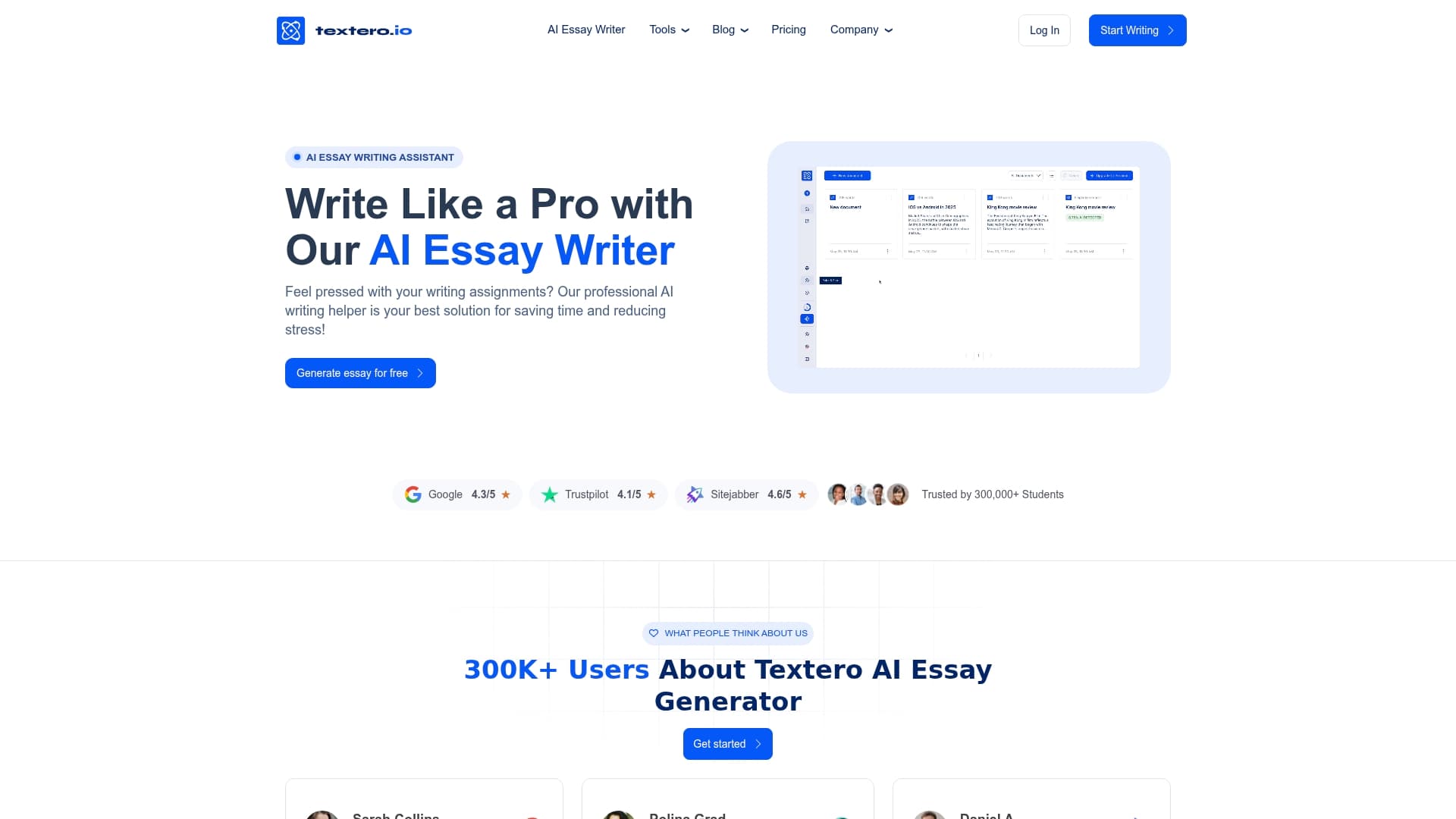
Textero handles documents up to 20,000 words, so students can draft long literature reviews without splitting files. It accepts custom source uploads and returns citations formatted for MLA, APA, and Chicago. The platform also offers PDF summarization, paraphrasing, and AI content detection to support revision workflows.
Core Features
Core features include AI generated essay writing and editing tools that produce drafts and rewrite passages. Users can upload sources, manage citations, and run plagiarism and AI detection inside the editor. Additional utilities cover PDF summarization, paraphrasing, outline generation, and in depth feedback with essay grading.
Key Differentiator
Textero's marketing materials state the model was trained on academic datasets and tuned for scholarly writing. That training plus the ability to upload custom sources produces drafts that reflect assigned readings and citations. For research oriented assignments this blend helps keep references aligned with the argument and reduces manual referencing work.
Pros
Outputs tend toward academically phrased prose and handle long documents up to 20,000 words without truncation. The custom source upload and citation tools keep references tied to specific passages, which speeds literature review drafting. Built in plagiarism and AI detection tools plus in depth feedback give students concrete revision targets before submission.
Cons
- Buyer reviews note that AI generated content may lack creativity or depth, especially for narrative or highly interpretive assignments.
- Some outputs can trigger plagiarism detectors depending on phrasing and overlap with uploaded sources.
- Automatic originality markers are limited, so users must manually verify citations and paraphrase quality before submission.
When It May Not Fit
If you need highly creative or literary prose, this tool may feel formulaic rather than inventive. Courses that require bespoke phrasing to pass strict originality checks will need careful human revision because some outputs can trigger detectors. Users seeking automated, guaranteed originality scoring will not find it here because the platform needs human verification.
Who It's For
Students, researchers, and academic professionals working on essays, theses, or literature reviews will benefit from Textero's reference aware drafting. Non native English speakers can use the multilingual support to practice phrasing and produce citation ready drafts. Academic professionals who assemble long reports will value the large document support and citation workflow.
Real World Use Case
A university student uploads ten articles and asks Textero to draft a literature review. The tool cites each source in MLA or APA and highlights passages needing paraphrase. The student edits flagged sections and submits a draft with formatted citations.
Pricing
Pricing uses flexible subscription plans with monthly, quarterly, and yearly options. Annual plans start at $8.25/month and include unlimited AI commands, PDF uploads, and credits, excluding taxes.
Website: https://textero.io
Comparison of alternatives
For academics and students requiring a focused tool for generating citation-integrated and AI-compliant academic documents, Samwell.ai provides capabilities. However, each platform reviewed—Samwell.ai, Grammarly, and Textero—offers essential tools with unique features catering to distinct user needs.
Academic functionality and citation management
Samwell.ai excels in integrating authentic citation-generation features explicitly designed for MLA and APA styles, ensuring references directly support the generated content, thereby reducing manual workload. In comparison, Textero's custom source upload feature provides flexibility, particularly when users need to work with non-standard or niche materials.
Platform compatibility and device integration
Grammarly distinguishes itself by delivering cross-platform support via browser extensions, desktop applications, and mobile apps, enabling users to edit documents directly within their workflow environment. This ability contrasts with Samwell.ai and Textero entities, which centralize functionality within their native interfaces.
Best fit
- Academics and graduate students drafting long research papers with MLA/APA-required citations will appreciate Samwell.ai's integrated citation tools and academic focus.
- Professionals and researchers requiring document editing across multiple platforms benefit from Grammarly’s extensive browser and application integrations.
- Students handling custom source materials for specialized studies will find Textero ideal for citation alignment and draft generation.
Our pick
For academic professionals and students desiring a tool to maintain scholarly integrity while expediting writing and citation tasks, Samwell.ai proves to be the choice. Its integration of citation management, content humanization to meet academic standards, and long-document support fulfills the rigorous demands of academic writing that alternative options only partially address.
For students and professionals needing an AI-driven academic writing assistant, compare platforms based on features, audience fit, and pricing.
| Product | Key Differentiator | Best For | Pricing | Notable Limitation |
|---|---|---|---|---|
| Samwell | Semihuman.ai technology for plagiarism reduction | Researchers and higher education | Basic: Free; Academic: $12/month | Limited engineering-specific source databases |
| Grammarly | Personalized tone and style adaptation | Academics and professionals | Free; Pro: $12/month (annual billing) | Free plan lacks advanced rewriting tools |
| Textero | Academic dataset training and custom source uploads | Students drafting long documents | Annual: $8.25/month | Outputs may lack creativity for narrative writing |
How to Address Writer AI Challenges in Academic Projects
Writer AI tools often struggle to maintain academic integrity while producing well-cited, natural-sounding content. Students and researchers face difficulties with plagiarism risks, citation management, and producing lengthy drafts that hold scholarly value. Samwell offers a unique solution with its Semihuman.ai technology to reduce plagiarism while keeping academic phrasing authentic. The platform supports long documents, real-time AI detection, and source-linked citations, easing the burden of thesis drafting and group projects.
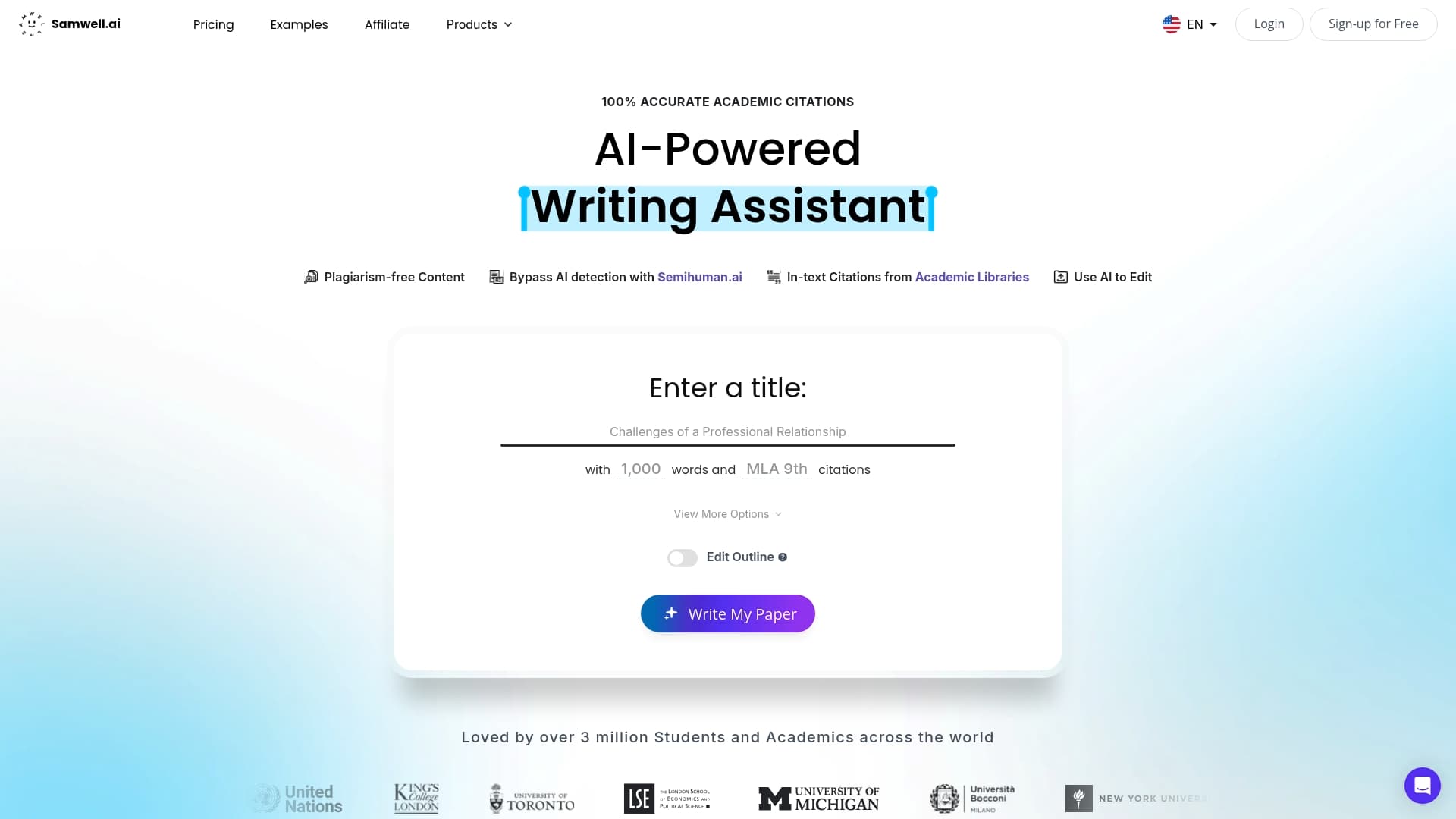
Explore how Samwell enhances your academic writing by generating citation-backed essays and offering a Power Editor for precise content refinement. Visit Samwell.ai to experience a platform built for students and university researchers who want reliable, source-driven drafts and smooth collaboration. Start by importing your sources and crafting a fully cited document that respects scholarly standards.
FAQ
How does Samwell.ai enhance academic writing?
Samwell.ai provides source-backed essay generation and real-time citation checks. Its Semihuman.ai technology helps maintain academic integrity while preventing plagiarism. This allows students and researchers to create credible academic documents more efficiently.
What is the difference between Samwell and Grammarly?
Grammarly focuses on grammar checking, clarity, and tone adjustment, making it great for polished professional documents. Samwell excels in generating long academic papers and literature reviews with direct citations, which is vital for thesis writers and research teams. Each platform serves distinct needs depending on the type of writing required.
Which platform supports real-time editing and collaboration?
Samwell.ai offers real-time editing tools and collaboration features that facilitate group projects and instructor feedback. These capabilities enable multiple users to work together efficiently on academic documents while tracking citations.
Can I use Samwell.ai for very technical topics?
Samwell.ai is mainly suited for general academic writing; it has limited engineering-specific source databases. Researchers focusing on niche technical topics may need to supplement their use of Samwell with other tools for comprehensive coverage.
What pricing tiers does Samwell.ai offer?
Samwell.ai provides a basic free plan that allows for 1,000 words of generation. The Academic Plan at $12/month includes expanded features such as 200,000 words, ideal for heavier users like thesis writers and research teams.
Recommended
- Top 3 Ai Citation Tools 2025 Alternatives 2026
- Top 6 Ai Academic Writer Alternatives 2026
- Best AI Writing Tools 2025 – Expert Comparison
- Top 8 Research Paper Generators 2025 – Expert Comparison
Generate essays with Samwell.ai
Whether you’re a publisher, professor, journalist, or student, let us tailor a plan just for you.Most Read Articles

Your Guide to Help Writing a Essay Successfully
Expert tips for help writing a essay - from crafting a thesis to structuring your essay effectively.

How to Write Critical Thinking Essay: Expert Tips
Expert tips for writing a critical thinking essay. Learn how to structure, choose topics, and use evidence effectively.'

How to Write a Good Hook: A Step-by-Step Guide
Master the art of crafting a good hook with our guide. Create compelling openers for a memorable first impression.